- News
- UK
- Crime
Dawn Sturgess was killed by the Russian nerve agent, while a police officers, a former Russian spy and his daughter were poisoned
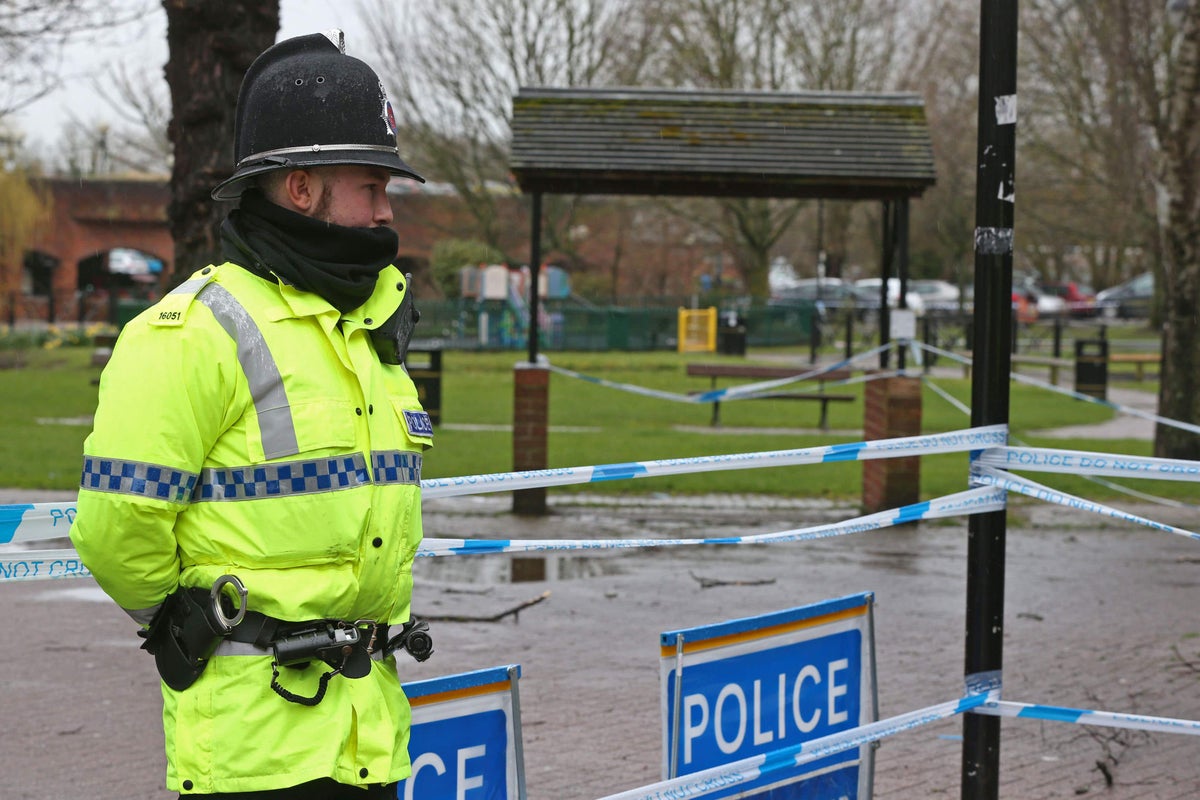
Holly EvansThursday 04 December 2025 10:38 GMT open image in galleryA long-awaited report into the Salisbury Novichok poisonings is finally due to be published (PA)
For free real time breaking news alerts sent straight to your inbox sign up to our breaking news emails
Sign up to our free breaking news emails
Sign up to our free breaking news emails
Email*SIGN UPI would like to be emailed about offers, events and updates from The Independent. Read our Privacy notice
Seven years after four people were poisoned in the city of Salisbury by a Russian nerve agent Novichok, a long-awaited report into the incident is finally due to be published.
Retired Supreme Court judge Lord Hughes of Ombersley is set to deliver his findings into the death of Dawn Sturgess, as well as the poisonings of former Russian spy Sergei Skripal, his daughter Yulia and police officer Nick Bailey.
An international arrest warrant was issued for three Russians thought to be involved in the attack, but as the Russian constitution does not allow the extradition of its citizens, it is unlikely they will ever stand trial.
Here is a timeline of events:
2 March 2018
3pm: Men travelling on passports in the name of Alexander Petrov and Ruslan Boshirov arrive at Gatwick Airport, having flown from Moscow on Aeroflot flight SU2588.
5.40pm: Suspects arrive at Victoria railway station after travelling by train into central London.
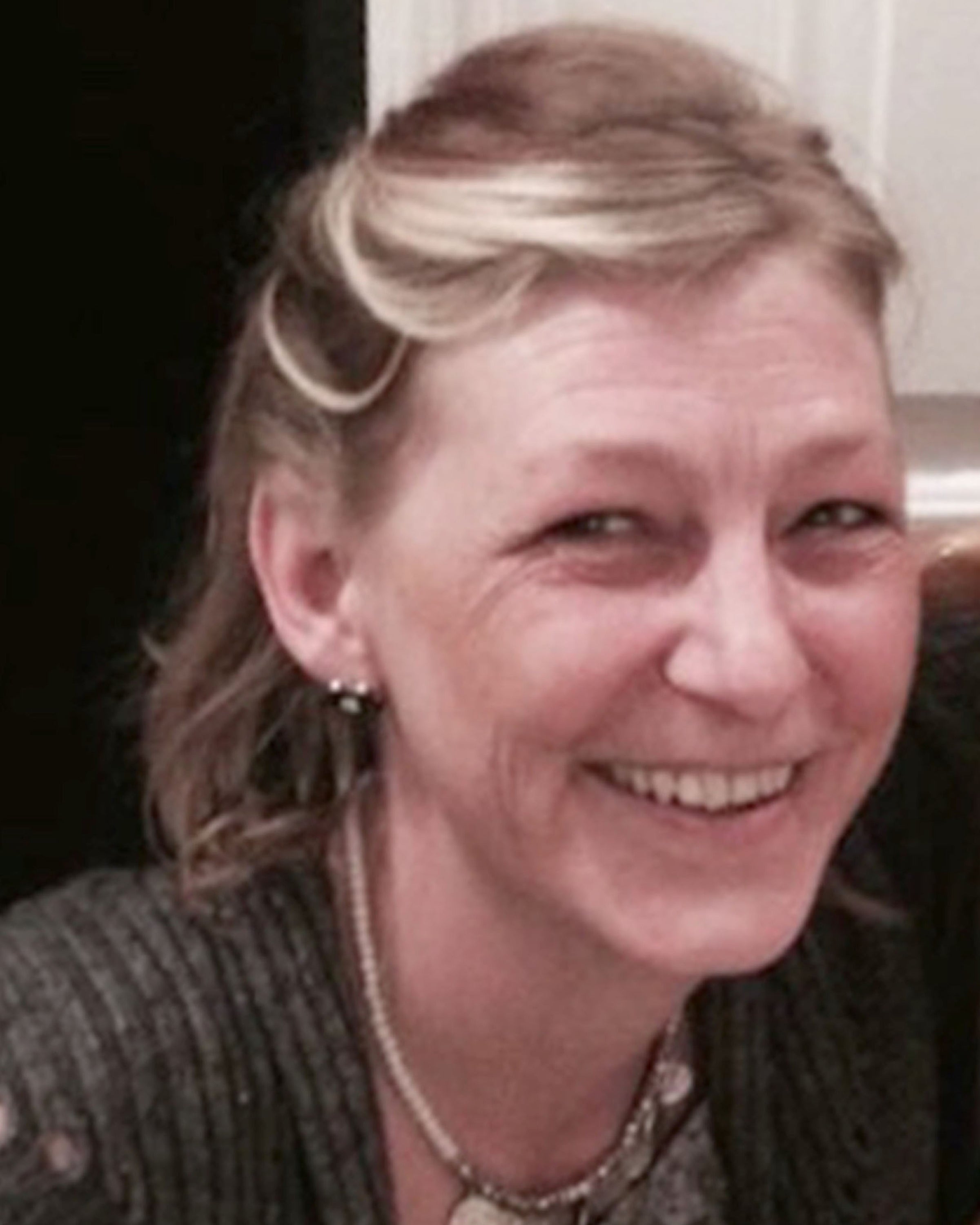 open image in galleryDawn Sturgess died in 2018 after being exposed to the Novichok nerve agent that had been discarded in a perfume bottle (Metropolitan Police)
6-7pm: Men in Waterloo station area after travelling on London public transport, then onwards to City Stay Hotel in Bow Road, East London.
3 March
11.45am: Suspects arrive back at Waterloo station after taking the Tube from the hotel.
2.25pm: Suspects arrive in Salisbury on train for suspected reconnaissance trip. “We assess that this trip was for reconnaissance of the Salisbury area and do not believe that there was any risk to the public from their movements on this day,” Mr Basu said.
2.40pm: Yulia Skripal arrives at London Heathrow Airport from Russia to visit her father.
4.10pm: Suspects leave Salisbury on train, arriving back in Bow at 8.05pm.
4 March
8.05am: Suspects repeat journey from Bow to Waterloo station, and onwards to Salisbury.
11.58am: Suspects caught on CCTV near Mr Skripal’s house in Wilton Road, Salisbury, “moments before the attack”.
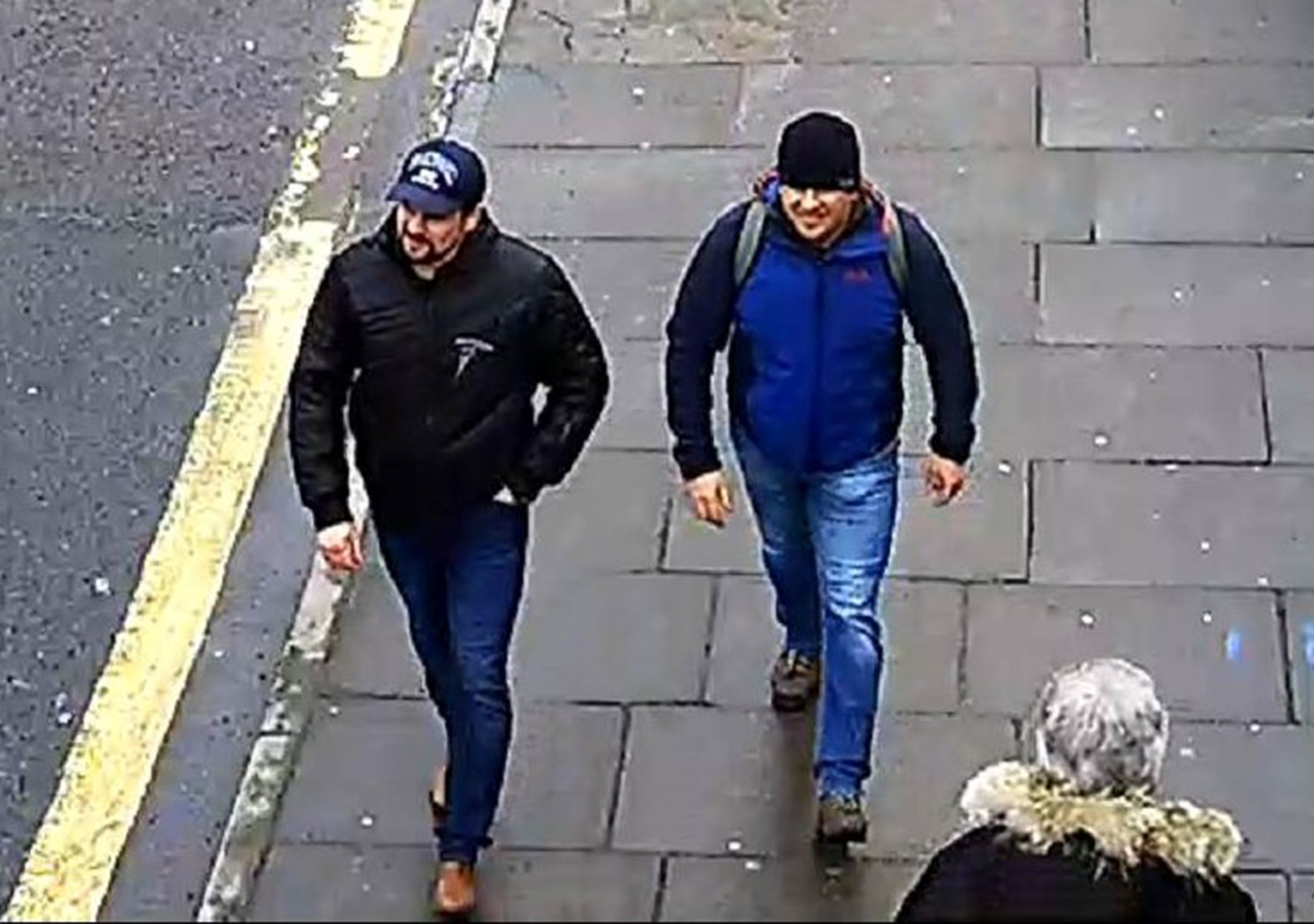 open image in gallerySalisbury Novichok poisoning suspects Alexander Petrov and Ruslan Boshirov are shown on CCTV in Salisbury (Metropolitan Police)
1.30pm: Mr Skripal’s car seen driving towards Salisbury city centre, where he and his daughter arrived at the Sainsbury’s car park 10 minutes later.
4.15pm: Sergei and Yulia Skripal found unconscious on a bench in Salisbury city centre.
7.28pm: Suspects pass through passport control at London Heathrow Airport.
5 March
Major incident declared after Salisbury District Hospital staff send samples for testing, as Sergei Skripal, his daughter and Detective Sergeant Nick Bailey are treated.
7 March
Police say a nerve agent was used to poison the pair and the case is being treated as attempted murder.
8 March
Home secretary Amber Rudd says Wiltshire Police officer Det Sgt Nick Bailey is seriously ill in hospital.
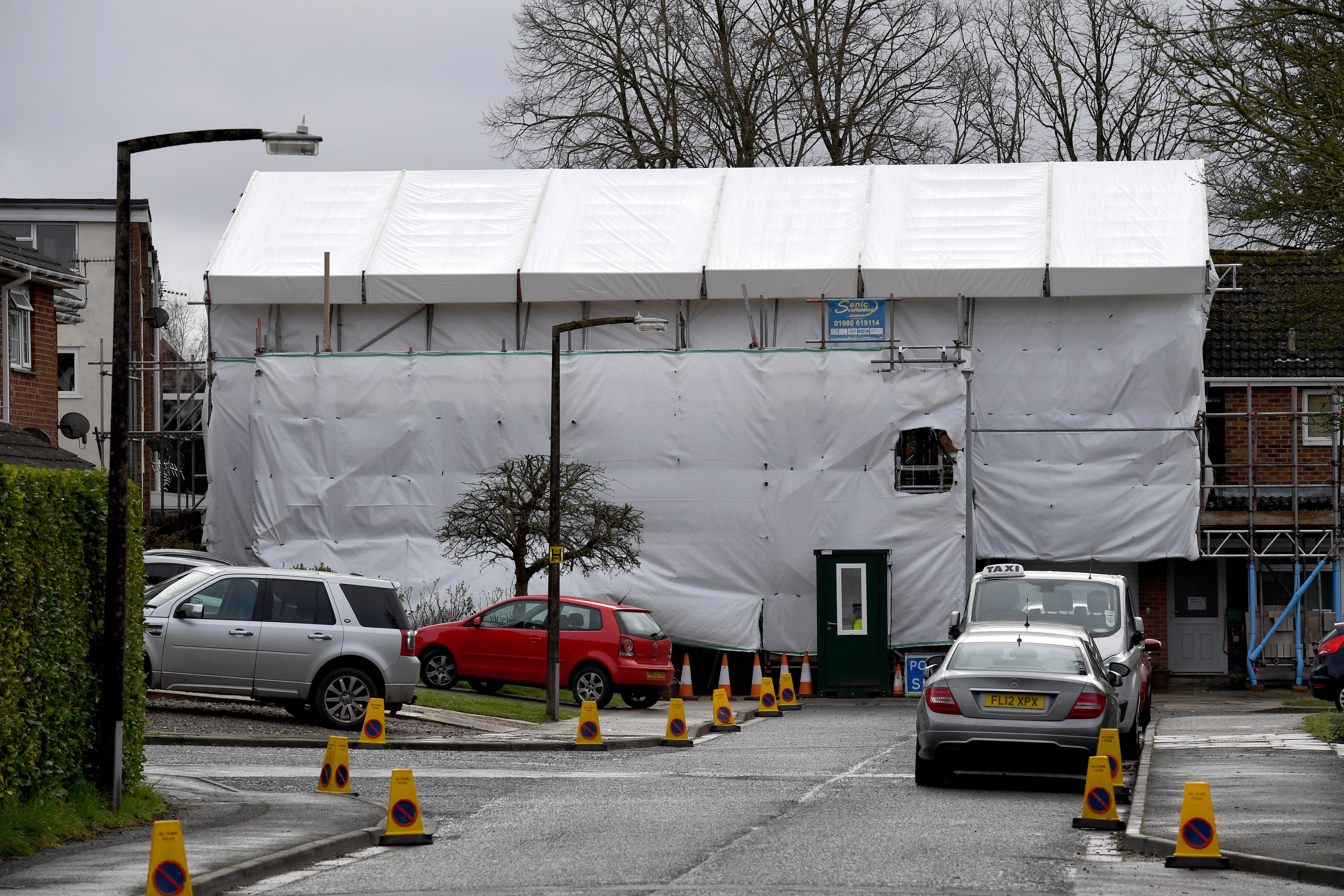 open image in gallerySergei Skripal’s home on 2 March 2019 in Salisbury (Getty)
12 March
Prime minister Theresa May tells the Commons the nerve agent Novichok is of Russian origin and the government has concluded it is “highly likely” Russia is responsible for the poisoning.
14 March
Ms May tells MPs the UK will expel 23 Russian diplomats, calling the poisoning an “unlawful use of force by the Russian state against the UK”.
22 March
Det Sgt Bailey is discharged from hospital but says life will “probably never be the same”.
26 March
Britain’s allies announce more than 100 Russian agents are being sent home from 22 countries, in what Ms May calls the “largest collective expulsion of Russian intelligence officers in history”.
10 April
Ms Skripal is discharged from hospital, followed by her father just over a month later.
30 June
Dawn Sturgess and Charlie Rowley fall ill at a flat in Muggleton Road, Amesbury, eight miles from Salisbury, and are taken to hospital.
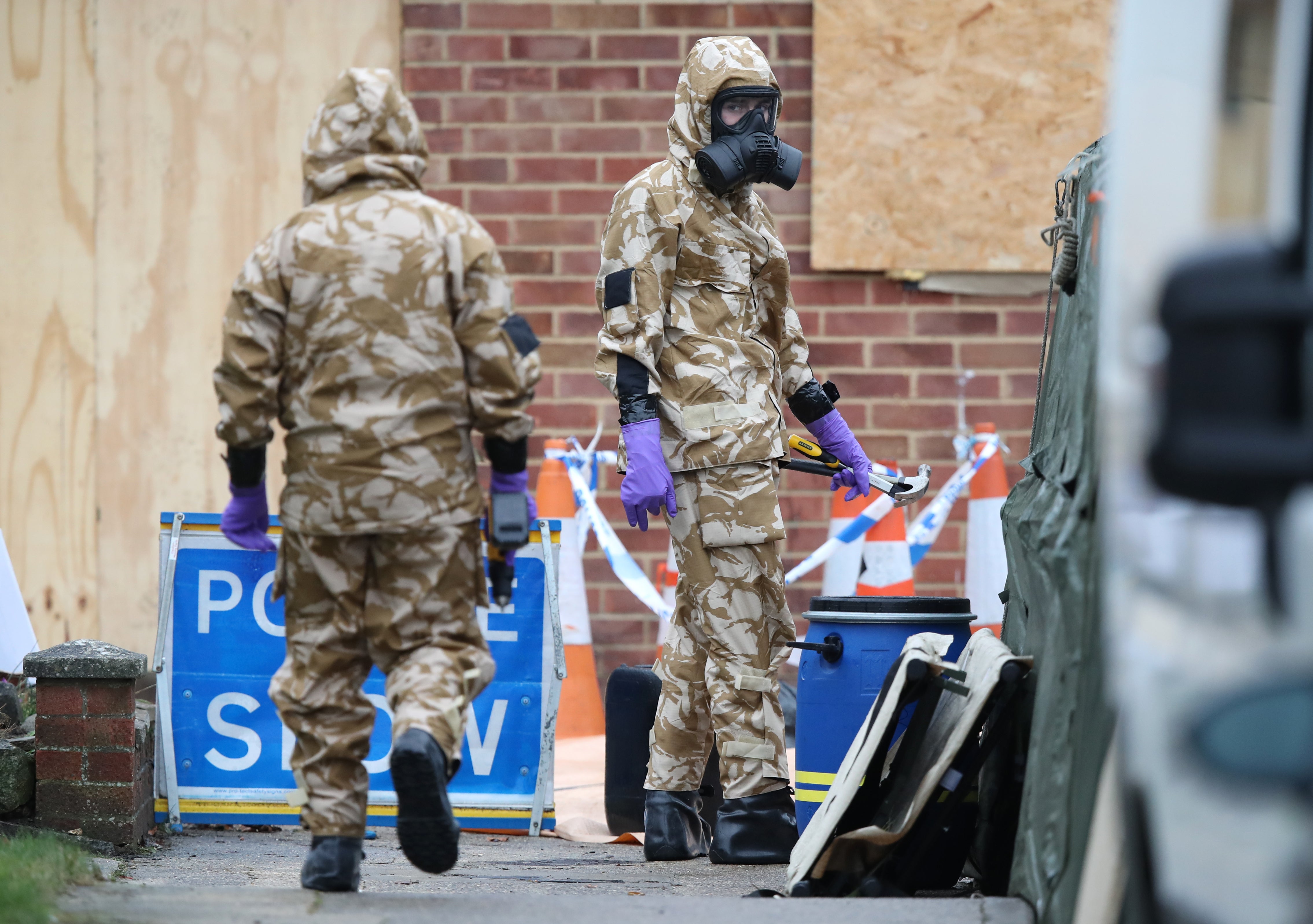 open image in galleryThe Novichok incident in Salisbury was an example of Russia’s grey zone activities, MPs said (PA)
4 July
Police declare a “major incident” after revealing Ms Sturgess and Mr Rowley have been exposed to an “unknown substance”, later confirmed to be Novichok.
8 July
Ms Sturgess dies in hospital and a murder investigation is launched.
10 July
Mr Rowley regains consciousness and is discharged from hospital later that month.
4 September
Independent investigator, the Organisation for the Prohibition of Chemical Weapons, confirms the toxic chemical that killed Ms Sturgess was the same nerve agent as the one that poisoned the Skripals.
5 September
Scotland Yard and the Crown Prosecution Service say there is sufficient evidence to charge two Russians, Alexander Petrov and Ruslan Boshirov, with offences including conspiracy to murder. Petrov’s real identity is believed to be Alexander Mishkin, who worked as a doctor for Russian military intelligence service the GRU, while Boshirov’s real identity is believed to be Anatoliy Vladimirovich Chepiga.
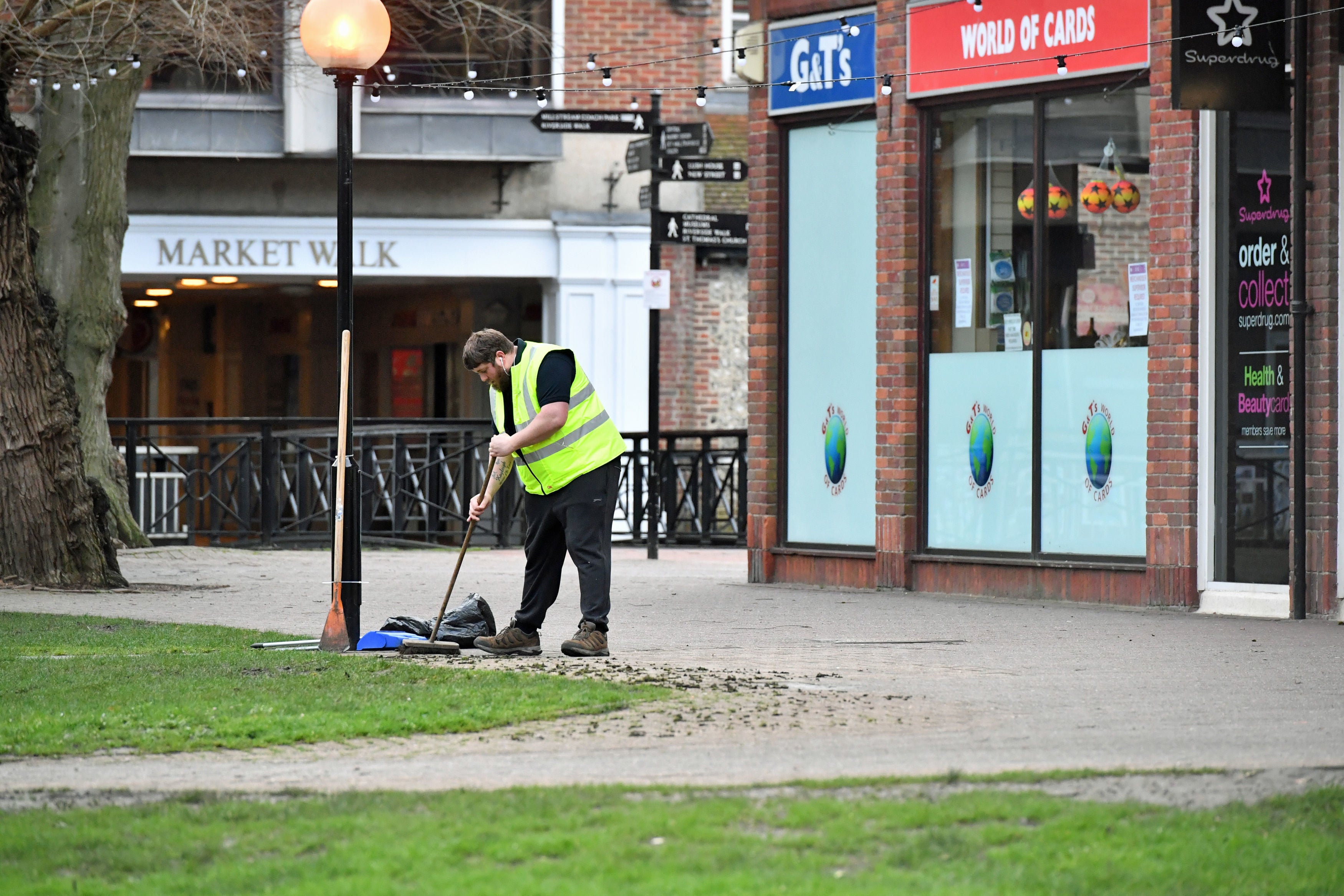 open image in galleryA large clean up of the city ensured after the nerve agent was discovered (Ben Birchall/PA) (PA)
12 September
Russian president Vladimir Putin says there is “nothing criminal” about Petrov and Boshirov. Downing Street insists they are GRU officers “who used a devastatingly toxic illegal chemical weapon on the streets of our country”.
13 September
Petrov and Boshirov are interviewed by Russian state-funded news channel RT, in which they claim they were tourists visiting Salisbury.
1 March 2019
The Ministry of Defence announces Salisbury is to be declared decontaminated of Novichok after an almost year-long military clean-up of 12 sites.
June 2020
BBC docudrama The Salisbury Poisonings is broadcast over three consecutive nights. Its first episode was reported to have been watched by more than seven million viewers, making it the biggest UK television premiere of the year so far.
September 2021
Investigators say they have sufficient evidence to charge a third man over the poisonings – Russian spy Denis Sergeev, also known as Sergey Fedotov.
14 October 2024
The Dawn Sturgess Inquiry begins public hearings in Salisbury before later continuing in London.
2 December
The hearings conclude.
4 December 2025
Lord Hughes publishes his report.


