 Anung Camui/Shutterstock
For new riders, a small bike that feels "real" with throttle control, balance, braking feedback, and more, all while also being lightweight and easy to control, sounds like a great place to start. With a mini bike, mistakes on the first ride often lead to more embarrassment than serious damage, which definitely sounds good to any rider — new or old. And that balance might just be what makes the category so enduring.
Even so, a lot of things like frame build quality, ease of maintenance, parts availability, and more all come into play in achieving that balance in real conditions, as well as whether the suspension and drive train are robust enough to handle basic rough terrain without leaving you frustrated. Also, keep in mind that mini bikes are not toys that cost only a couple of bucks; in fact, far from it. The cheapest models still cost hundreds of dollars, sometimes thousands. So, you'll want to ensure you get value for your money.
That said, let's proceed to look at the best mini bike brands for new riders. And this time, not according to spec-sheet horsepower and top-speed figures, but rather to the people who ride and work on them regularly.
Yamaha PW50
 Marc Pfitzenreuter/Getty Images
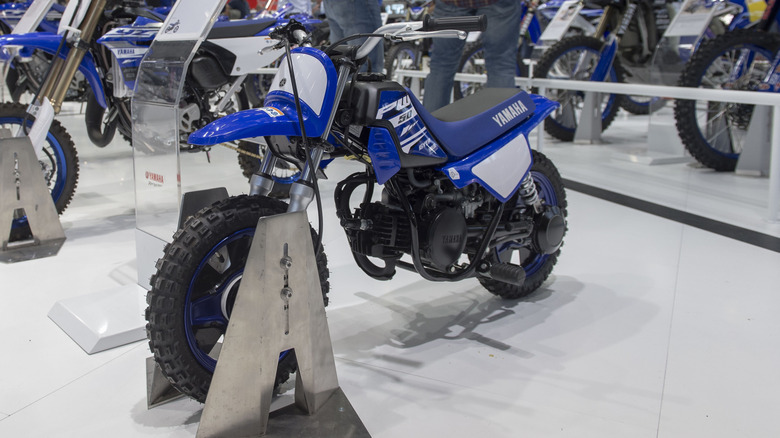
The PW50, or peewee as some like to call it, has long been the gold standard for bikeheads who want a "buy once, worry little" first bike. Since 1980, Yamaha has been producing this 50 cc two-stroke, and over four decades later, it still remains an excellent, reliable and forgiving entry-level dirt bike for kids and beginners alike, thanks to its layout that features a wet centrifugal-clutch, shaft-drive, drum brakes, small 10-inch tires, very low seat height, and being relatively lightweight at only 90 lb wet.
On small-bike forums like Mini Riders, you'll see many owners talk about the PW50's reliability and predictability more than its sheer performance. It's not the fastest mini bike — not that it's meant to be — and that's the point. What the bike does well is teach throttle feel without sudden surges, and with the motor enclosed, maintenance chores are highly reduced. The low-maintenance shaft drive and fully automatic setup that make the PW50 a "parent-friendly" learner are highlighted in Yamaha's own materials. Owing to this mechanical simplicity, it's not surprising that many parents buy it for their kids, and many small adults begin there before moving up to the big boys.
The downside is practical in equal measure. If you're an adult who wants to do serious trail riding, you'll outgrow it both physically and in terms of performance. But as an entry-level option to help you learn corner/weight technique and clutchless throttle control, the PW50 certainly holds its own.
Coleman CT/BT200-class
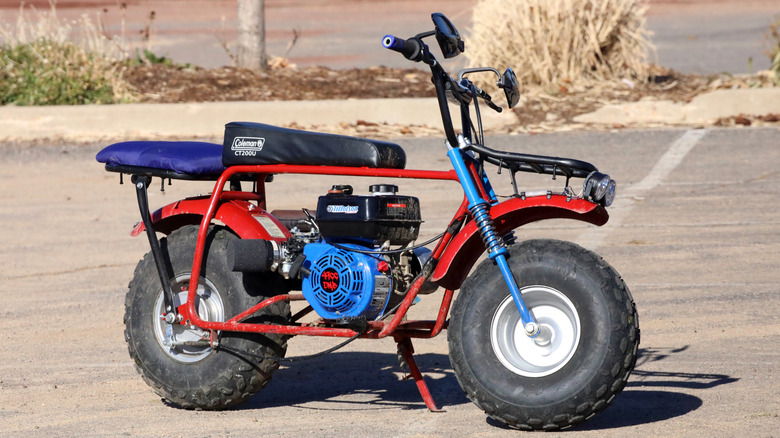 photo-denver/Shutterstock
If you scroll r/minibikes alongside other threads and forums in search of practical, adult-sized starter mini bike recommendations, Coleman Powersports will be one of the names you come across often. "Coleman is the most popular and available brand, you can get anything for any of the bikes," wrote one user in r/minibikes. Those sentiments just go ahead to show why Coleman bikes attract riders seeking a bigger frame and something with more torque than what a 50-cc offers.
Usually, the CT/BT200 bikes employ 196-200 cc air-cooled engines, have chain-drive systems, and basic suspension. That means more torque and weight capacity, as well as more variables like chain tension, clutch wear, shocks, and so on, all of which require regular attention. In terms of cost, many Colemans are priced roughly between $600 and $1000, which, in all honesty, is a good deal for anyone who wants an adult-sized ride without having to break the bank.
Even so, some owners also offer a cautious counterpoint. "I currently have a coleman ct200u-ex [...] bought off facebook so that also plays a huge factor on why its a sack of s*** so far," wrote another owner on r/minibikes when talking about the realities of second-hand problems. That line, although too frank, is a common theme in different forums.
Nonetheless, Coleman is still great for beginners, no doubt. Parts and community knowledge are widely available, aftermarket clutches and sprockets are cheap, and all these could prove useful for those starting out.
SSR, Apollo, and other budget imports
 Apollo Motorcycles
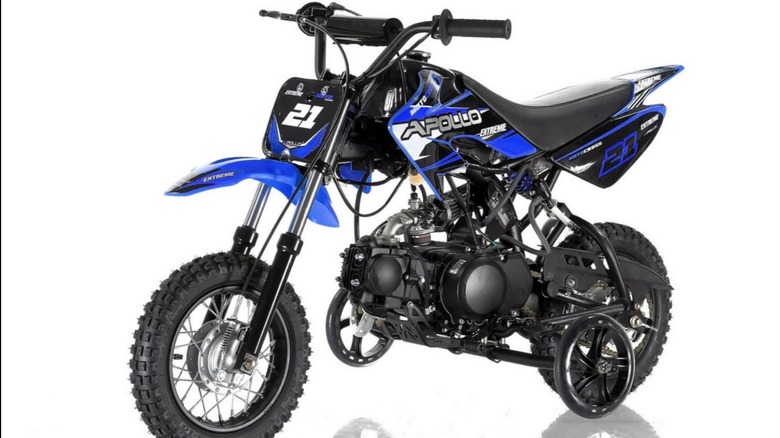
If an affordable mini motorcycle is what you're looking for, there are still options for you, SSR, Apollo, and similar imports, being great examples. In different threads about buying minis, you'll come across lines such as "don't spend over 900 bucks" as helpful advice for beginners shopping for used or cheap new. And with such a mindset, it's no surprise that these brands have grown in popularity, particularly among people who prefer seat-time now rather than a perfect finish later.
These bikes usually come with simple forks, modest brakes, and air-cooled 4-stroke engines, often in the 70-125 cc range. And while they are no Coleman or Yamaha, owners seem to acknowledge their tradeoffs and know that eventually, they may need to tune carbs, adjust chains, potentially replace suspension parts, and whatnot. One owner had this to say in a thread about Apollo bikes on r/Dirtbikes: "I picked up an Apollo [...] and I f***ing love it. I can tear it apart and put it all back together in an afternoon." Another user in the same thread went: "As long as you know what it is and understand it's limitations [...] it's good enough for me 👌🏻 I have one Apollo, two ssr, a coolster [...]." Those comments sum up why some buyers prefer them — they are cheap and have a steep learning curve, which some in the thread argue is part of the fun. But for someone after long-term reliability, they're a gamble.
Electric and small street-style minis
 lcwang/Shutterstock
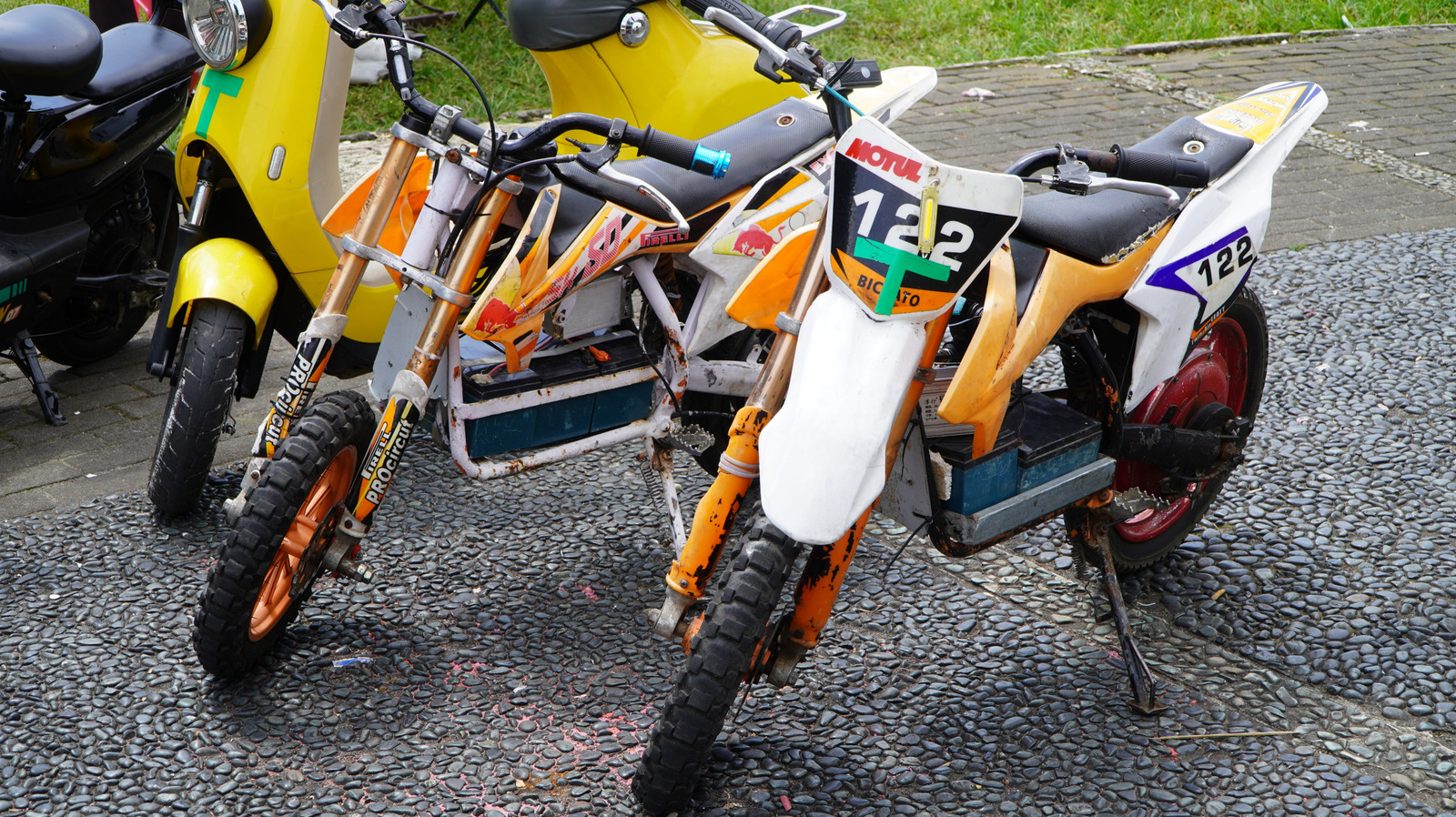
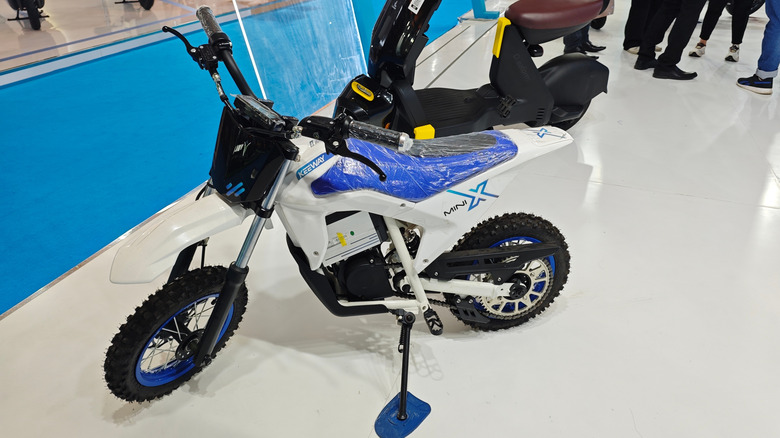
Unlike their gas-powered rivals, electric and small street-style mini bikes have something different to offer — less mechanical trouble. They're also cheaper to operate, have zero emissions (which is a big deal for beginner riders who care about the environment), simpler to maintain (no more oil changes and spark plug replacements), and much more. But what most owners seem to like most is the quiet, plug-in simplicity. One owner, while talking about his Razor MX650 on r/minibikes, summed that up perfectly: "It's electric, quiet, and low-maintenance, but definitely more of a casual or youth option than a serious utility bike." We found this line to be very useful simply because it praises the e-bike while also setting realistic limits.
Needless to say, electric minis have their share of trade-offs, just like pretty much anything else. We're talking battery range, torque curve, frame sturdiness, and suspension, all of which make many cheap electrics only usable on smooth roads and pavement rather than rough singletrack. Most people only use them for driveway practice, short trips around the suburbs, and quick commutes where charging is easy. Suffice it to say, electric minis are great for a beginner in search of a small, quiet machine to roam short distances and equally perfect for a parent buying a safe, low noise option for their biker-wannabe teen.
DIY platforms & kit frames
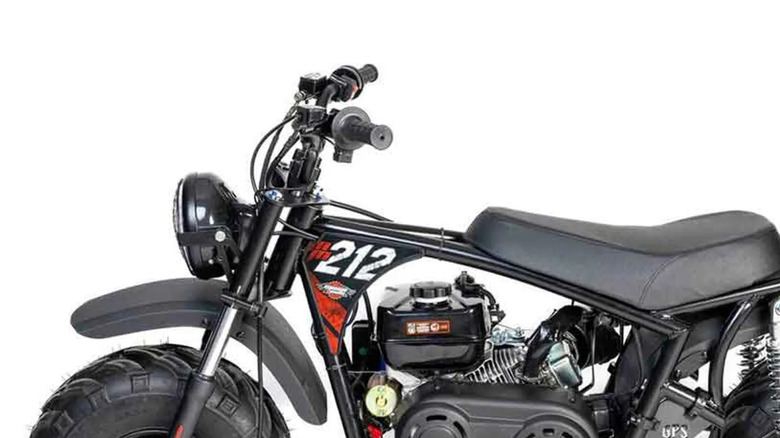 Go Power Sports
Some bikeheads not only want to ride, but also learn what they're riding. That's where kit frames and classic DIY mini bike platforms come in, offering a hands-on course in drivetrain alignment, clutch action, carburetion, suspension setup, and the basics of structural maintenance. In a thread debating between building a mini bike and buying one, one Redditor had some forum wisdom to dispense by saying: "If you've never had a minibike or go-kart before, building one will give you valuable knowledge of every facet of building and repairing." Honestly, they are not wrong.
With DIY platforms, beginners with a mechanical focus get to learn much more than just bolt torque. They learn how low-speed control is impacted by clutch engagement, how chain length and pivot geometry alter tension during travel, why frame stiffness or weak welds lead to handling oddities or cracks, and almost everything else in mini bike engineering. Great, right? So, not only can you start cheaply, but you can also develop skills that you can leverage to raise the resale or reuse value of almost any subsequent machine.
There is, of course, a trade if you choose to go this direction. The bike won't build itself, which means you have to sacrifice immediate ride time for more garage time. But if you're somebody who enjoys wrenching, or rather plans to scale up to larger bikes in the future, a DIY platform is just what you need to get rolling with.
How we arrived at this round-up
 Pramata/Shutterstock
We aimed to keep things grounded in what real riders consistently had to say. We began by combing through several Reddit threads, mainly r/minibikes and r/Dirtbikes, as well as other forums like Mini Riders, avoiding isolated opinions unless they were backed by more owners and focusing only on patterns that could yield trends to work with and base our opinions on.
We also chose only quotes publicly posted by users, which are verifiable. Where feasible, we verified figures and claims against manufacturer specs and technical write-ups, and gave weight to affordability, parts availability, mechanical complexity, and the burden of maintenance because we understand that for many first-time buyers, these practical realities matter more than sheer power or looking cool.