- News
- UK
- Crime
An investigation into the brutal murder of a woman two decades ago has concluded following a DNA breakthrough
Dan HaygarthWednesday 03 December 2025 12:36 GMT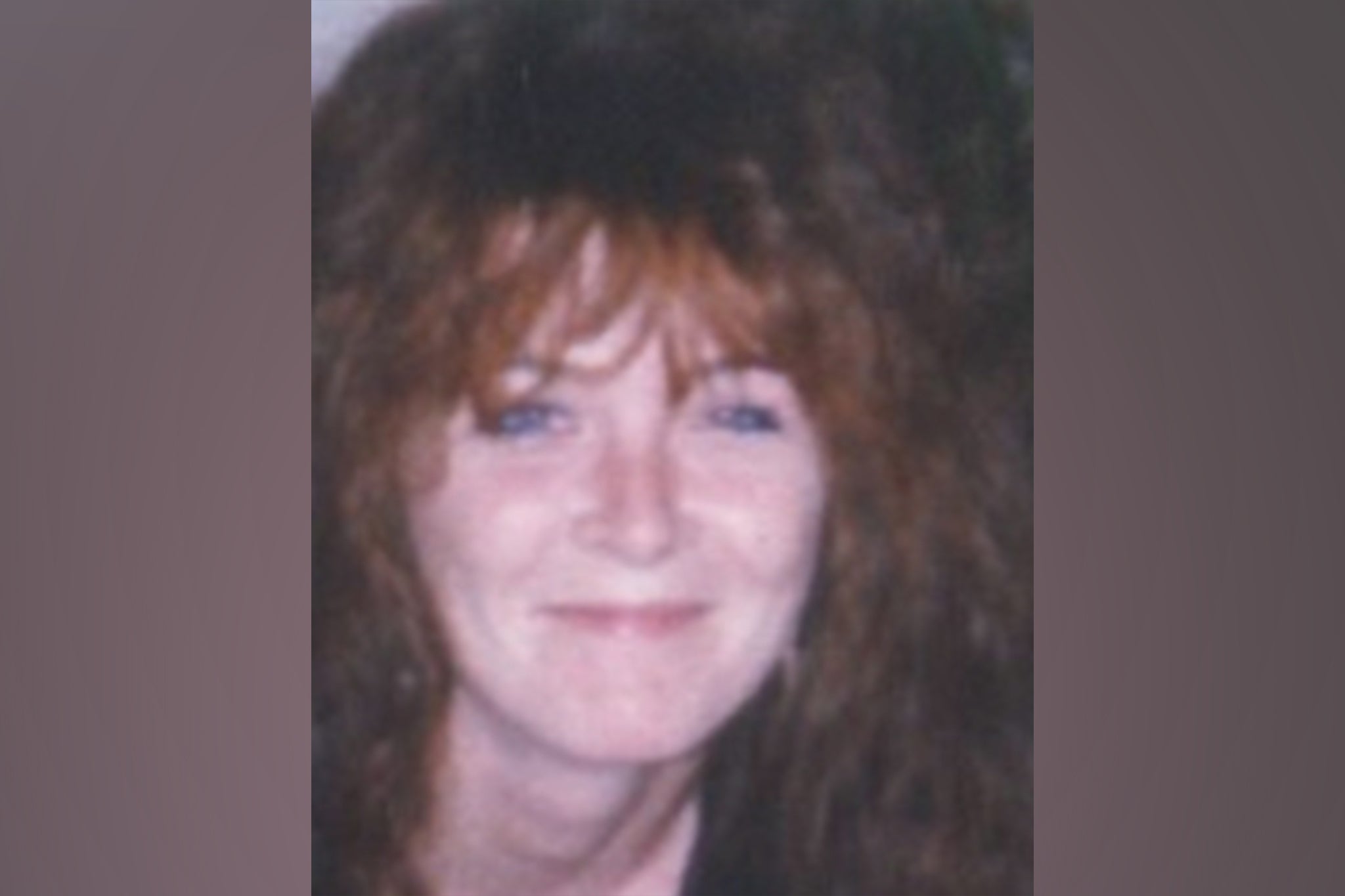 open image in galleryJennifer Kiely, 35, was found dead in Hollywell, Eastbourne, by Sussex fire service in the early hours of 22 January 2005 (Sussex Police)
For free real time breaking news alerts sent straight to your inbox sign up to our breaking news emails
Sign up to our free breaking news emails
Sign up to our free breaking news emails
Email*SIGN UPI would like to be emailed about offers, events and updates from The Independent. Read our Privacy notice
A suspected murderer has been named using DNA from a cigarette butt, 20 years after a woman was killed at a seafront shelter.
Jennifer Kiely, 35, was found dead in Hollywell, Eastbourne, by the Sussex fire service in the early hours of 22 January 2005. She had been stabbed multiple times, had sustained an injury to the back of her head, and her body had been set on fire.
The attack was thought to be sexually motivated and two suspects were arrested in the same year but they were later released without charge due to insufficient evidence.
DNA was recovered from the scene, including from a cigarette butt, that contained a full profile of a man whose profile also matched DNA found on Jennifer’s body and in her blood, but he did not appear on the national database.
Two decades later, Sussex Police have now named Keith Dowbekin, who died at the age of 60 in 2014, as the man they suspect to be responsible for her death, citing “overwhelming” DNA evidence.
Detective chief inspector Simon Dunn, of the Surrey and Sussex major crime team, said: “Over the past few years we have traced and identified several people who shared similar component parts of the DNA found at the crime scene, all of whom volunteered their DNA for forensic analysis.
“A sample obtained from a man in the north of England in summer of 2024 proved to be the final piece of the puzzle which meant we could formally nominate a suspect.
 open image in gallerySussex Police named Keith Dowbekin, who died in 2014 aged 60, as the man responsible for her death, citing ‘overwhelming’ DNA evidence (Sussex Police)
“He has been identified as Keith Dowbekin – alias Keith Black and Keith Broadbent – who was originally from the northwest of England and died in 2014, aged 60.
“Extensive background checks confirmed he was known to stay in Eastbourne and associated with members of the homeless community like Jennifer, which strengthened our hypothesis he was responsible for her murder. If he had been alive today, we would have sought authority from the Crown Prosecution Service to prosecute him for Jennifer’s murder.”
Prior to Jennifer’s murder, Dowbekin had been arrested by Norfolk Police in connection with two separate rape offences in Great Yarmouth in 2003 and 2004.
On 29 January 2005, Dowbekin was stopped at the Port of Dover for a standard investigative check relating to Jennifer’s murder; those officers did not see any note of his previous arrests.
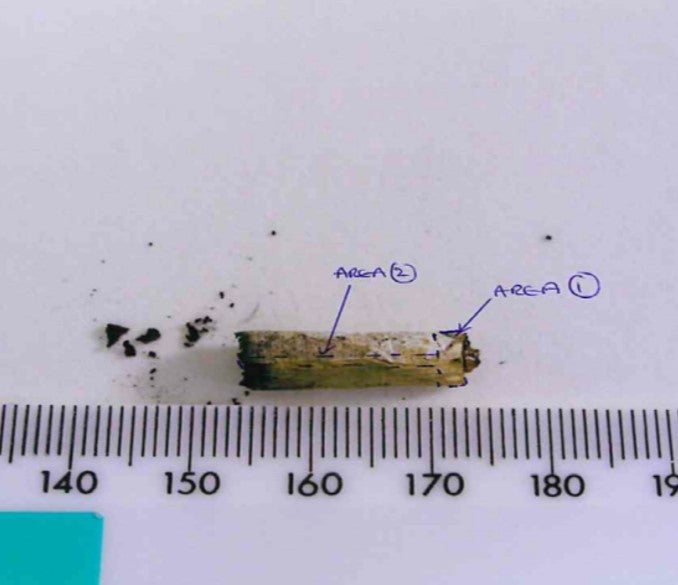 open image in galleryDNA was recovered from the scene, including from a cigarette butt, that contained a full profile of a man whose profile also matched DNA found on Jennifer’s body and in her blood (Sussex Police)
DCI Dunn said: “In 2003 and 2004, there was no provision to take DNA from people who were arrested. DNA was only taken from those who were charged with an offence, that is different now.
“In addition to that, we have networks now of definitely cross-border checking in terms of intelligence systems.”
The force also said that Dowbekin had actually given a DNA sample as a witness to a separate murder, but it was not added to the database as he was not a suspect.
In 2018, using a familial DNA strategy, which uses the “predictable way” that DNA is transferred from parents to children but was not available in 2005, Sussex Police were able to uncover Dowbekin after obtaining DNA from members of his family.
Their original search threw up thousands of names that were then narrowed down until relatives of Dowbekin were found, DCI Dunn said. It was only after formally deciding that Dowbekin was a suspect in 2024 that the force learned of his previous arrests for rape.
 open image in galleryJennifer’s body was discovered after a fire was reported in a seafront shelter at Holywell in the early hours of 22 January 2005 (Sussex Police)
DCI Dunn said: “It was only in 2024, after we formally nominated Dowbekin as our suspect, that we discovered he had been arrested in Norfolk in 2003 and 2004. Therefore, we contacted the force and were able to confirm that the DNA they still had on their system matched that of the DNA we obtained from the murder scene. This proved to be a significant milestone in our investigation.
“In hindsight, if further intelligence checks were completed in 2005 and the rape allegations were identified, then Dowbekin may have been treated differently. Due to current robust investigative practices I am confident all relevant intelligence checks would now be completed on persons in similar circumstances.”
Sussex Police said several factors have been taken into consideration as part of the decision to identify Dowbekin publicly. The force said this included the “overwhelming public interest, the severity of the crime, the impact on the victim’s family and wider community, and the potential to support identification of further offences”. They are not seeking anyone else in connection with the incident.
Jennifer’s family have issued a tribute saying: “Our mum was more than her struggles. She was a gentle, funny and creative soul who loved music and cared deeply for others, even when life was hard.
“She was a mum, a daughter, sister, niece and a friend. Her life mattered.
“After 20 years, my family and I are grateful for the resolution of her case and for the hard work of those who never gave up.
“While this brings a sense of closure, it does not erase the loss of a kind, loving and vibrant woman who meant so much to those who knew her, especially her children.
“I hope her story encourages compassion for those experiencing homelessness and the stigma surrounding mental health.
“These are issues that affect countless individuals and families, often in silence. I hope her memory inspires others to look beyond stereotypes and extend compassion to those who are struggling.”