- News
Belgium is rejecting a plan to use frozen Russian assets to support Ukraine's economy and war effort
Lorne CookWednesday 03 December 2025 08:54 GMTBelgium rejects EU plan to use frozen Russian assets for Ukraine, saying the move is too risky
Show all 2

For free real time breaking news alerts sent straight to your inbox sign up to our breaking news emails
Sign up to our free breaking news emails
Sign up to our free breaking news emails
Email*SIGN UPI would like to be emailed about offers, events and updates from The Independent. Read our Privacy notice
Belgium on Wednesday rejected a plan to use frozen Russian assets to help prop up Ukraine’s economy and war effort over the next two years, saying that the scheme poses major financial and legal risks.
Ukraine’s budget and military needs for 2026 and 2027 are estimated to total around 130 billion euros ($150 billion). The European Union has committed to fill the gap. It has already poured in over 170 billion euros ($197 billion) since the war started in 2022.
The biggest pot of ready funds available is through frozen Russian assets. Most of the money is held in Belgium – around 194 billion euros as of June – and outside the EU in Japan, with around $50 billion, and the U.S., U.K. and Canada with lesser amounts.
The European Commission, the EU’s executive branch, was due to make public later on Wednesday details of its proposal to use the Russian money as collateral to help meet Ukraine’s considerable needs through a “reparations loan.”
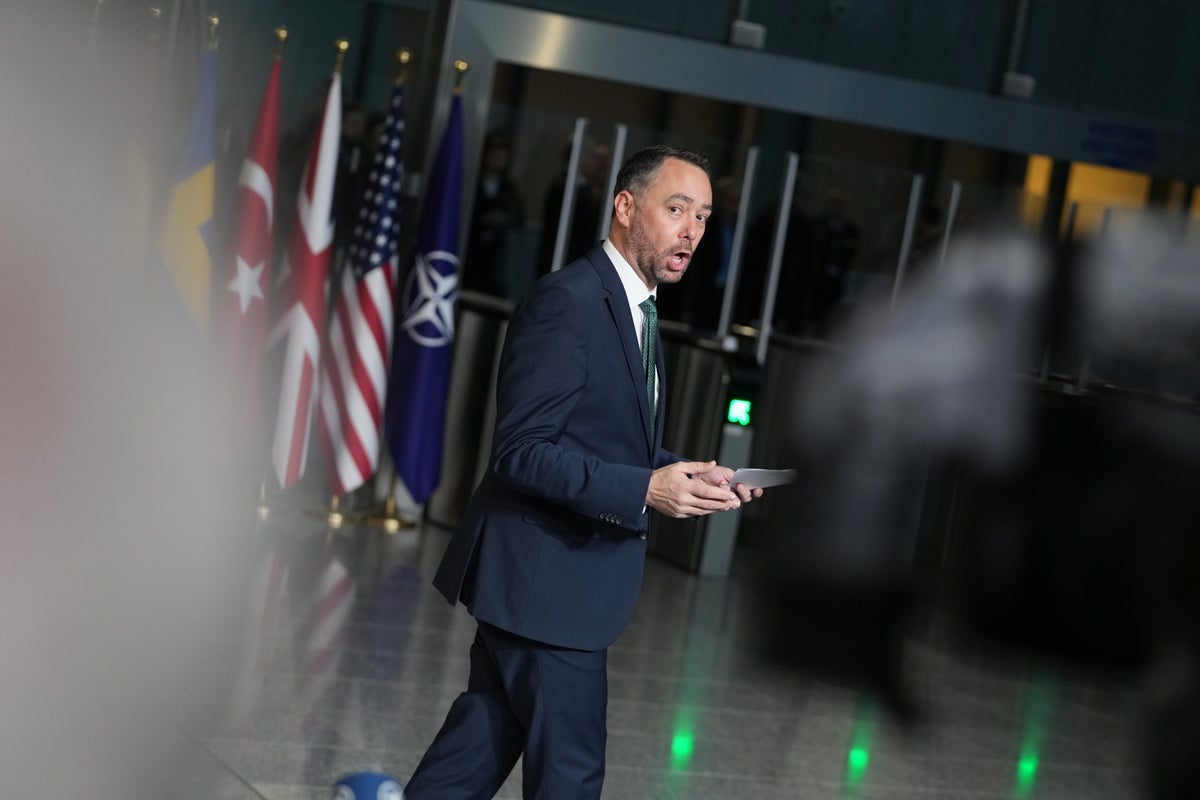
But Belgian Foreign Minister Maxime Prévot said that his country considers “the option of the reparations loan the worst of all, as it is risky. It has never been done before.” Russia has described the scheme as “theft.”
Haltingly reading prepared remarks to reporters at NATO headquarters in Brussels, Prévot urged the EU to borrow the money for Ukraine on international markets. “It is a well-known, a robust and a well-established option with predictable parameters,” he said.
“The reparation loans scheme entails consequential economic, financial and legal risks,” he said, adding that the commission’s proposals do not address Belgium’s concerns. “It is not acceptable to use the money and leave us alone facing the risks.”
Belgium fears that the Brussels-based financial clearing house holding the frozen assets, Euroclear, could take legal action if Russia challenges any use of the funds or if the move harms its image and business interests.
Prévot said Belgium feels that its concerns are not being heard by its EU partners.
“We are not seeking to antagonize our partners or Ukraine. We are simply seeking to avoid potential disastrous consequences for a member state that is being asked to show solidarity without being offered the same solidarity in return,” he said.
In essence, EU countries would lend Ukraine around 140 billion euros ($163 billion). The money would not be seized as such, as Kyiv would refund the money once Russia pays significant reparations for the massive destruction its war has caused.
Should Moscow refuse, the assets would remain frozen.
Belgium has been earning some tax income on the assets, and the interest raised is also being used to fund a loan program for Ukraine organized by the Group of Seven major world powers.
The European Central Bank is worried that the plan for an EU reparation loan could undermine confidence in the euro single currency on international markets. EU leaders are due to discuss the scheme and Ukraine's economic and military needs at a summit in Brussels on Dec. 18.