 Nasrullah25/Shutterstock
We may receive a commission on purchases made from links.
When it comes to batteries, most of us will have a handle on fundamentals like volts, amps, and watts. But what about the rest of the jargon? One of the common head-scratchers is just what the "S" and the "P" on a battery pack mean. Put simply, these letters let us know whether the battery pack is configured in 'series' or in 'parallel' — we won't insult you by elaborating on which is which. However, we will go into some detail on how that simple labelling reveals not just the internal architecture of the battery, but why it's important.
In other words, the P and S on a battery pack determine how the individual cells within a pack are connected. In a cell where the batteries are connected in series, the positive terminal in one cell connects to the negative terminal in the adjoining cell, and so on — Think of how you stack the cells positive to negative in many flashlights, and you have the picture. The effect of this is to multiply the voltage the battery can supply, e.g., connecting two 1.5-volt batteries in series supplies 3 volts.
In a parallel arrangement, the opposite applies. In these packs, all the positive terminals are connected, as are the negative terminals. In this scenario, connecting two 12-volt batteries will still result in a 12-volt output. However, the energy capacity of the pack is doubled, which is why many diesel trucks have two batteries. And, just to muddy the waters a little, many battery packs combine both architectures.
How series and parallel configurations change performance
 Amazon/DeWalt
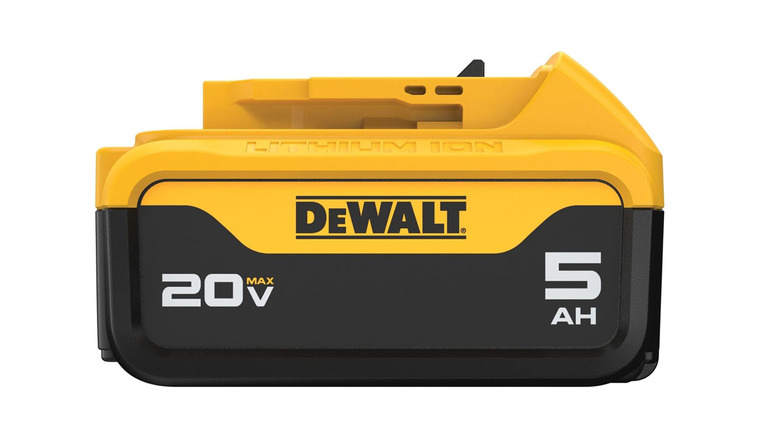
We now know what the S and P in battery packs mean. Next, let's look at why there are two distinctly different battery pack architectures. Ultimately, it comes down to the power demands of the device they're designed for. For instance, devices that draw a lot of power in short bursts, such as power tools, benefit from higher-voltage packs that use a serial architecture. More voltage means the motor can deliver greater torque and maintain speed under load — a key requirement for tools designed to handle heavy loads. This is why a DeWalt 20V MAX pack, for example, uses a 5-cell series arrangement; this ensures the output is high enough to give the motor the grunt it requires — picking the right voltage is an important consideration before buying a power tool battery.
In contrast, devices that are required to operate in long, steady operations — like e-bikes or scooters — often rely on packs built from a combination of series and parallel groups. These packs consist of cells wired in series to increase voltage, and multiple series strings are then connected in parallel to raise capacity. This architecture combines the advantages of both systems, and is why you will often see batteries that are labelled with both an "S" and a "P" designation.
For example, a battery labelled as 4S2P has two four-cell series strings wired together in parallel. We discuss this in a little more detail next.
How to read battery pack labels
 Milan Sommer/Shutterstock
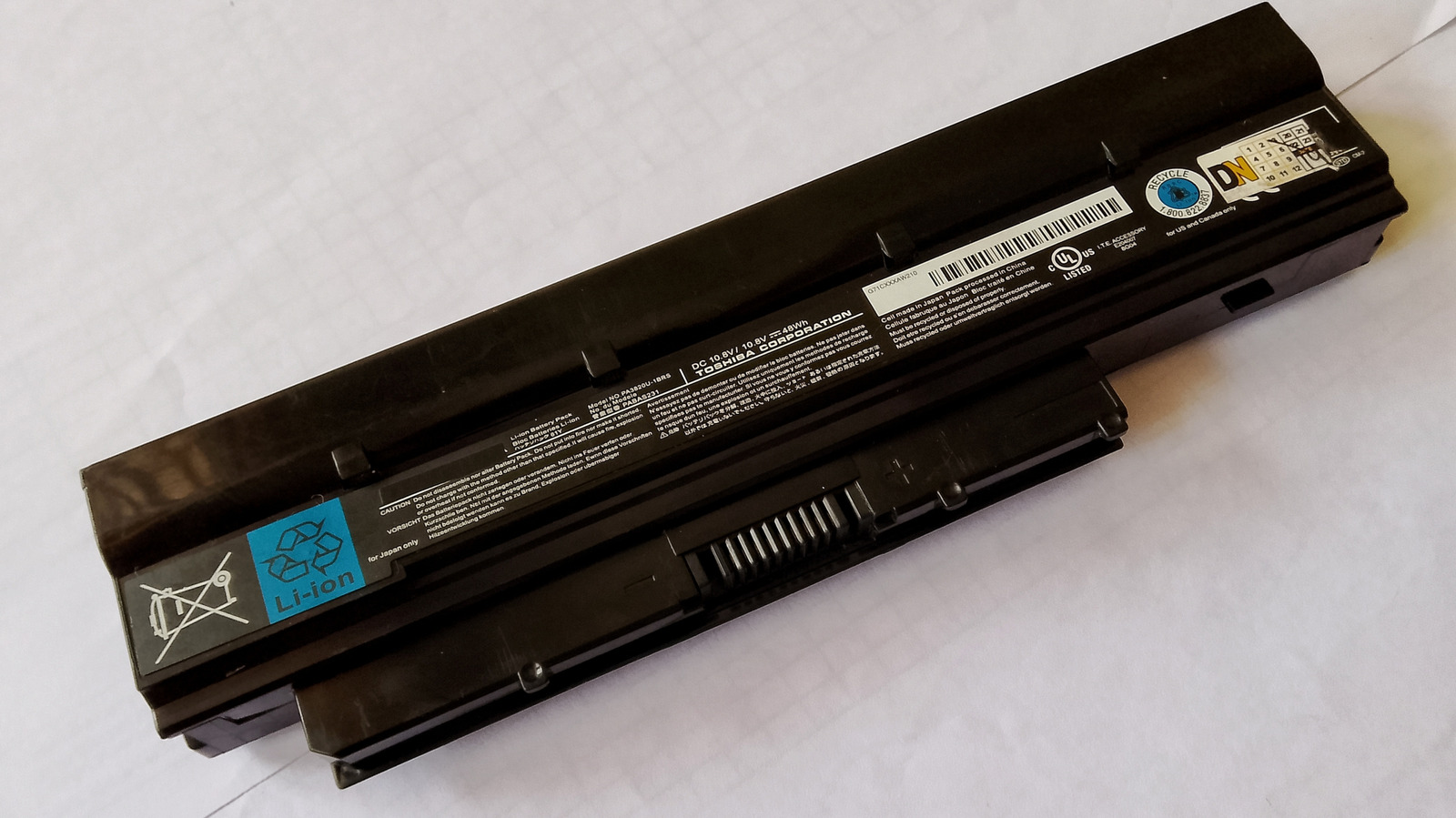
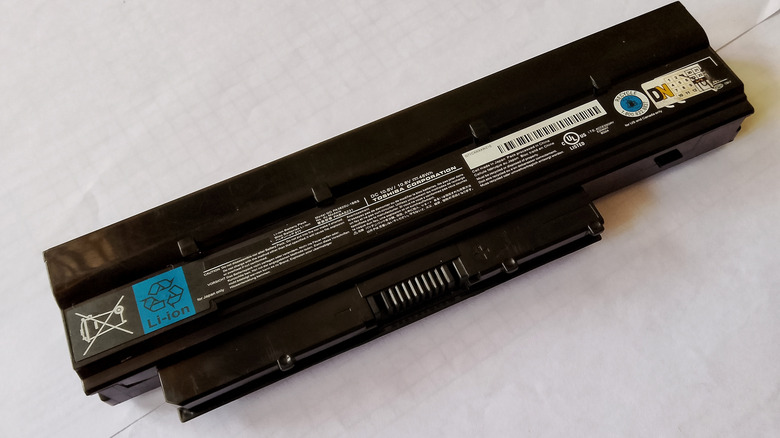
The 4S2P configuration is one that most of us have probably used at some point. It's a configuration commonly used to power our laptops and notebooks. Breaking it down, the "4S" part of the designation tells us that there are four batteries connected serially. Typically, these will be 3.6-volt batteries, and some simple arithmetic gives us a nominal voltage of 14.4 (4 x 3.6). However, while a single bank of such cells would power a laptop, it wouldn't do so for very long. This is where the "2P" comes into the equation; this refers to the fact that two of the "4S" components are wired together in parallel. The result is a battery that still produces a nominal 14.4 volts, but can theoretically last twice as long.
Another commonly seen designation is the 13S range. Applying the same logic, it uses an architecture where thirteen batteries are connected serially. In this instance, the pack is usually designed to produce 48.1 volts (13 x 3.7). These packs are commonly wired in parallel groups of four or five (13S4P or 13S5P) and are generally used to power e-scooters or e-bikes.
Scaling this up, let's look at a couple of EV battery architectures (incidentally, most EVs still need a regular 12-volt battery). Typical examples found in EV vehicles include 12S72P, a configuration common in Rivian vehicles, and incredibly powerful packs like the 192S3P architecture used in the Hummer EV, although the latter is dynamically reconfigured from existing 96S6P packs for higher voltage operation.


