 By Khaleda RahmanShareNewsweek is a Trust Project member
Legal experts have raised concerns about the constitutionality of a new bill that seeks to eliminate dual citizenship for Americans.
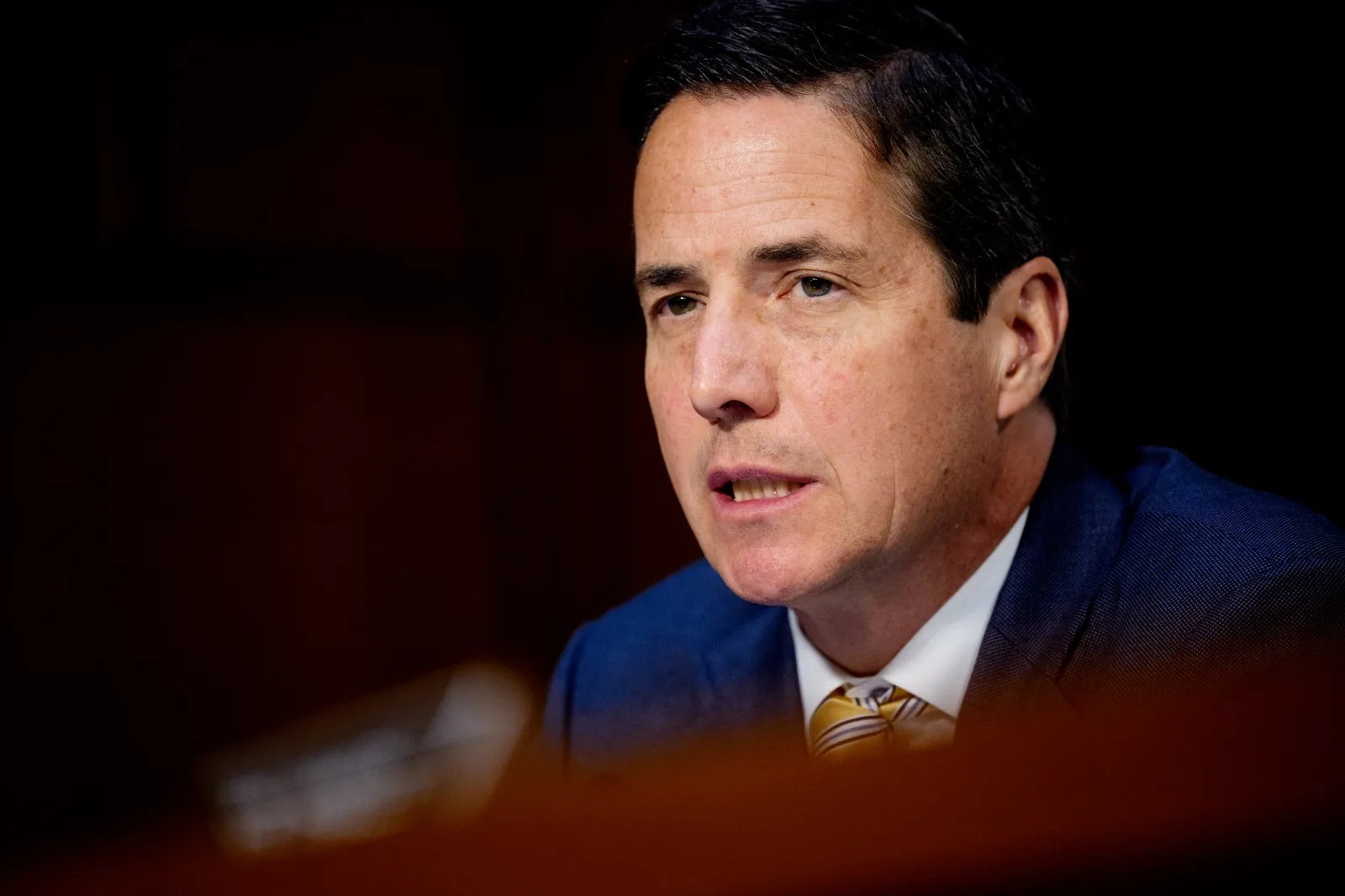
Republican Senator Bernie Moreno of Ohio on Monday introduced the Exclusive Citizenship Act of 2025. According to the bill, it would establish that citizens of the United States "shall owe sole and exclusive allegiance to the United States."
However, experts told Newsweek that the legislation appears to go against landmark rulings from the Supreme Court that hold U.S. citizens cannot be stripped of their citizenship unless they willingly surrender it.
Why It Matters
Moreno’s bill, if enacted, could affect millions of Americans who hold dual citizenship, although it is not known exactly how many dual citizens there are since there is no requirement under U.S. law to declare or register dual citizenship.
Moreno’s bill directly challenges decades of U.S. legal precedent. The U.S. Supreme Court has affirmed that dual citizenship is "a status long recognized in the law."
 ...
...What To Know
According to the text of the bill, it will bar individuals from being a citizen or national of the United States "while simultaneously possessing any foreign citizenship."
It would require U.S. citizens who hold foreign citizenship to, within a year of the bill’s enactment, to submit either a written renunciation of their foreign citizenship to the secretary of state or a written renunciation of their U.S. citizenship to the secretary of homeland security.
It states that anyone who fails to "timely comply" will "be deemed to have voluntarily relinquished United States citizenship." It adds that any U.S. citizen who voluntarily acquires foreign citizenship after the bill’s enactment "shall be deemed to have relinquished United States citizenship."
Legal experts say the proposed legislation conflicts with the Supreme Court’s 1967 decision in Afroyim v. Rusk and its 1980 decision in Vance v. Terrazas.
Peter Spiro, a law professor at Temple University, who has written a book dealing with dual citizenship, told Newsweek that if the bill were enacted, the Supreme Court "would almost certainly strike it down as unconstitutional."
He pointed to the cases where the court "severely limited" the government's power to terminate citizenship unless an individual willingly surrenders it.
In Afroyim v. Rusk, the court held that Congress does not have the power under the Constitution to divest a person of citizenship without voluntary renunciation. In Vance v. Terrazas, the court "held that the government can only terminate an individual's citizenship for a so-called expatriating act (for example, naturalizing in another country) where the individual specifically intends to relinquish citizenship as a result of that conduct," Spiro said.
Polly Price, a law professor at Emory University, told Newsweek: "I don't see how this bill could constitutionally apply to anyone who is already a U.S. citizen, without overruling Afroyim v. Rusk."
She noted that in that decision, the high court "refused to revoke citizenship under § 401(e) of the Nationality Act of 1940, which provided that a United States citizen would ‘lose' his citizenship if he voted in a foreign political election. The Court held that Congress has no power under the Constitution to divest a person of his United States citizenship absent his voluntary renunciation of it."
But she said that the bill could be a way to push the high court to reconsider those precedents.
"Maybe that's the strategy—pass the bill, deny a U.S. passport because of an alleged dual citizenship, then argue in the courts that Afroyim v. Rusk should be overturned," she said.
What People Are Saying
Peter Spiro, a law professor at Temple University, told Newsweek: "This bill is going nowhere. There are too many Americans—both Democrat and Republican—who now have dual citizenship for the status to be outlawed."
He added: "If hypothetically Congress did enact this bill, the Supreme Court would almost certainly strike it down as unconstitutional. In a series of cases in the 1960s and 1970s, the Supreme Court severely limited the government's power to terminate citizenship against an individual's will. This bill would clearly contravene those decisions by mandating termination of US citizenship where an individual maintains another."
Polly Price, a law professor at Emory University, told Newsweek: "If U.S. citizenship can't be revoked because of dual citizenship, I don't see how this bill makes anyone do anything. The U.S. has no authority to revoke citizenship recognized by another country. It might be that Congress could amend the Naturalization Act to require future U.S. citizens to first renounce a foreign citizenship, but I don't see how this bill could constitutionally apply to anyone who is already a U.S. citizen, without overruling Afroyim v. Rusk."
Senator Bernie Moreno said in a statement: "One of the greatest honors of my life was when I became an American citizen at 18, the first opportunity I could do so. It was an honor to pledge an Oath of Allegiance to the United States of America and ONLY to the United States of America! Being an American citizen is an honor and a privilege—and if you want to be an American, it’s all or nothing. It’s time to end dual citizenship for good."
What’s Next
It’s unclear how much support there is in Congress for Moreno’s bill, but Spiro and other experts expect it will face steep hurdles.
But if it were to be enacted, they expect legal challenges would quickly follow.
Request Reprint & LicensingSubmit CorrectionView Editorial & AI Guidelines Add Newsweek as a preferred source on Google to see more of our trusted coverage when you search.
Recommended For You
 U.S.Half of Gen Z Wants Crypto For Christmas3 min read
 For MembersNewsUncommon Knowledge: Will Trump Accounts Pay Off?6 min read
 NewsIRS Issues Update on Trump Accounts3 min read
 NewsMalaysia Relaunches Hunt for Missing MH370 Flight: What To Know3 min read
 NewsTennessee Election Map Shows Huge Voter Shift From Trump to Democrats4 min read
 NewsExclusive: Democrat Targets Trump’s $175B Immigration Funds for Housing7 min read
Related Podcasts
Top Stories
NewsExclusive: Democrat Targets Trump’s $175B Immigration Funds for Housing7 min readFor MembersNewsUncommon Knowledge: Will Trump Accounts Pay Off?6 min read NewsUkraine War Live Updates: Russia Says No ‘Compromise’ Peace Deal Reached2 min read
 PoliticsDemocrat Says Trump Admin’s ‘Absurd’ Actions Will Help ICE Bill Succeed6 min read
 OpinionHas President Trump Ushered in an Era of Peace in the Middle East? Newsweek Contributors Debate6 min read
 U.S.Exclusive: Melania Trump’s Immigration Lawyer Responds to New Citizenship Bill5 min read
Trending
 WeatherList of Schools Closed Tuesday as Snowstorm Hits4 min read
 TennesseeTennessee Special Election: Behn Teases Another Run After Losing to Van Epps2 min read
 Winter StormWinter Storm Warning As 12 Inches of Snow To Hit: ‘Delay All Travel’3 min read
 ViralCat Arrives at Vet for Neuter, Staff Not Ready for What’s in the Carrier3 min read
 CitizenshipCitizenship Requirements to Change For Millions of Americans Under New Bill4 min read
Opinion
 OpinionLebanon 2.0—Shepherding the Path to Peace | Opinion4 min read
 OpinionThe Cost of Detaining Immigrants Working Legally | Opinion5 min read
 OpinionProsecuting Congress for Stating the Law: An Impeachable Offense | Opinion4 min read
 For MembersOpinionConventional Wisdom: Trump Pardons Former Honduran President3 min read
 OpinionRand Paul: My Proposal Will Improve Health Care and Lower Costs | Opinion4 min read