- Lifestyle
- Health & Families
Sarcopenia is a disease that affects your muscle mass and strength, and is common amongst older people.
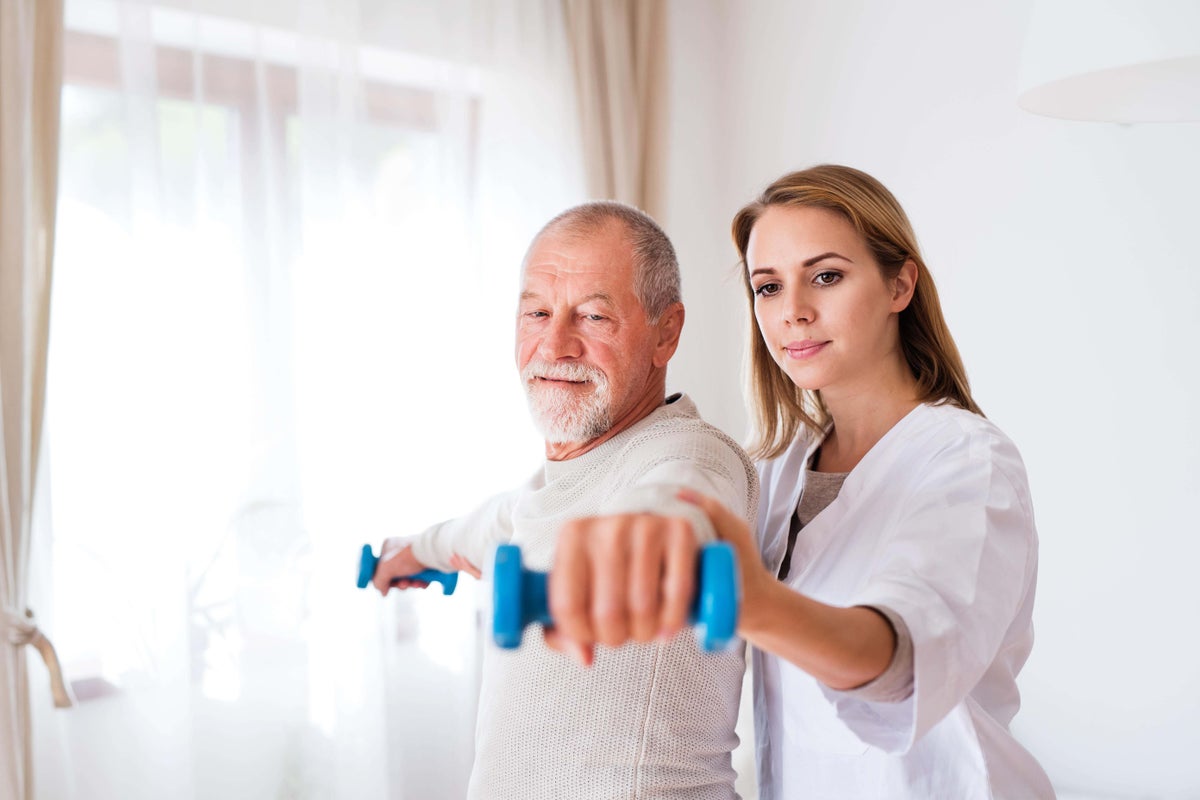
Camilla FosterWednesday 03 December 2025 14:02 GMT open image in galleryBeing strong helps increase your quality of life (Alamy/PA) (Alamy/PA)
Sign up to our free Living Well email for advice on living a happier, healthier and longer life
Live your life healthier and happier with our free weekly Living Well newsletter
Live your life healthier and happier with our free weekly Living Well newsletter
Email*SIGN UPI would like to be emailed about offers, events and updates from The Independent. Read our Privacy notice
As we age, many people notice small changes that make them feel a little weaker or slower – but they often don’t realise the cause is sarcopenia.
We spoke to Lucy Macdonald, physiotherapist based in Surrey at Restart Physio, who explained exactly what sarcopenia is and shared some tips on how to stay strong later in life.
What is sarcopenia?
“Age-related sarcopenia is the process by which muscles get weaker as you get older,” explains Macdonald.
This condition is caused by a combination of factors, including the natural ageing process, physical inactivity and changes to hormonal levels.
“There are some factors, like hormonal changes, that people can’t do anything about. For example, decreasing levels of testosterone in men and women as they get older can be a factor,” says Macdonald. “However, we are in control of our activity levels.
“A lot of people will reduce their activity levels, in part just because of general lifestyle but also sometimes because of fear of injury, and actually these things can significantly contribute to muscle wasting as well.”
She highlights that she usually sees sarcopenia in patients who are in two particular phases of life.
“The first one would be people in their late 40s because around that age people’s lives tend to be very busy,” says Macdonald. “They’ve got busy careers and often have caring responsibilities for kids and older relatives. So, in terms of the amount of time they have to stay active, that’s quite a sort of crunch point.
“Then sarcopenia is also very prevalent in the early 60s age range. At this age, people are thinking of retiring which is another turning point as some people will have a really active retirement and some will do considerably less.”
What are some symptoms that might suggest you have sarcopenia?
“Finding it difficult to get out of a chair or to go up and down stairs easily are two key indicators,” says Macdonald. “If you start to notice that you’re struggling a bit to get that power to do these things without using your upper body, I would seek professional advice about this.”
How can sarcopenia impact your daily life?
“Day-to-day things like carrying your shopping or playing with the grandkids might become difficult,” says Macdonald. “So many things involve physical activity and if you haven’t got the muscle strength to do it you’re going to start to enjoy these activities less.
“It could also become painful to do things. Sarcopenia is considered to be a significant contributing factor to joint pain which can really affect people’s quality of life.”
Can you slow down the progression of sarcopenia or prevent it?
“The best thing to do to slow down the progression of sarcopenia or to prevent it is strength work,” says Macdonald. “A physio can give you specific exercises to strengthen your muscles in relation to the things that you want to be able to achieve.
“For example, if you wanted to be able to take your grandchildren to the park, then a physio can help you strengthen the muscles that are involved in that.”
What are your top tips for building and maintaining muscle later in life?
Try sit and stand exercises
“When you’ve just got out of bed in the morning, try sitting on the edge of your bed and standing up and sitting down again in a controlled way, and repeat that 30 times,” says Macdonald. “Sit to stand is basically a squat and you can progress by adding a bit of weight to this exercise or try doing it on a lower surface, such as a sofa.”
Wall press ups
“Lean as much of your body weight as you can against your hands on a wall, and then just gently bend and straighten your elbows,” recommends Macdonald.
Introduce weights under the guidance of a professional
“Slowly introduce some lifting exercises under the guidance of either a physio or a personal trainer,” recommends Macdonald. “They will help you learn a bit more about your own body and how important strength is, and will also provide some encouragement.”
Increase the weight gradually
“If you suddenly launch into doing weights, you will probably get injured,” warns Macdonald. “By overloading them, you’ll get tears in the muscle which can be very painful and you’ll end up weaker, rather than stronger. So, you want to start low and increase the weight gradually.”
Join a group
“There’s lots of groups out there where you can go and do resistance training and use weights in a group setting,” says Macdonald. “The advantage of doing exercise in a group is that you’re more likely to stick to it.”
Don’t be afraid
“Try to not let fear get in the way of getting strong,” advises Macdonald. “Although fear of injury is very normal, fear often ends up increasing the likelihood of getting injured because if you don’t use it, you lose it.”
Remember that losing strength isn’t inevitable
“Just because it’s harder to be strong as we get older doesn’t mean that it’s not possible,” says Macdonald. “I’ve seen some incredibly strong older people, so there’s full potential to be strong later in life. You have control over it, so getting weaker and weaker as you age is not an inevitable thing.”