- News
- Health
Exclusive: Staff have been left disabled, with severe asthma and forced out of their jobs as the NHS and UK regulators fail to protect thousands from a toxic cancer-linked chemical
 Wednesday 03 December 2025 14:41 GMTComments
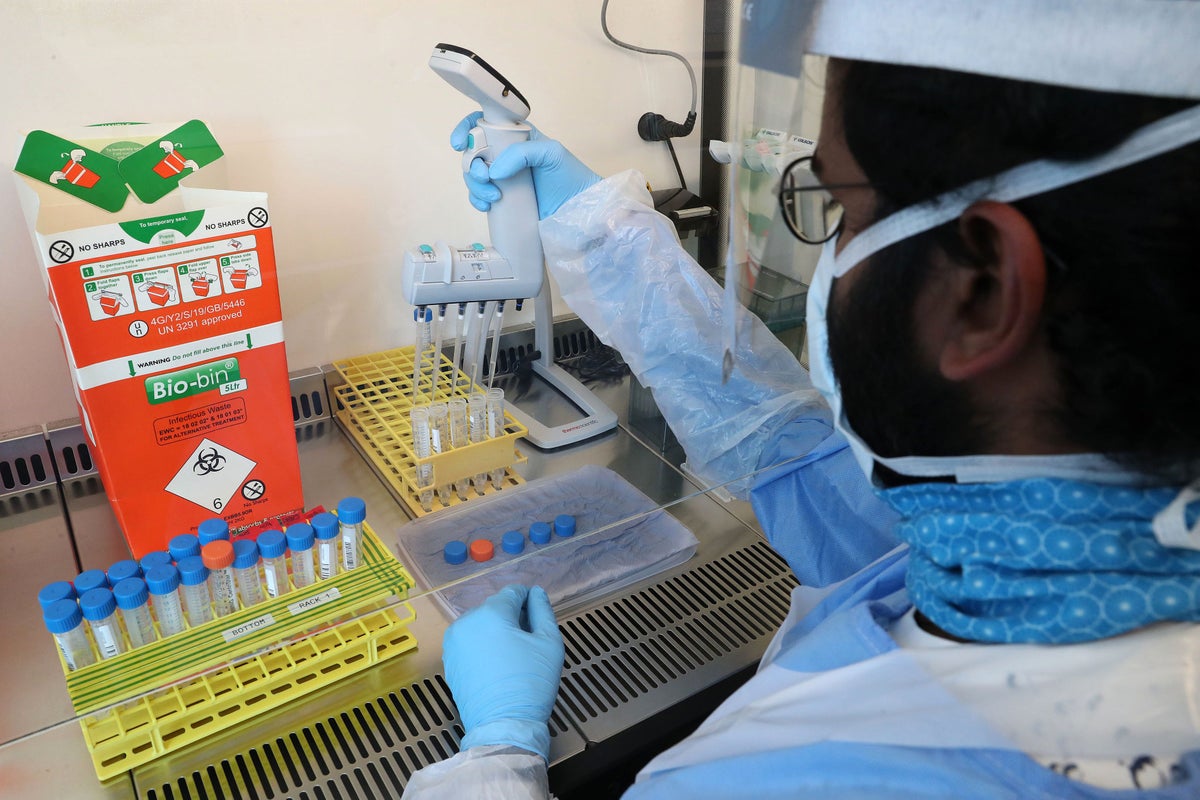
 open image in galleryNHS staff have been left disabled and with severe asthma as a result of the toxic chemical (POOL/AFP via Getty Images)
Sign up for our free Health Check email to receive exclusive analysis on the week in health
Get our free Health Check email
Get our free Health Check email
Email*SIGN UPI would like to be emailed about offers, events and updates from The Independent. Read our Privacy notice
For Robert Mifflin, it started with sore eyes and a runny nose. Soon, he was experiencing vomiting and nosebleeds. Eventually, after three years, he had developed such severe problems with his breathing that he was unable to work.
As head of mortuary services at Oxford University, Mr Mifflin, 57, had spent years being exposed to formaldehyde - a cancer-causing chemical which experts have likened to asbestos - while carrying out autopsies for the medical school laboratory.
Now retired, he is left having to use a walking frame and believes the near-daily exposure to the chemical has “completely wrecked” his life.
“We used to be in a motorcycle club. I had to stop that because I couldn’t breathe while riding. It's just ridiculous. We used to do a lot of walking. I can't do that. We take the dog out, but I now have, like, a Zimmer frame with a seat on it, so I can sit down every so often. So, yeah, it's changed a lot. You know, it's difficult.”
Mr Mifflin is one of several former NHS and laboratory workers who have spoken to The Independent and Channel 4 News as part of a probe into concerns that staff are being exposed to unacceptably high levels of formaldehyde, which is putting their health at risk.
As part of the joint investigation, we have spoken to staff who have been forced to quit their jobs over ill-health after being regularly exposed to levels of formaldehyde deemed unsafe by UK and EU regulators.
Experts have warned that regulators and NHS trusts are failing to protect thousands of staff working in labs where formaldehyde will be used every day.
However, the issue spans far wider, with the chemical used across multiple industries - including by funeral directors and embalmers, vets and university students. Despite the risks, the UK has refused to reduce exposure thresholds to match EU levels in the aftermath of Brexit.
‘The next asbestos’
Formaldehyde, called formalin in its liquid solution form, can be used to produce resins and adhesives, to preserve cosmetics, and as a disinfectant and fumigant. It can also be used by laboratories to store human tissue samples.
The chemical has been classified as cancer-causing in humans by the International Agency for Research on Cancer (IARC), and multiple research papers have linked it to nasal tumours and leukaemia in industrial workers when exposed over long periods of time. Studies have also linked formaldehyde exposure to damage to the respiratory, female reproductive and nervous systems.
.png) open image in galleryRobert Mifflin was forced to leave his job after developing acute respiratory symptoms (Channel 4 News)
open image in galleryRobert Mifflin was forced to leave his job after developing acute respiratory symptoms (Channel 4 News)The current UK legal limit for workplace exposure to formaldehyde is set by the Health and Safety Executive (HSE) at 2 parts per million (ppm) over eight hours, which is seven times higher than the EU limit of 0.3ppm and the highest defined limit in the world.
The UK’s threshold also exceeds the level deemed safe in the US. Just last year, the US Environmental Protection Agency ruled that formaldehyde presents an “unreasonable risk of injury to human health” after doing a risk evaluation.
Pathologists, Dr Richard Yates and Dr Magdalena Plesa, have been trying to raise the issue with regulators with the HSE, after their research revealed last year, that 70 per cent of 117 NHS pathology departments in England, had exceeded EU safety levels regularly over 12 months, and 34 per cent were even exceeding the UK’s levels.
Before Brexit, the HSE had been planning to bring UK levels into line with the EU, and in 2019, parliament was told by the regulator that there were plans to revise the limit.
But in a letter to Dr Yates’ MP Munira Wilson, in July, the HSE has said: “When Great Britain was part of the EU, HSE participated in the EU regime for setting workplace exposure limits (WELs). As we are no longer part of the EU regime, HSE has moved to a blended approach to controlling exposures, such as communicating what proportionate control measures it expects rather than solely introducing a WEL, as directed by evidence.”
Speaking to The Independent, he said: “People have been saying over the last 25 or 30 years that formaldehyde is the next asbestos, so it's not really a new position, and I think that we need to take it as seriously.
“Clearly, there's a bit of cognitive dissonance that's being applied in the situation at the moment where you have a huge amount of regulation of asbestos as a carcinogen in the work environment, and very little regulation of formaldehyde as a carcinogen in the work environment, and that's what needs to be addressed.”
Despite the known risks, just 54 per cent per cent of NHS labs were monitoring formaldehyde levels more than once a month, according to Dr Yates’ data.
‘We believed it was safe’
A recent report by the clinical negligence body NHS Resolution revealed it had received 371 claims from NHS staff over exposure to harmful chemicals, including formaldehyde, between April 2013 and March 2023. It could not provide a breakdown of claims specifically related to formaldehyde.
NHS staff and university laboratory staff have described to The Independent and Channel 4 News how they have worked in a dilapidated lab environment, without adequate ventilation, while tubs of chemicals such as formaldehyde were left exposed and open.
Mr Mifflin was left with such acute respiratory conditions that he was forced to retire early, and now much of his days are spent at home struggling with everyday tasks.
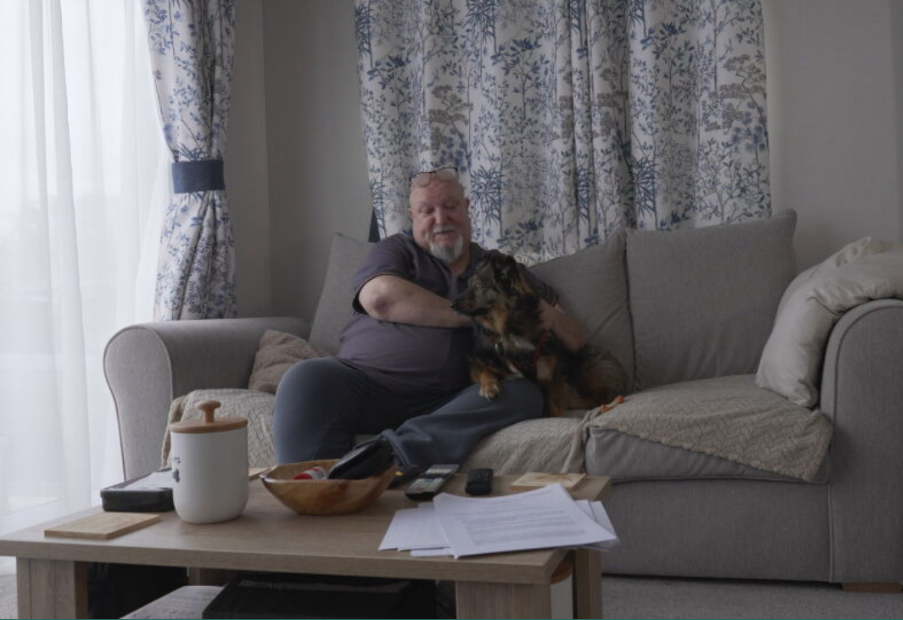 open image in galleryRobert Mifflin has to use a zimmer frame every time he walks his dog due to his lung conditions (Channel 4 News)
He said: “First of all, it was just eyes and nose irritation and then gradually, over time, I had sores in my nostrils, as well as vomiting, nosebleeds and constant problems with my breathing.
“But it got to the point where I was so lethargic, I was struggling to get up to go to work, and I just felt constantly ill - and I hadn't a clue why. I kept apologising to my line manager, saying ‘I'm not going to be able to come in again’ - but she was great about it. But we didn't know what it was,” he said.
Mr Mifflin claims he and his colleagues believed the work environment was safe: “Well, we believed it, really. When I think back now, I can't believe it.”
He said he was exposed to formalin within a lab that did not have adequate ventilation. He also alleged that the university failed to tell staff the ventilation system had not been working for a month.
Mr Mifflin, who was represented by law firm Irwin Mitchell, was awarded a £200,000 settlement this year after the university accepted it breached its duty of care in relation to exposing Mr Mifflin to formaldehyde during his employment.
A University of Oxford spokesperson said: “We cannot comment on individuals but we constantly strive to ensure that our facilities comply with current health and safety requirements and that all staff are trained to use equipment and facilities safely.”
.png) open image in galleryLaboratories should use machines called downdraft benches to store tissue samples kept in formaldehyde (Channel 4 News)
open image in galleryLaboratories should use machines called downdraft benches to store tissue samples kept in formaldehyde (Channel 4 News)Elsewhere in Scotland, Sally*, a biomedical scientist for NHS Lanarkshire recalled the “stink” of formaldehyde as she walked into the hospital's lab daily until she was forced into retirement at 60, after developing severe asthma.
Sally, who has asked to remain anonymous, began working at the health board in 1984 and described being surrounded by jars of formalin throughout her career.
She said, “We were making up the jars of the formalin solution, and the place would absolutely stink. It's only really after my experiences that I realised that they didn’t take enough care. We didn’t have any respiratory PPE - just some gloves and an apron if you were lucky.”
She said the jars of human tissue samples should be stored on equipment which draws the fumes down, called downdraft benches. However, in her lab, she described samples that were left open and lined up in jars, trollies, or big buckets.
In 2023, Sally was diagnosed with occupational asthma linked to formalin exposure by doctors.
Nine years later, after further exposure to harsh cleaning chemicals during the Covid pandemic, she received a settlement last year from the trust after she had retired due to ill health.
Sally was represented by the law firm Thompsons Solicitors Scotland, which also reported a settlement for another worker, who was a lab assistant at the same health board. This woman received a settlement of £90,000 after she was exposed to “significant amounts of formalin”.
An NHS Lanarkshire spokesperson said: “While we cannot comment on individual cases, scheduled monitoring has consistently shown formaldehyde levels below workplace limits. We have reviewed safety systems, and a 2024 Health and Safety Executive inspection found no issues. Ongoing monitoring will continue to ensure staff are not at risk from chemical exposure.”
Meanwhile, a pregnant NHS lab worker in London claims she was fobbed off by managers when she attempted to find out the risks of formaldehyde to her unborn baby. She said she asked for Personal Protective Equipment but was refused and was told to “get on with it”.
The Department for Health and Social Care said: “NHS trusts are responsible for ensuring safe working environments for all staff, and where concerns are raised, we expect the Health and Safety Executive to take swift action.
“This government inherited a crumbling NHS estate which had been starved of investment but is turning this around through a record £30 billion for day-to-day maintenance and repairs - with over £5 billion allocated specifically to address the most critical cases.”
A HSE spokesperson said employers have a “legal duty to assess risks from hazardous substances and implement adequate control measures”.
They added: “As formaldehyde is a carcinogen, exposure must be reduced to as low a level as is reasonably practicable (ALARP).
"As the legal requirement is already to reduce exposure to the lowest reasonably practicable level, there would be no health risk benefit to be gained by lowering the current workplace exposure limit.
"We are aware of the research concerning formaldehyde exposure in NHS pathology departments and have met with the researchers to discuss their findings.”
More about
HospitalsAsbestosNHSHealth and Safety ExecutiveJoin our commenting forum
Join thought-provoking conversations, follow other Independent readers and see their replies
Comments