- Climate
- News
Regional experts warn that without rapid cuts in fossil-fuel emissions and serious investment in resilience – from restoring forests to enforcing planning rules – disasters like this year’s may become regular rather than rare, Stuti Mishra reports
Wednesday 03 December 2025 12:10 GMTComments
 CloseAerials show scale of flooding in Indonesia as national disaster try to reach affected areas
Sign up to the Independent Climate email for the latest advice on saving the planet
Get our free Climate email
Get our free Climate email
Email*SIGN UPI would like to be emailed about offers, events and updates from The Independent. Read our Privacy notice
More than 1,300 people have been killed in cyclonic storms and floods that devastated several countries in Southeast Asia last month, disasters that experts say are a result of extreme weather magnified by human greed.
More than 750 people died in Indonesia, 400 in Sri Lanka, and 200 in Thailand, with three deaths confirmed in Malaysia, according to officials. More than 800 people are still unaccounted for. Millions have been affected, with villages cut off for days after roads, bridges and power lines were swept away, forcing tens of thousands into emergency shelters.
What felt unprecedented was exactly what climate scientists expect: A new normal of punishing storms, floods and devastation.
Three cyclonic storms hit the region in quick succession: Typhoon Koto (also known as Verbena), which formed on 23 November and moved from the Philippines towards Vietnam; Cyclone Senyar, a rare storm that spun up in the narrow Strait of Malacca and lashed Indonesia, Malaysia, and southern Thailand; and Tropical Cyclone Ditwah, which crossed Sri Lanka before skirting India’s south-east coast.
Mahesh Palawat, a meteorologist with Delhi-based private forecaster Skymet, says the seas around the region were unusually warm and primed for “cyclogenesis”, or the birth and rapid strengthening of storms.
“The southern part of the Bay of Bengal is conducive for cyclogenesis. Temperatures are warmer than normal, say, 29 to 30C,” he says, noting that sea-surface temperatures above about 28C give cyclones extra fuel. Warmer ocean temperatures provide more energy for storms, making them stronger and wetter, while rising sea levels amplify storm surges.
Normally, there is a gap of “15 to 20 days” between tropical storms in this basin as each system uses up energy from the ocean and atmosphere. “The gap of these cycles was very less. We have not seen such frequent effects,” he says.
“What we are seeing now in Aceh – entire villages submerged, families displaced, bodies being pulled from rivers and mud – is not just the result of extreme weather. It is a disaster magnified by greed,” says Farwiza Farhan, chairperson of Forest, Nature & Environment Aceh (HAkA).
“For decades, illegal logging and unauthorised land-clearing inside the Leuser Ecosystem has stripped the hills of their natural sponge. When cyclone-driven downpours came, there was nothing left to absorb the water, so the floods turned into a lethal wave that laid to waste communities downstream.”
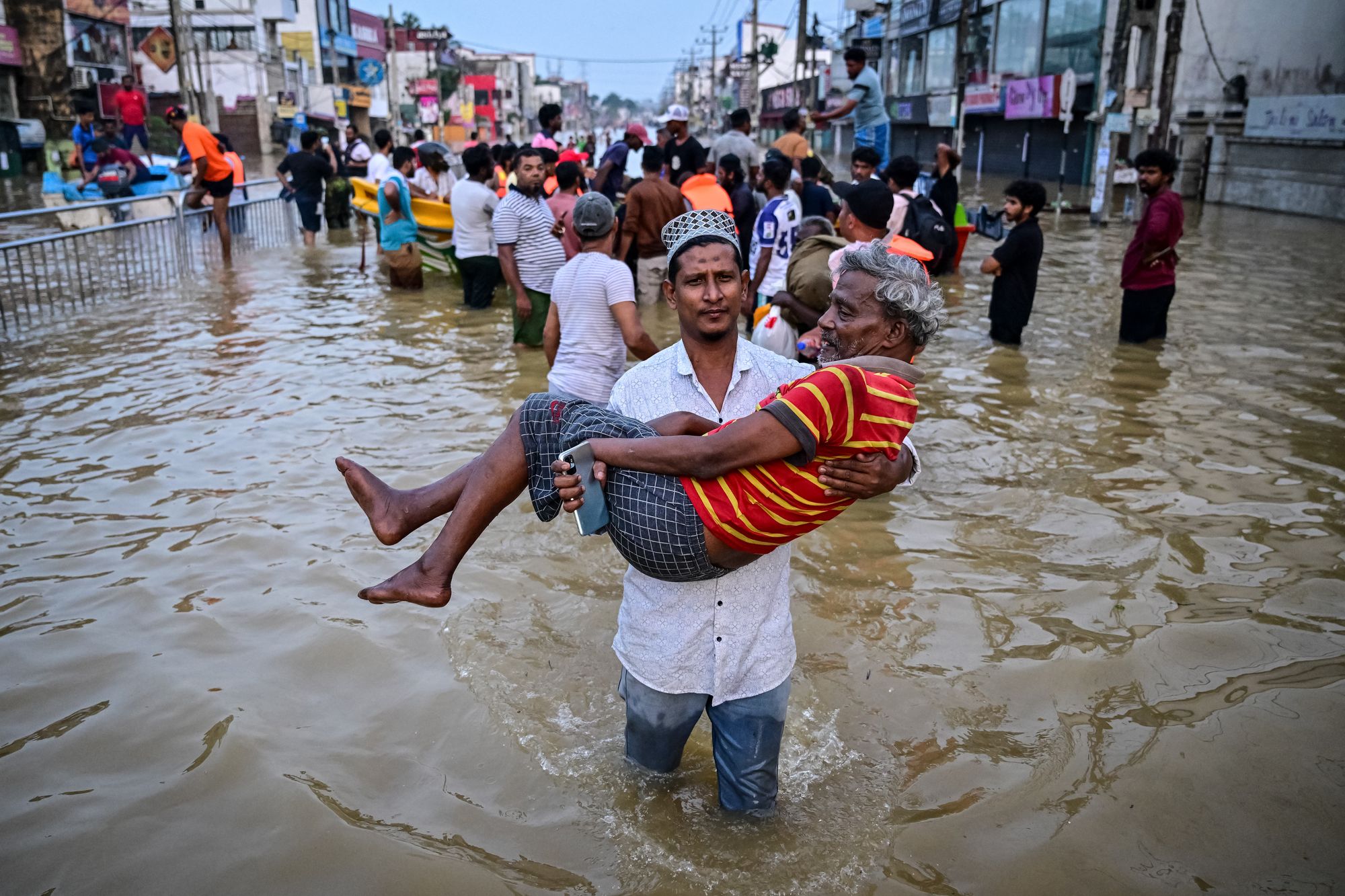 open image in galleryA youth carries an elderly man as they wade through a flooded street after heavy rainfall in Wellampitiya on the outskirts of Colombo on November 30, 2025 (AFP via Getty Images)
In Indonesia, relentless rain hammered Sumatra on 26 November, triggering floods and landslides that submerged towns, uprooted homes and washed away roads. The country’s disaster agency says nearly 300,000 people have been displaced in North Sumatra, West Sumatra and Aceh, with helicopters and boats battling rough conditions to reach isolated communities.
Satellite images and videos from Aceh show entire valleys choked with mud, boulders and felled trees. Activists say that is not just the work of nature.
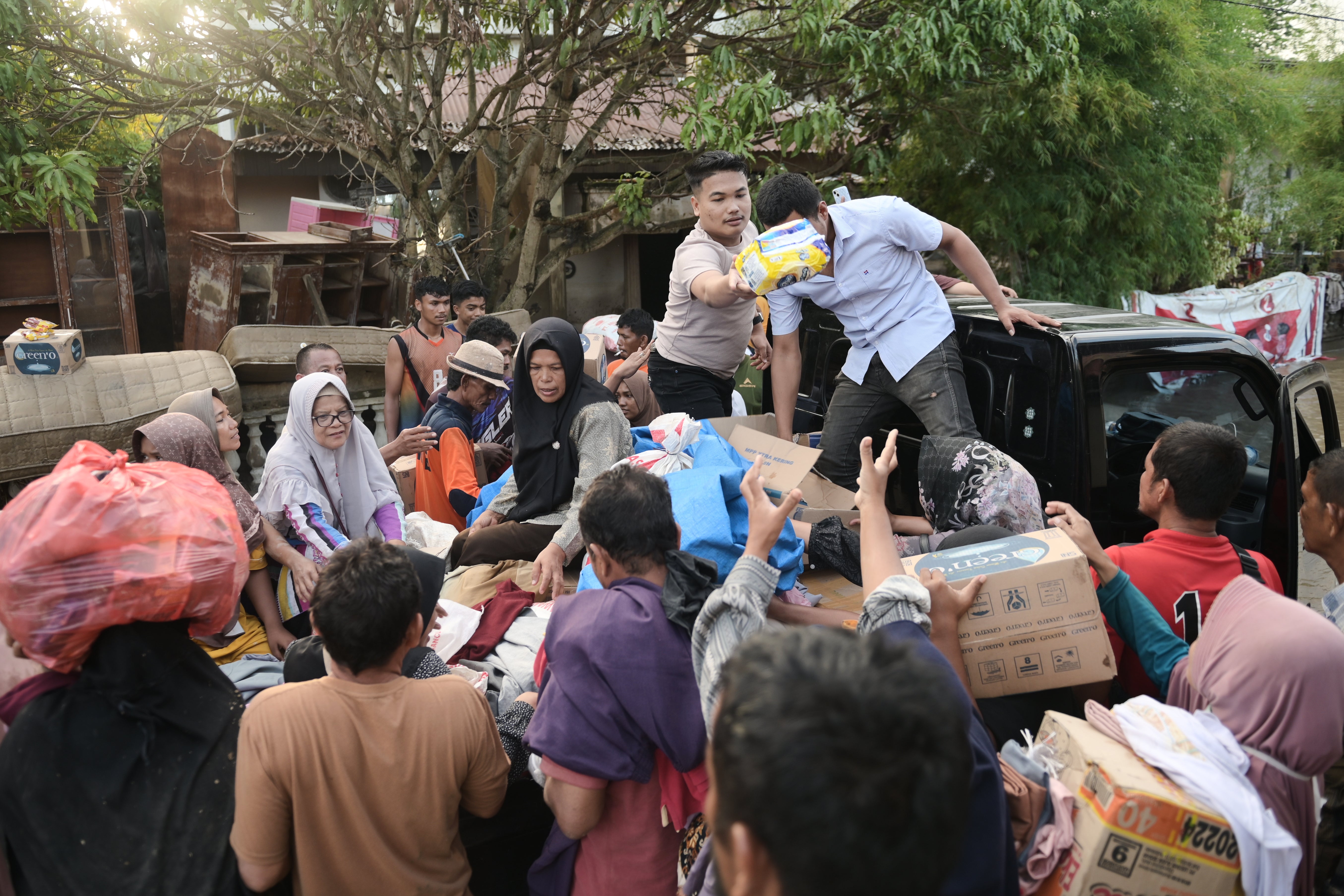 open image in galleryVolunteers distribute relief goods to survivors at a village affected by flash flood in Pidie Jaya, Aceh province, Indonesia (AP)
Across the region, analysts say the scale of damage reflects a pattern of “compound disasters”. It is a pattern in which not just one storm, but multiple hazards hit the same vulnerable areas in quick succession.
Matt Sechovsky, head of ESG country risk at research firm BMI, says the impact was driven by the concentration of natural climate phenomena exacerbated by climate change and human activity, from unregulated housing on floodplains to deforestation and poorly planned infrastructure.
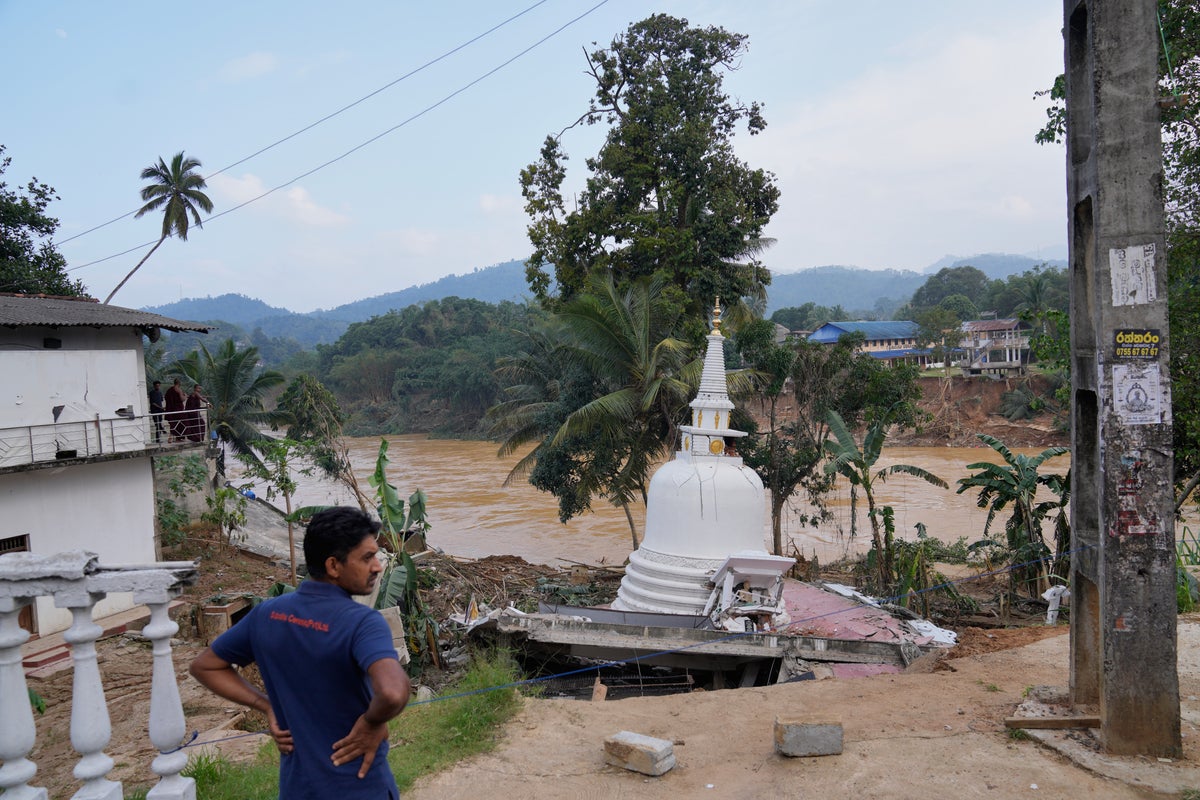
Sri Lanka has been particularly hard hit by Cyclone Ditwah. The storm brought torrents of rain that triggered landslides in the central highlands and flooding across much of the island. The Disaster Management Centre says about a third of the country has lost access to electricity or running water at some point during the crisis, with more than 80,000 people displaced and almost 120,000 sent to state-run shelters.
President Anura Kumara Dissanayake declared a state of emergency at the weekend, calling the floods “the largest and most challenging natural disaster in our history” while appealing for international aid.
On the ground, activists say the true human toll is still not fully known.
“I know that we have reported like, 400 toll, but there are still bodies under, under soil,” says climate and political activist Melani Gunathilaka, speaking from Sri Lanka’s hill country. She says telecommunications and power lines collapsed quickly, leaving some communities unable to call for help or withdraw money, while local shops were now running out of food.
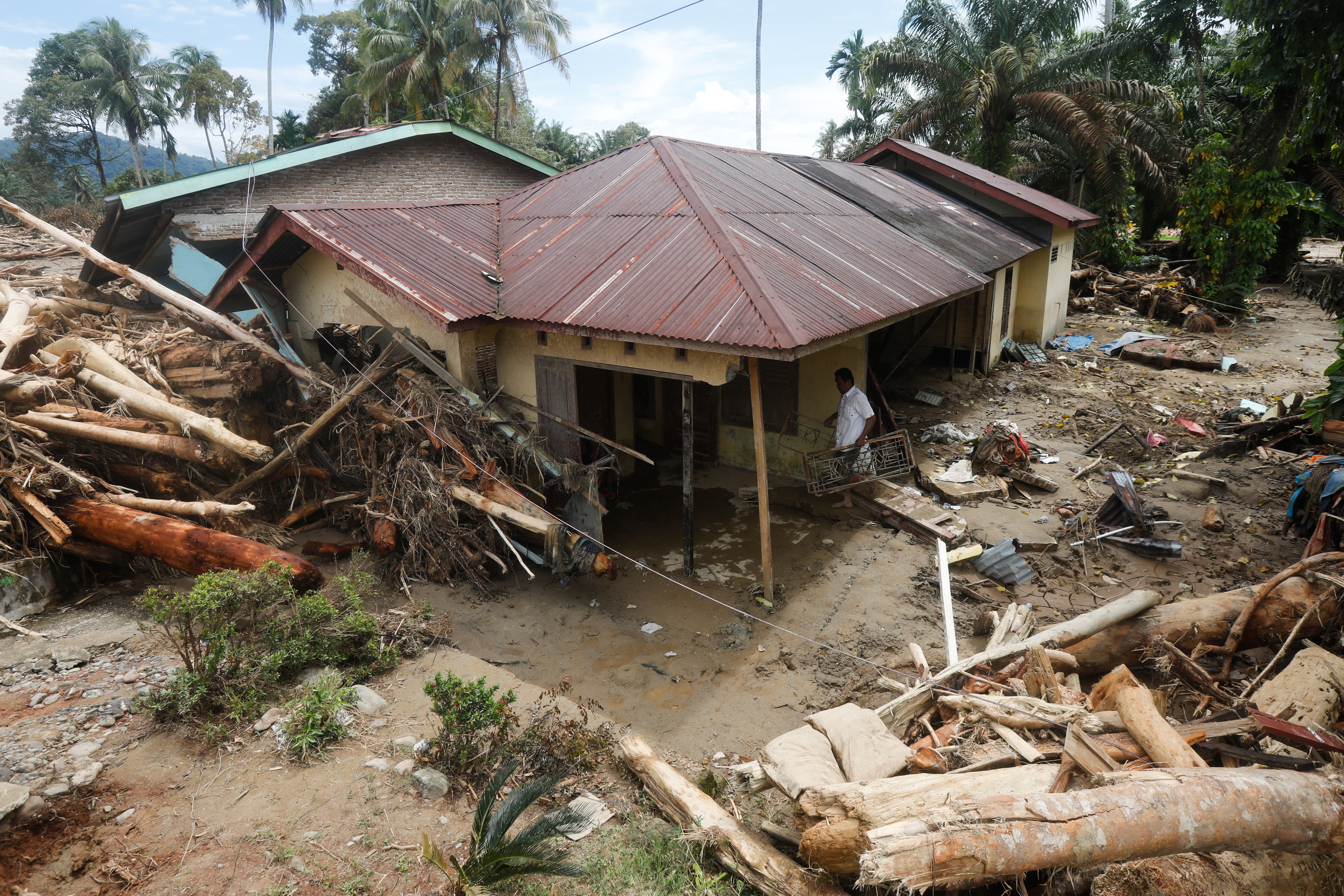 open image in galleryA man cleans his house at a village affected by flood in Batang Toru, North Sumatra, Indonesia (AP)
Gunathilaka says decades of deforestation in the central highlands and large development projects that ignored the island’s steep terrain have made landslides far more dangerous, particularly for tea-estate workers living in fragile housing on unstable slopes.
“The problem is like, what happened this time impacted not only the hill country, not only the floodplains, but all across the whole island. And I think the main thing is that we were not prepared. We were not ready for a disaster at this magnitude,” she says.
Scientists say the physical drivers behind this year’s catastrophe are well understood. A warmer atmosphere can hold more moisture – roughly 7 per cent more water vapour for every degree Celsius of warming. Which means when it rains, it can pour much harder. Hotter oceans, meanwhile, load tropical cyclones with extra energy.
Regional experts warn that without rapid cuts in fossil-fuel emissions and serious investment in resilience – from restoring forests and wetlands to enforcing planning rules and strengthening early-warning systems – disasters like this year’s may become regular rather than rare.
More about
IndonesiaSri LankaThailandfloodsMalaysiaJoin our commenting forum
Join thought-provoking conversations, follow other Independent readers and see their replies
Comments