
- News
- Health
The study suggests that men may even more susceptible to these experiences than women
Jane KirbyWednesday 03 December 2025 12:41 GMT
 CloseThis Morning's Sian Welby opens up on parenting 'guilt'
Sign up for our free Health Check email to receive exclusive analysis on the week in health
Get our free Health Check email
Get our free Health Check email
Email*SIGN UPI would like to be emailed about offers, events and updates from The Independent. Read our Privacy notice
Intrusive thoughts and experiences mirroring psychosis are significantly more prevalent among new parents than previously understood, according to groundbreaking new research.
Experts have revealed that individuals navigating the early stages of parenthood frequently grapple with high levels of unwanted and distressing ideas and images. Intriguingly, the study suggests that men may even be more susceptible to these challenging experiences than women.
These findings, published in the Community Mental Health Journal, come from a University of East Anglia (UEA) study.
The research involved 349 parents who had welcomed a baby within the last year, recruited through various parenting platforms including Mumsnet, Netmums, and Dads Matter UK, alongside social media sites such as Facebook and X (formerly Twitter). Participants completed an anonymous online survey.
Researchers found that 96 per cent of people reported experiencing at least one intrusive thought – for example unwanted, distressing ideas or images.
Some 89 per cent reported at least one psychotic-like experience, such as temporary paranoia or unusual perceptions.
Almost 31 per cent of those surveyed were considered “at-risk” for developing psychosis based on the symptoms they listed.
Lead researcher Dr Jo Hodgekins, from UEA’s Norwich Medical School, said: “The perinatal period is a time of huge change for parents, and previous research has shown that more than one in five mothers experience mental health challenges during this time.
“Challenges like sleep deprivation, stress, and hormonal changes can all take a toll on the mental health of new parents.
“Most research to date has focused on depression and anxiety because they’re so common.
“But we wanted to look beyond that and explore the wider range of mental health experiences parents face.”
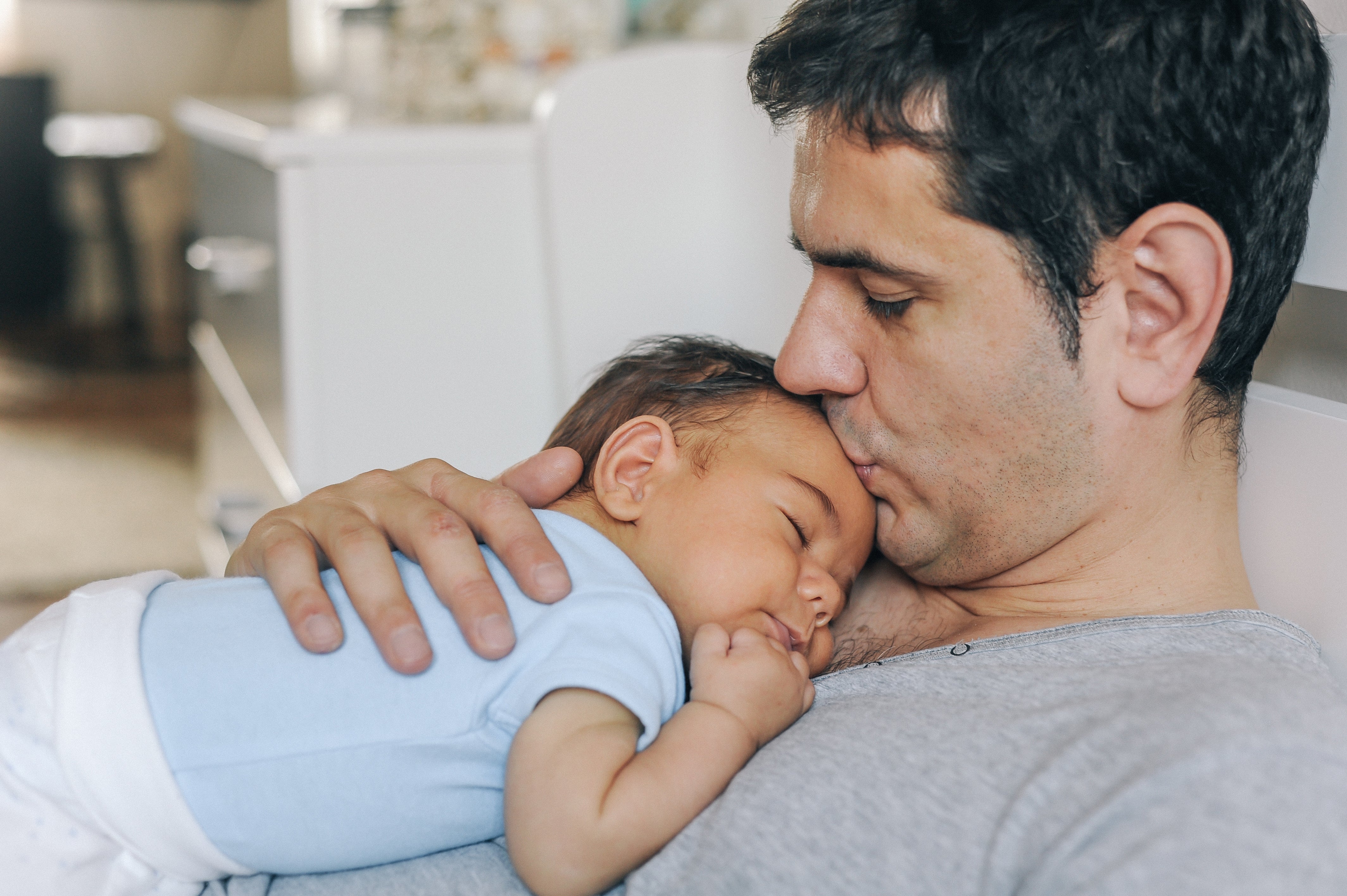 open image in galleryMen in the study reported more intrusive thoughts, greater parenting stress, and higher levels of depression and anxiety than new mothers (Getty Images)
Men in the study reported more intrusive thoughts, greater parenting stress, and higher levels of depression and anxiety than new mothers.
“Male parents may experience these symptoms due to sleep deprivation, heightened stress, and the psychological adjustment to new responsibilities and identity as a father,” said Dr Hodgekins.
“But this result might be skewed by the fact that the vast majority of the participants, around 90 per cent, were female.
“It would certainly be interesting to focus on recruiting more male participants in future research.”
The study highlighted how experiencing symptoms was strongly linked to lower parenting confidence, higher stress, and increased depression and anxiety.
Dr Hodgekins said: “We found that psychotic-like experiences and intrusive thoughts are common among new parents.
“For a significant minority, these experiences cause severe distress, which is linked to higher parenting stress and lower perceived competence and satisfaction.
“Our work highlights the need to normalise some of these experiences for new parents, reducing stigma and raising awareness so that conversations can be opened up about them.
“Intrusive thoughts and psychotic-like experiences don’t always mean there’s a clinical disorder, but they’re common and can seriously affect parenting, so they deserve attention.
“However, we also need to go beyond normalisation, by providing tailored and targeted support for those who find such experiences distressing, to improve mental health and parenting outcomes.”
Dr Claire Wilson, psychiatry specialist registrar at King’s College London, said: “The mental health of parents is critical to building healthy and resilient families.
“Intrusive thoughts and psychotic-like experiences are common and their true frequency among new parents is difficult to ascertain from this study due to the way in which parents were recruited to participate, which may have over-estimated their frequency.
 open image in gallerySome 89 per cent reported at least one psychotic-like experience, such as temporary paranoia or unusual perceptions (Getty/iStock)
“What is significant is that so many parents found these symptoms distressing and the negative impact that it had on their perceived abilities as a parent.
“This is because distress and impairment in functioning are some of the criteria for a mental illness, which requires prompt identification and treatment in order to mitigate the potentially devastating impact that it can have on families.
“The study reminds those of us who support all new and expectant parents of the importance of using every opportunity to ask about these experiences.”
In the research paper, the authors said factors such as sleep deprivation, stress and hormonal changes can impact upon mental health after having a baby.
They added that intrusive thoughts usually peak in the first few weeks following birth and can be related to infant safety.
These can include “distressing thoughts of harm to the infant, whether intentionally or accidentally”, they said.
“Many mothers are reluctant to disclose intrusive thoughts due to feelings of shame, although there is no evidence the presence of intrusive thoughts of infant-related harm is linked to increased risk of infant harm.”

