- Asia
- India
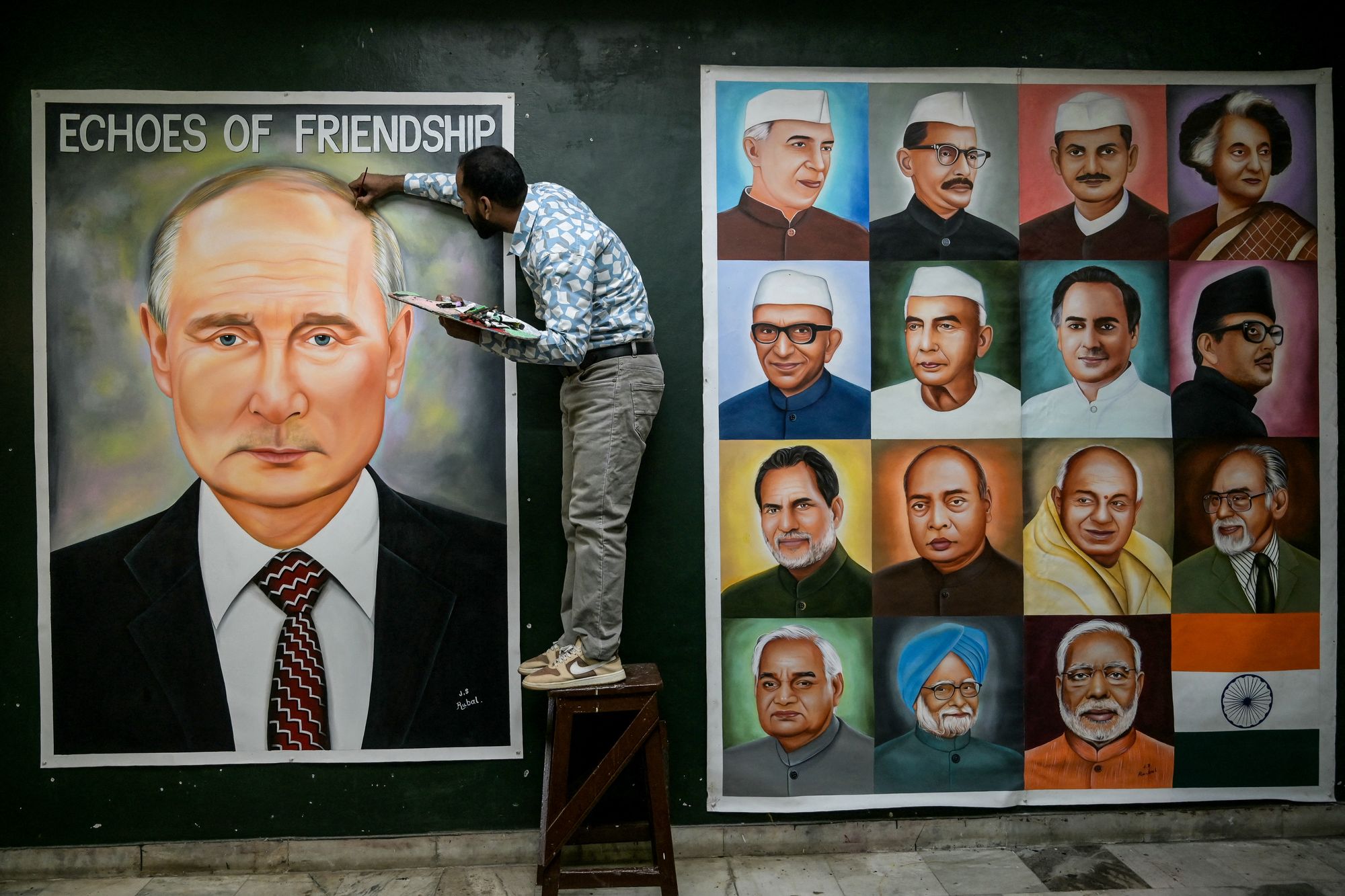
Vladimir Putin is in India this week for a summit focused on strengthening economic, defense and energy ties
Rajesh RoyWednesday 03 December 2025 10:56 GMT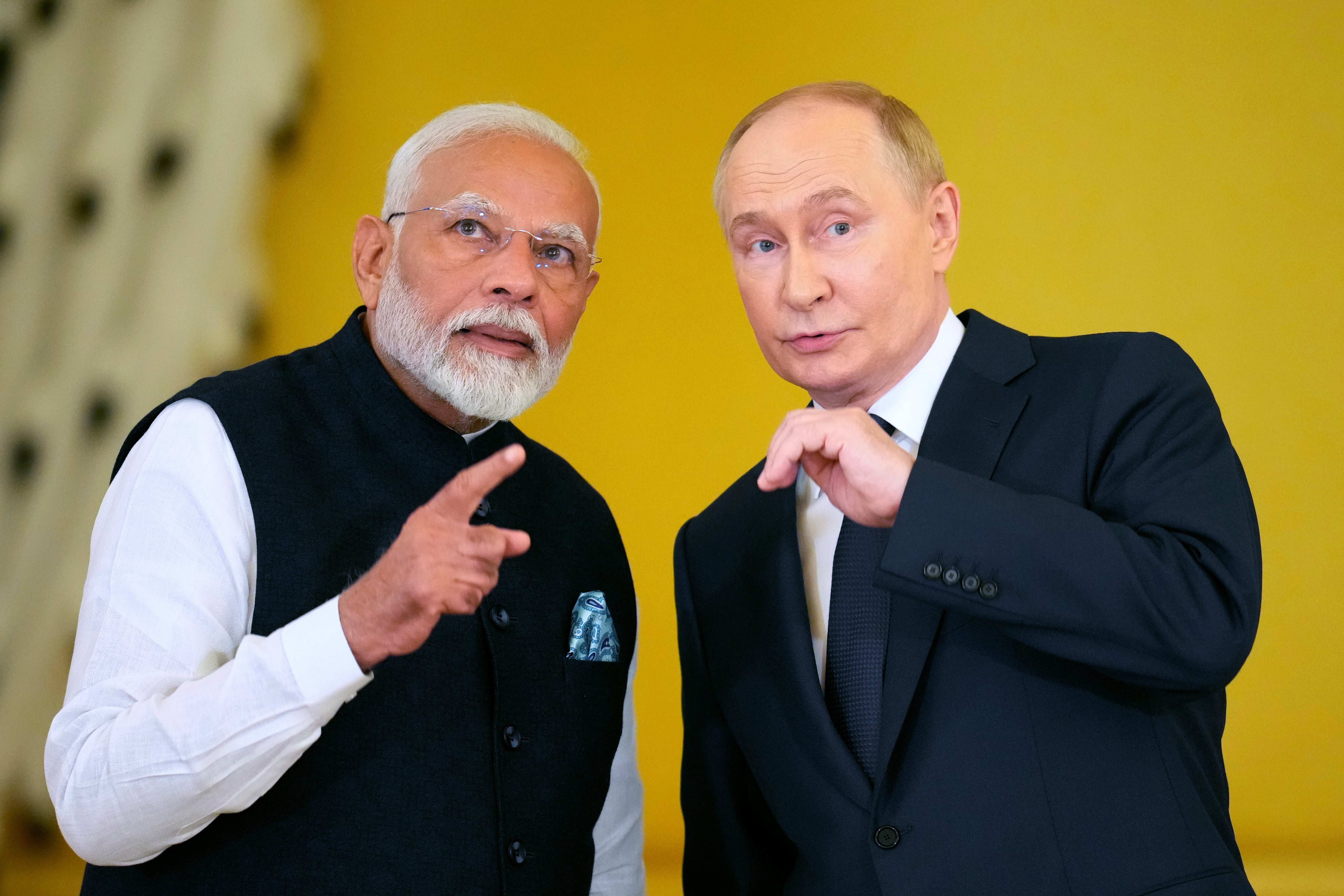 open image in gallery(AP)
On The Ground newsletter: Get a weekly dispatch from our international correspondents
Get a weekly dispatch from our international correspondents
Get a weekly international news dispatch
Email*SIGN UPI would like to be emailed about offers, events and updates from The Independent. Read our Privacy notice
Russian President Vladimir Putin will be in India this week for a summit aimed at deepening economic, defense and energy ties, a visit that will also test New Delhi’s efforts to balance relations with Moscow and Washington as the war in Ukraine grinds on.
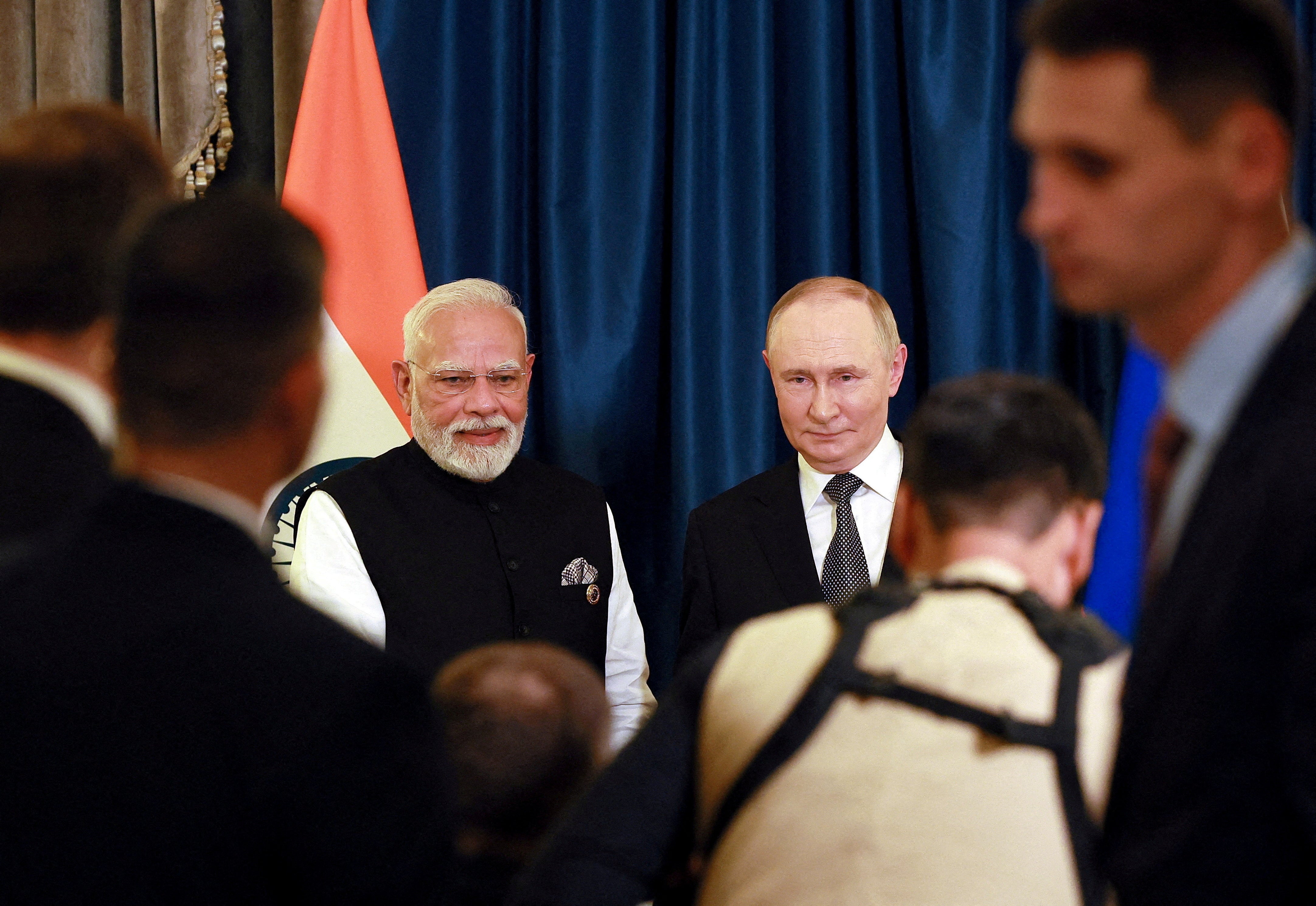
Putin is scheduled to arrive on the state visit Thursday and hold talks with Indian Prime Minister Narendra Modi on Friday. They are expected to review progress on bilateral ties, discuss issues of mutual interest and sign interdepartmental and business agreements, both governments said.
India has continued to buy discounted Russian oil, despite warnings from Washington that this is partly keeping Moscow’s revenues afloat to fund the Ukraine war. U.S. President Donald Trump has imposed additional 25% tariffs on Indian imports, raising the total duties to 50%, in retaliation.
India has defended its imports as essential for meeting the growing energy needs of its 1.4 billion people.
Putin last visited India in 2021. Modi was in Moscow last year, and the two leaders briefly met in September in China during a Shanghai Cooperation Organization summit.
 open image in gallery(AFP via Getty Images)
The pivotal diplomatic moment
The India-Russia summit comes as the United States renews its push for an Ukraine peace plan and seeks broader cooperation from key partners.
U.S. President Donald Trump’s peace plan has prompted concerns that it tilted too heavily toward Moscow. The proposal was revised after U.S. and Ukrainian officials met in Geneva more than a week ago.
Modi has avoided condemning Russia for the fighting in Ukraine while emphasizing the need for a peaceful settlement.
Sreeram Sundar Chaulia, an international affairs expert at the Jindal School of International Affairs near New Delhi, said India has avoided taking on an overt mediating role because it could complicate its ties with both Russia and the U.S.
“But behind-the-scenes diplomacy by Modi is feasible, and has happened already to some extent,” Chaulia said.
Modi could try to nudge Putin “to accommodate some Ukrainian and European concerns to bring about a cessation of hostilities,” he added.
 open image in gallery(via REUTERS)
Economic cooperation key focus of Putin’s visit
India and Russia will look at bolstering their bilateral relation and are expected to deliver a package of documents centered around economic cooperation, trade facilitation, maritime, healthcare and media exchanges, according to Indian officials involved in the summit’s preparation. They spoke on condition of anonymity as the details aren’t public.
India is keen to increase exports of pharmaceuticals, agriculture and textiles to Russia and is seeking the removal of non-tariff barriers. New Delhi is also seeking long-term supplies of fertilizers from Moscow.
Another key area where the two countries are working to finalize an agreement is the safe and regulated migration of Indian skilled workers to Russia.
U.S. pressure on India to shun Russian oil
The U.S. has pressed India to halt purchases of discounted Russian oil, accusing New Delhi of helping fund Moscow’s war effort. In August, Trump imposed a 50% tariff on Indian imports to increase pressure over the issue.
India rejected the charge, saying it follows international sanctions and prioritizes its national interest and energy security. But its position could become more complicated after new U.S. sanctions on Russian oil majors Rosneft and Lukoil. Indian officials said the country will avoid buying oil from sanctioned producers, while keeping options open with companies not targeted by the restrictions.
“India will certainly underscore that there is no Indian desire to cut off energy supplies from Russia completely,” said Harsh Pant, vice president of foreign policy at the Observer Research Foundation, a New Delhi-based think tank.
 open image in galleryTRUMP-ARANCELES-INDIA (AP)
Pant said future imports will depend “on the market forces and how effective sanctions are in weaning away Indian private sector or Indian state-run companies from Russian energy sources."
Energy cooperation is expected to feature prominently at the summit, including India’s investments in Russia’s Far East and expanded civil nuclear collaboration. The Kudankulam nuclear power plant in the Indian state of Tamil Nadu, built with Russian assistance, remains the centerpiece of that partnership, and officials said talks continue on localized equipment manufacturing and potential joint projects in third countries.
Defense cooperation at the core
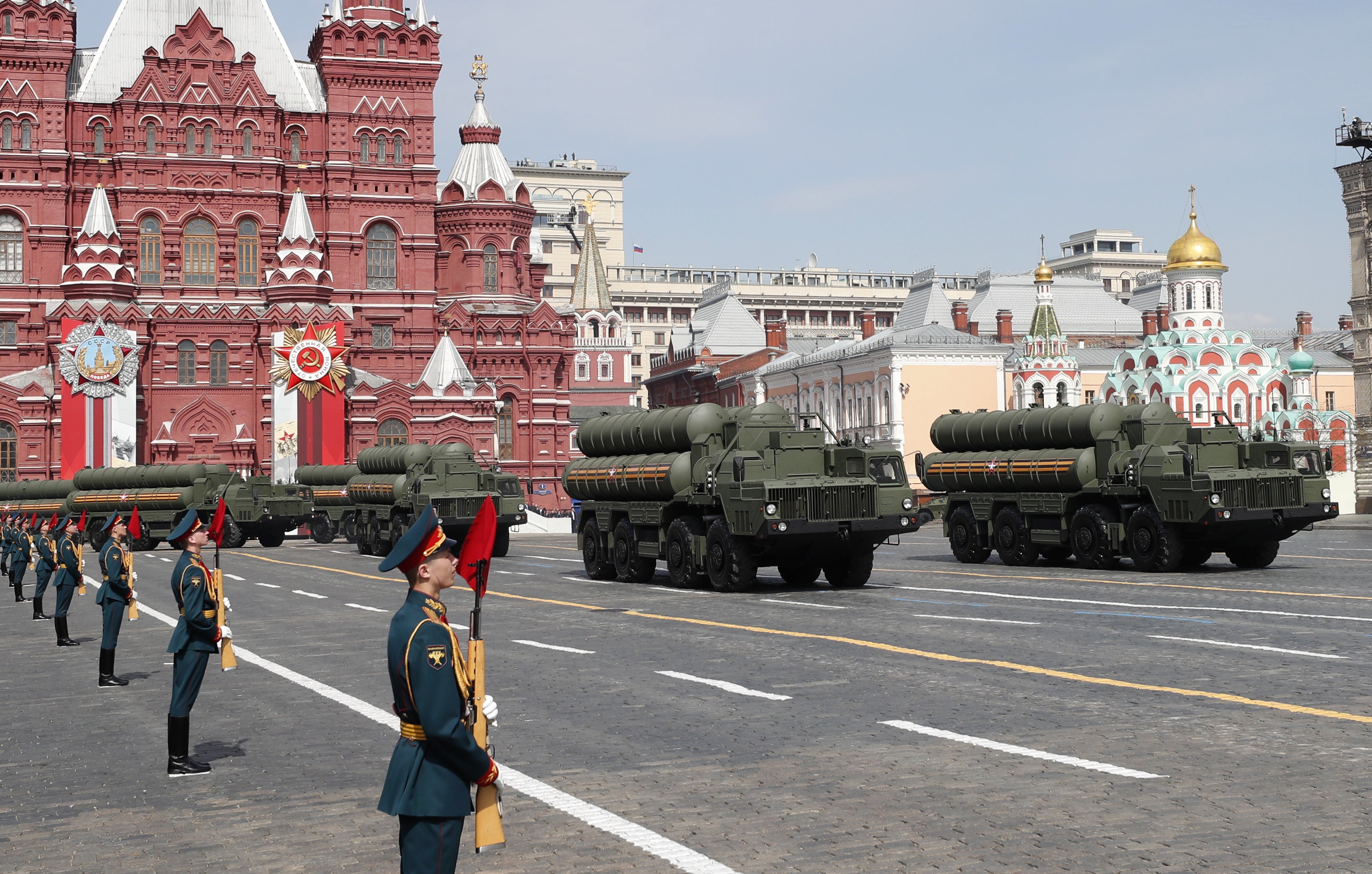
India is expected to push Russia for faster delivery of two further S-400 surface-to-air missile squadrons, after receiving three under a 2018 deal worth about $5.4 billion. The delay has been tied to supply chain disruptions linked to the war in Ukraine.
Indian authorities are also likely to explore the possibility of acquiring additional S-400 units or an upgraded variant, though no contract or announcement is expected.
 open image in gallery(EPA)
Indian defense planners say the S-400 proved effective during a brief military standoff with Pakistan in May.
“The meeting will focus on broader elements of institutional cooperation on defense between our two sides and will try to ensure that delivery delays are ended. Potentially, S-400 additional is not ruled out, but don’t expect any announcement during the visit,” India’s Defense Secretary Rajesh Kumar Singh said at a security conference in New Delhi last week.
Talks are also expected on upgrading India’s Russian-made Su-30MKI fighter jets and accelerating deliveries of critical military hardware, as well as improving coordination on joint exercises and disaster relief.
Despite India diversifying its procurement of military hardware over the last few years, Russia continues to be its biggest supplier. Moscow is keen on selling its stealth fighter jet Su-57 to India, but New Delhi has kept its options open to other foreign suppliers as well.