- News
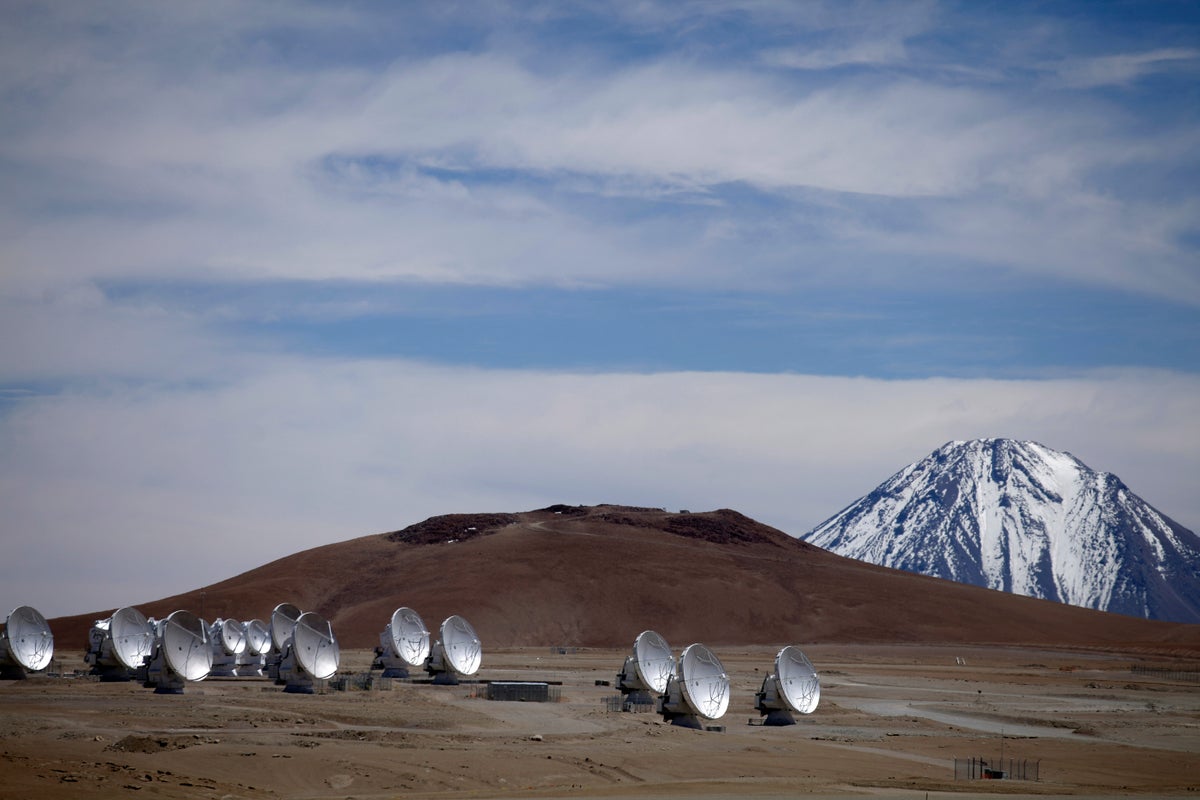
Chile’s Atacama Desert is one of the darkest spots on earth, a crown jewel for astronomers who flock from around the world to study the origins of the universe in this inhospitable desert along the Pacific coast
Nayara Batschke,Isabel DebreTuesday 02 December 2025 23:50 GMT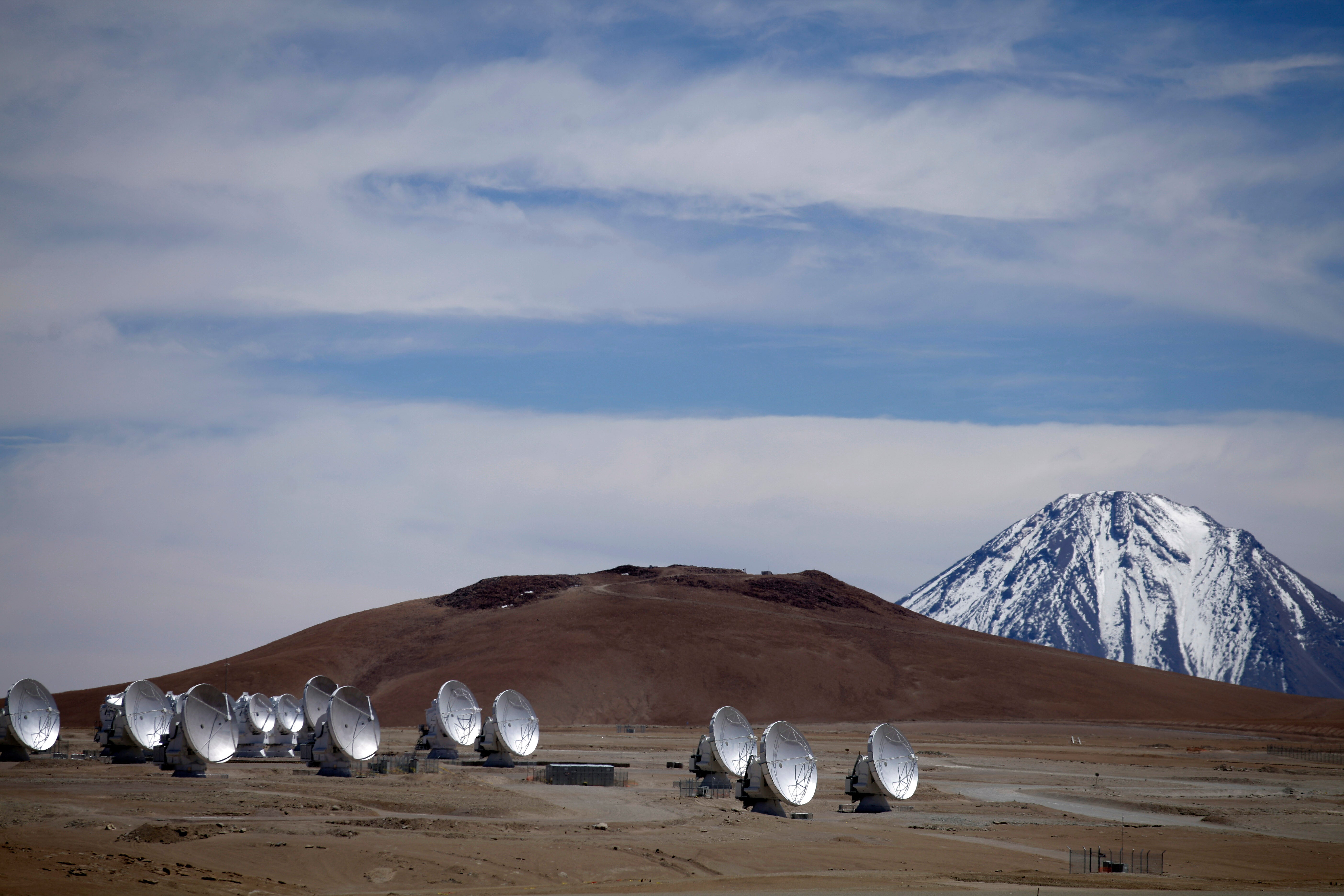 Chile Atacama Observatory (Copyright 2025 The Associated Press. All rights reserved.)
For free real time breaking news alerts sent straight to your inbox sign up to our breaking news emails
Sign up to our free breaking news emails
Sign up to our free breaking news emails
Email*SIGN UPI would like to be emailed about offers, events and updates from The Independent. Read our Privacy notice
Chile’s Atacama Desert is one of the darkest spots on earth, a crown jewel for astronomers who flock from around the world to study the origins of the universe in this inhospitable desert along the Pacific coast.
A rare confluence of factors makes the Atacama an ideal home for some of the world’s biggest ground-based astronomical projects — dry climate, high altitude and, crucially, isolation from the light pollution of civilization.
“It's a perfect cocktail for astronomy,” said Daniela González, executive director of the Skies of Chile Foundation, a nonprofit that defends the quality of the country’s night skies.
But that may not be the case for much longer, a group of leading scientists warned in an open letter to Chile’s government released Tuesday.
A private company is pressing ahead with plans to construct a giant renewable energy complex in sight of one of Earth’s most productive astronomical facilities — the Paranal Observatory, operated by an international consortium known as the European Southern Observatory, or ESO.
In the letter, 30 renowned international astronomers, including Reinhard Genzel, a 2020 Nobel laureate in astrophysics who conducted much of his prize-winning research on black holes with the ESO-operated telescopes in the Atacama Desert, describe the project as “an imminent threat” to humanity's ability to study the cosmos, and unlock more of its unknowns.
“The damage would extend beyond Chile’s borders, affecting a worldwide scientific community that relies on observations made at Paranal to study everything from the formation of planets to the early universe,” the letter reads.
“We are convinced that economic development and scientific progress can and must coexist to the benefit of all people in Chile, but not at the irreversible expense of one of Earth’s unique and irreplaceable windows to the universe.”
The scientists join a chorus of voices that have been urging the Chilean government to relocate the hydrogen-based fuel production plant since the plan was unveiled a year ago by AES Andes, an offshoot of the American-based multinational AES Corp.
In response to a request for comment, AES Corp. said that its own technical studies showed the project would be “fully compatible” with astronomical observations and compliant with the Chilean government's strict regulations on light pollution.
"We encourage trust in the country’s institutional strength, which for decades has guaranteed certainty and environmental protection for multiple productive sectors," the company said.
The plan, which is still under environmental review, calls for 3,000 hectares (7,400 acres) of wind and solar energy farms, a desalination plant and a new port.
That means not only a major increase in light pollution but also new dust, ground vibrations and heightened atmospheric turbulence that blurs stars and makes them twinkle. All of that — just three kilometers (miles) from the Paranal Observatory’s high-powered telescopes — will mess the view of key astronomical targets and could obstruct scientific advances, experts say.
“At the best sites in the world for astronomy, stars don't twinkle. They are very stable, and even the smallest artificial turbulence would destroy these characteristics,” said Andreas Kaufer, the director of operations at ESO, which assesses that the AES project would increase light pollution by 35%.
“If the sky is becoming brighter from artificial light around us, we cannot do these observations anymore. They're lost. And, since we have the biggest and most sensitive telescopes at the best spot in the world, if they're lost for us, they're lost for everyone."
Although this controversy might be specific to Chile, home to 40% of the world’s astronomy infrastructure, the project reflects the wider tension between natural darkness and industrialization tearing at countless countries as light pollution makes the night sky about 10% brighter each year.
“Major observatories have been chased out to remote locations, and essentially now they’re chased out to some of the last remaining dark sky locations on Earth, like the Atacama Desert, the mountain peaks of Hawaii, areas around Tucson, Arizona,” said Ruskin Hartley, the executive director of DarkSky International, a Tuscon-based nonprofit founded by astronomers.
“All of them are now at risk from encroaching development and mining. It’s happening everywhere.”
___
DeBre reported from Buenos Aires, Argentina