- Travel
- Africa
- Botswana
Driving headlong into danger isn’t everyone’s choice for a holiday, writes Victoria Richards, but when you’re with the first female African Bush Camp guide in the Okavango Delta, facing what you’re afraid of is the point
 Tuesday 02 December 2025 11:00 GMTComments
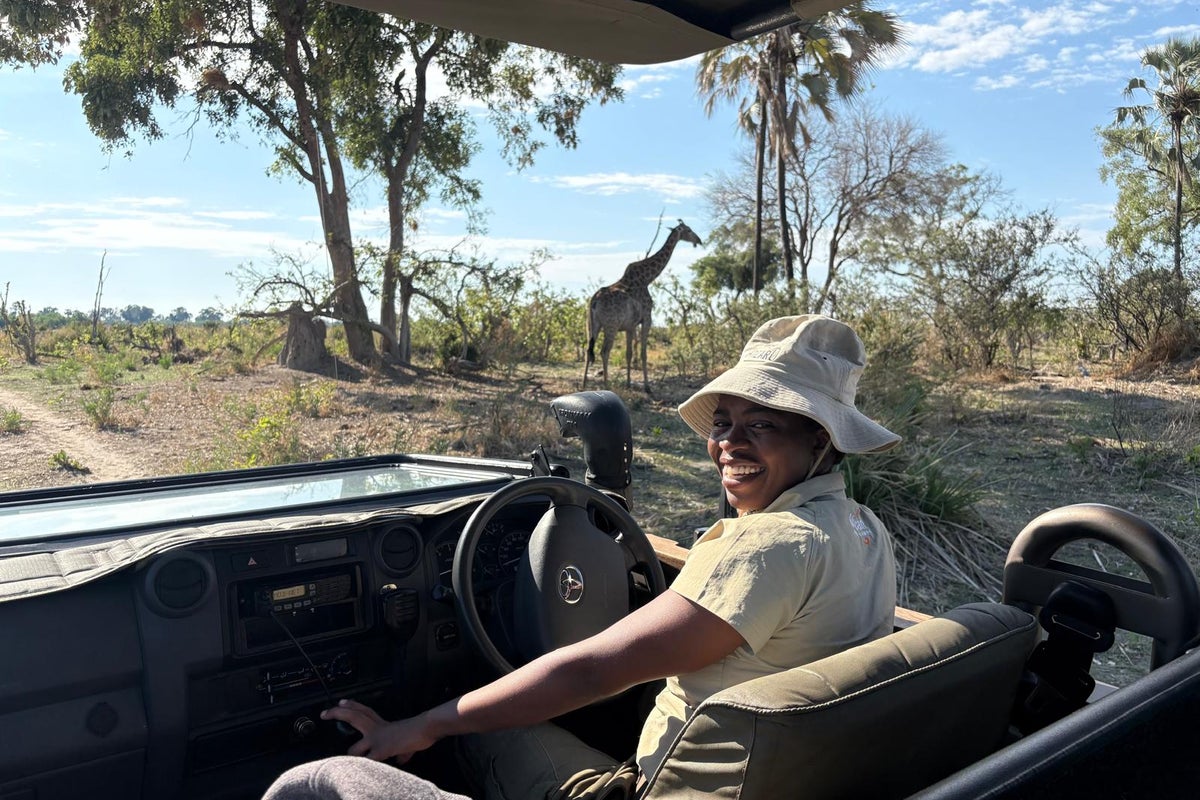
 open image in galleryBae – the first female African Bush Camp guide in Botswana – showed us a giraffe giving birth in the bush (Victoria Richards)
Sign up for the Independent Women email for the latest news, opinion and features
Get the Independent Women email for free
Get the Independent Women email for free
Email*SIGN UPI would like to be emailed about offers, events and updates from The Independent. Read our Privacy notice
“There’s a leopard out there – hunting,” our guide Bae tells us excitedly, pointing towards the bush. I follow her line of sight past a dazzle of zebras, a tower of giraffe and the waggling tails of the “pumba” (warthogs, so similar to those in The Lion King that I can’t help but break into song every time I see them). “Let’s go and find him!”
Bae orders us to “hold on” and cranks the chunky four-wheeler into gear. “You good?” she shouts over her shoulder to the nervous Brits and Belgians at the back. We nod uncertainly and she revs the accelerator. “Ferrari safari,” she yells. “Let’s go!”
And we go. Boy, do we go – clinging to the handrails of the jeep for our lives as we bounce up and down through muddy craters formed by African elephants’ four-tonne feet. We give the hyenas a run for their money by charging across the plains, headlong into scrub bushes and broken palms. We career through rivers frequented by hippos, snakes and monitor lizards and hare at top speed towards the place a leopard was last spotted, chewing on a baby impala. All I can think is: who chooses to chase leopards?
Bae does. She has been a full-time guide at our camp, the Atzaró Okavango in Botswana, for a year – and it’s clear she is the best there is. She’s certainly the most fearless. Bae motions to us to be quiet as she scans the horizon, her eyes moving like a tracker…. and then we see him. He is perfectly camouflaged, just five feet away from our vehicle: svelte, spotted and magnificent. The rosettes of his coat shine through the undergrowth as he gnaws at the remains of his prey. I, meanwhile, am simply relieved it’s not me clutched between his jaws.
 open image in galleryLeopards, we are told, can – and do – wander into camp (Victoria Richards)
Read more: Everything you need to know about going on safari
My schoolfriend Sarah and I are in the African wilderness, staying at a five-star (unfenced) safari retreat. Leopards, we are told, can – and do – wander into camp. Ditto elephants: one of the staff tells us a story about how she broke the cardinal rule of the bush (no running) and bolted when an African elephant strolled casually into reception. She laughs and clutches her chest as she says she “panicked” – until the other staff reminded her exactly how to respond: by standing still, remaining “relaxed” and clapping hands. The elephant, in due course, wandered away.
This is the secret of Atzaró Okavango: respect for the animals and for the terrain (and the pecking order, of which we are down towards the bottom) is paramount. It has to be. This is their territory, not ours – and as long as you follow the rules of the wild and the people who understand it, you should be perfectly safe.
But it’s not for the fainthearted. It’s a tantalising mixture of raw, confronting, luxury travel – with bugs. One night, we are stunned by the sight of thousands of winged termites making a nuptial flight in the middle of the restaurant: they shimmered and danced (quite literally to the death) in an ecstatic synchronised swarm, before losing their wings and dying off by morning.
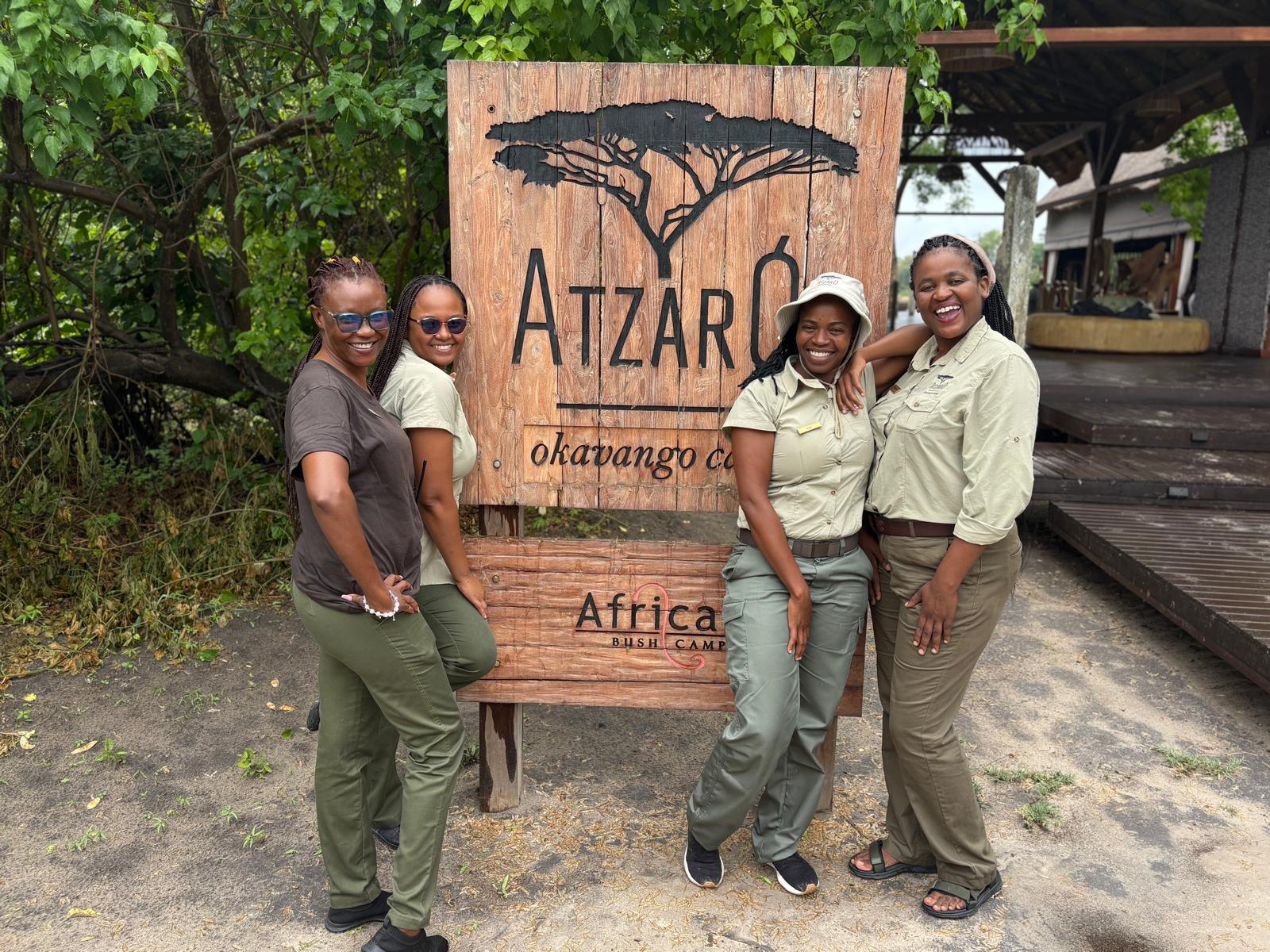 open image in galleryThe staff at Atzaró Okavango make you feel like family (Victoria Richards)Recommended
 What are the seven wonders of the world? How to visit the sites on the modern list
 The wildlife mistakes I’ve made while travelling – from cuddling chimpanzees to riding elephants
 Why you should visit – and stay in – Johannesburg’s Soweto
The camp itself, which sits between the Moremi Game Reserve and the Gomoti Plains, is named after the country’s Okavango Delta: a vast inland river delta in northern Botswana and a Unesco World Heritage site that is home to a complex ecosystem of swamps, floodplains and lagoons – as well as a plethora of animals including “the big five” (lion, leopard, elephant, buffalo and rhino)… and, as any parent or Julia Donaldson fan would be proud to tick off, “the ugly five”, too (warthog, hyena, wildebeest, vulture and marabou stork).
During our three-day stay during November’s wet – or “emerald” – season, we see almost every single one of them (and more), but I’m not surprised our trip is so successful. With Bae at the wheel, there is no point in pessimism. We begin each day with a 5am wake-up, then a sunrise game drive, manifesting the animals we dream of seeing – and both Bae and the bush deliver. With a gutsy mother-of-two driving you around, facing what you’re afraid of is entirely the point. Fearlessness is as infectious as her smile.
Because sure, bumping over python-filled roads is terrifying and nobody in their right mind would stalk a pack of lions – except Bae would. She shares our delight as we spot a cheetah on our very first game drive. She’s as thrilled as we are when we stumble on a den of rare aardwolf pups – then a pack of playful African wild dogs – before the day is out.
Read more: The world’s best safari lodges, from treetops tents to shipwreck cabins
 open image in galleryBae shares our delight as we spot a cheetah on our very first game drive (Victoria Richards)
She isn’t even fazed – and so, neither are we – by the hyenas who wander by while she is setting up our “sunset drinks” of Amarula and Okavango gin on a picnic table outside of the jeep. “They won’t come close to us,” she says (and she is right). “They’re just curious. They’ve never seen an animal on two legs, before.” When we are scared, Bae explains why we don’t need to be; tells us the secrets only an expert in wild animal behaviour would know. Even the big cats won’t attack us, she says, because (as long as we sit down and remain quiet) they see us and the jeep as one and the same thing.
As a consequence of wildlife being able to roam freely, we aren’t allowed to walk at dawn or dusk to our accommodation alone and must be accompanied by a human “Uber” with a torch. Not that intrepid Bae has any truck with that. “I use my senses and my instinct,” she tells us. “At home, in my village, I don’t use a light. I observe the animals’ behaviour and I use my eyes and my ears to pick up danger. If there is something wrong, my body will know.” (My body, however, must be a bit confused, for it keeps me wide awake for the whole of the first night worrying about the sound of footsteps on the ceiling – a family of inquisitive squirrels, as it turns out – and the grunts and wheezes of a hippo somewhere nearby.)
On the surface of things, Bae is teaching us about wild animals – but she also reveals much about African society and her journey to get here. In 2025, Atzaró Okavango introduced female guides to the camp, in association with the African Bush Camps Foundation, which launched the Female Guides Programme in Botswana and Zambia in 2021. Their aim was to “empower women” – something Bae says was badly needed.
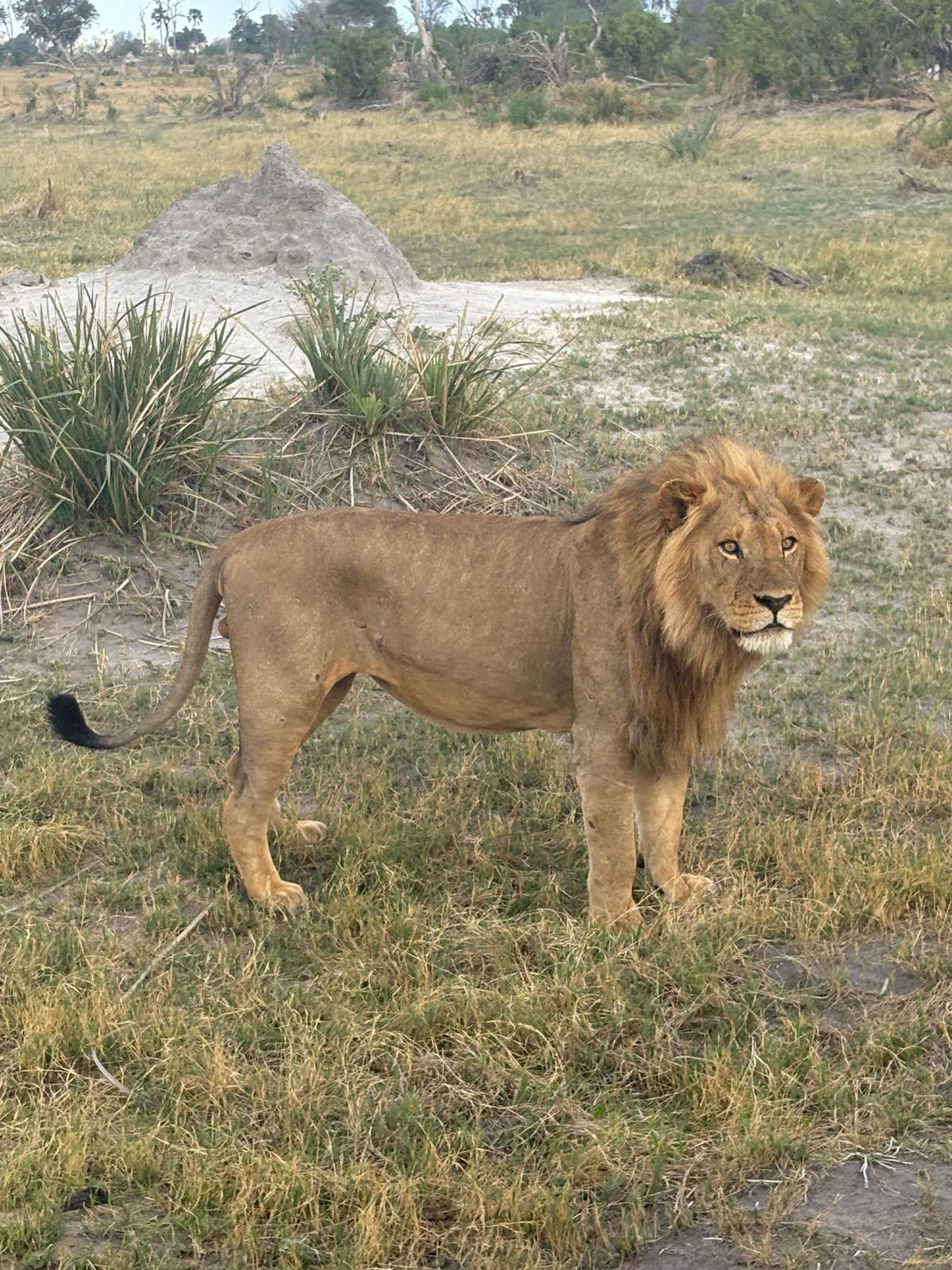 open image in galleryWe kept bumping into a pair of mating lions – this was the male (Victoria Richards)
Read more: I’ve found the most thrilling way to do a safari – by running a marathon
“In Botswana, women used to be housewives,” she says. “We were not expected to work, but to stay home – doing chores – while the man was the provider. Over time, we’ve seen women slowly getting into high-paying jobs. But the guiding industry is still very stereotypically male. Tourists expect a male guide – they see some kind of strength in a man out there, driving around in the bush. They react differently when they see us – that's one of the challenges ladies face. People think guiding is all about power, but it’s not – it’s about knowledge. And sometimes, ladies can do it better.”
The bush can be sexist, too. As we drive around, we see a giraffe in labour, surrounding by four females who keep her company during the long birth, like long-necked doulas or midwives. The males, meanwhile, simply come and go, “looking for mating opportunities”. We keep bumping into a pair of amorous lions: they copulate every 15 minutes for five full days to ensure they conceive. The male looks exhausted – but he “can’t risk sleeping”, Bae tells us – he thinks the lioness will “run off with his brother”. The lioness, however, is mourning for her two cubs, killed by another lion who “wanted the focus to be on his own cubs”.
I realise on leaving Botswana in a Robinson R44 helicopter later that I haven’t reflected much on the camp itself, nor its sister hotel, the Atzaró Cape Town (with its five-star boutique feel, unparalleled views and family-style warmth of the manager, Jordi). But there’s a simple reason for that.
Recommended This Brazilian wildlife hotspot is cheaper than an African safari
 Meet Ghana’s fantasy coffin makers: A glimpse into a joy-filled funeral culture
 Is there such thing as an affordable safari? How to holiday in the wild without breaking the bank
.jpg) open image in galleryAtzaró Okavango has a total of 10 rooms, which include eight luxury suites and two double luxury family suites (Victoria Richards)
open image in galleryAtzaró Okavango has a total of 10 rooms, which include eight luxury suites and two double luxury family suites (Victoria Richards)Atzaró Okavango’s facilities are pristine and luxurious – with jaw-dropping private helicopter transfers from Maun Airport; eight villas with private bathing pools with views of giraffes wandering by; outdoor showers and tubs. The food is Michelin-standard and the wine exquisite, while the on-site spa offers massage next to a lagoon-facing pool – but nothing can compare to the warmth, love and care of those who work there.
Even the animals come a close second to Bae, Lesh, Sasa, Eunice, Renny, Godfrey, Ronnie, LuckyM, Kele, Dalton, Ama, Witness, Kenny, Max, LJ, Richie and Big Joe. Including the hippo which kept us – gratefully, ecstatically – awake.
Victoria was travelling as a guest of Atzaró Group on the new Atzaró African Ultimate Experience at Atzaró Okavango.
How to do it
Luxury hospitality company Atzaró Group is launching a new nine-day itinerary, the Atzaró African Ultimate Experience. The trip combines a three-night city break at Atzaro Cape Town, a stylish small luxury hotel with panoramic views of the city and Table Mountain, with a stay at Atzaró Okavango in Botswana’s Okavango Delta. Prices for the Atzaró Ultimate African Itinerary per person (based on two people sharing a room) start at $11,340. Learn more at atzaro-okavango.com and atzarocapetown.com.
Read more: The ethical jewellery brand helping fight extreme poverty in Uganda
More about
FeminismAfrica travelSafarisJoin our commenting forum
Join thought-provoking conversations, follow other Independent readers and see their replies
Comments