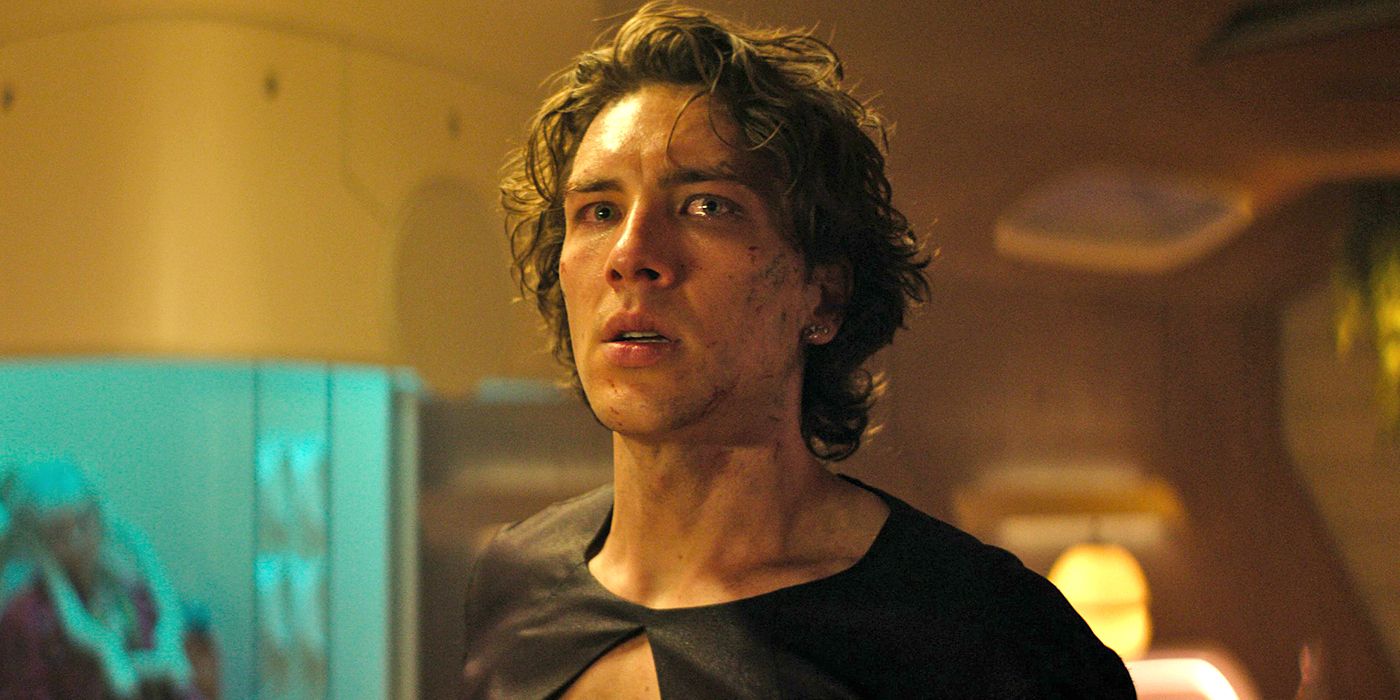
 Toran Mallow inside his ship and looking concerned in Foundation Season 3 Episode 7Image via AppleTV+
 By
Hannah Hunt
Published 3 minutes ago
By
Hannah Hunt
Published 3 minutes ago
Back in 2021, Hannah’s love of all things nerdy collided with her passion for writing — and she hasn’t stopped since. She covers pop culture news, writes reviews, and conducts interviews on just about every kind of media imaginable. If she’s not talking about something spooky, she’s talking about gaming, and her favorite moments in anything she’s read, watched, or played are always the scariest ones. For Hannah, nothing beats the thrill of discovering what’s lurking in the shadows or waiting around the corner for its chance to go bump in the night. Once described as “strictly for the sickos,” she considers it the highest of compliments.
Sign in to your Collider account Summary Generate a summary of this story follow Follow followed Followed Like Like Thread Log in Here is a fact-based summary of the story contents: Try something different: Show me the facts Explain it like I’m 5 Give me a lighthearted recapApple TV+’s sci-fi catalog has always been ambitious, but Pluribus and Foundation push that ambition into unsettling territory. Across two wildly different series, the same fear keeps resurfacing: the terror of losing yourself to something larger. Both shows operate on massive, civilization-spanning scales, yet their emotional core is intimate. They are about the creeping suspicion that your inner life is no longer yours.
The question the two shows keep circling is simple and chilling: what happens when every thought, memory, and choice gets swallowed by a single shared consciousness, and you do not get a say in the matter? It is the existential version of going offline forever. Identity becomes a technicality. Privacy becomes a myth. You remain alive, but the boundaries of selfhood melt until they barely exist. Apple’s sci-fi has always flirted with the uneasy edges of technology, but Pluribus and Foundation suggest something more pointed. The platform’s defining sci-fi theme might not be outer space or futuristic spectacle, but the horror of a perfectly efficient hivemind.
Apple’s Sci-Fi Pushes Toward Total Unity, and It Is Terrifying
The shared consciousness at the center of Pluribus operates like a dream and a nightmare at once. The series imagines a world where individuality can be pooled into a massive psychic network that promises stability, harmony, and communal intelligence. On paper, it sounds like utopia. No more secrets, no more selfishness, and no more human error: only happiness. But inside the reality of the show, the cost of that unity becomes impossible to ignore. Characters begin to feel their internal voices soften, then dissolve. Memories become collective property. Decisions, even the tiny ones that shape a person’s day, shift out of the individual’s hands. Once you join the consciousness, opting out stops being an option. The network becomes a kind of soft totalitarianism, one that does not need force because it can simply think for you.
Apple has become the home for cerebral sci-fi over the last few years, and the platform’s identity shows in these themes. This is not a dystopia with robots marching through the streets, it is a dystopia disguised as progress. The danger is a future that promises safety while quietly taking away the very thing that makes someone a person instead of data.
 Related
'Pluribus' Review: 23 Years Later, 'Breaking Bad's Creator Returns to Sci-Fi With an Absolute Masterpiece on Apple TV
Related
'Pluribus' Review: 23 Years Later, 'Breaking Bad's Creator Returns to Sci-Fi With an Absolute Masterpiece on Apple TV
'Better Call Saul's Rhea Seehorn leads Vince Gilligan's new sci-fi drama.
Posts 2 By Carly Lane Nov 6, 2025‘Foundation’ Explores the Same Fear Through a Different Lens
Foundation reaches the same terrifying idea from the opposite direction. Where Pluribus creates one consciousness from many minds, Foundation begins with one consciousness multiplied across bodies. The Cleon dynasty has always been the show’s most provocative invention. A line of cloned emperors, each iteration raised to believe he is the rightful continuation of one eternal identity, creates a political hivemind masquerading as monarchy.
The Cleons are individuals only on the surface. Their sense of self is engineered, their memories are curated, and their lives are predetermined performances in service of a singular imperial idea. When the cracks begin to show in that system, the show becomes a philosophical thriller about what happens when a person realizes he is not a person at all.
Season after season, Foundation pushes deeper into the tension between personal agency and inherited destiny. The show’s version of a hivemind is not technological. It is historical and political. But the result is the same as Pluribus. The dissolution of individuality becomes the thesis of the narrative. Even Hari Seldon’s (Jared Harris) psychohistory, the predictive science driving the entire saga, treats humanity like a single organism that can be steered, shaped, or predicted without regard for personal choice. It is another kind of collective thinking that crushes the idea of the lone decision maker.
Why Apple TV Keeps Returning to This Anxiety
This obsession with dissolved identity is not accidental. Apple’s best sci-fi consistently asks what happens when humanity chases optimization so aggressively that it forgets autonomy. In both Pluribus and Foundation, the threat does not come from an outside invader. It comes from systems built by those who believe they are doing the right thing. The loss of individuality occurs not because someone is trying to destroy humanity, but because someone is trying to improve it. Apple’s sci-fi slate works because it treats these concepts not as abstract hypotheticals, but as emotional threats. What scares the characters is not the technology itself. It is the quiet fear that their innermost thoughts no longer belong to them. The shows echo anxieties already present in the real world. We live in an era where algorithms predict our desires before we articulate them, where online behavior is merged into data sets, and where identity feels increasingly flattened by digital spaces. Apple’s shows stretch these anxieties to cosmic scales, but they remain grounded in fears people already understand.
There is also a thematic contrast between what the characters gain and what they lose. Both series show the seductive appeal of surrendering control. In Pluribus, the network promises clarity. In Foundation, the Cleons promise order. But the shows also insist that humanity’s greatest strength is the unpredictability of individual minds. That is the quiet message beneath both narratives. When every mind is merged, the world might function more smoothly, but it stops being a world shaped by human beings. Progress becomes a script instead of a choice. Apple TV+’s sci-fi has become one of the most distinctive corners of the streaming landscape because it is willing to wrestle with these uncomfortable questions. Pluribus and Foundation serve as companion pieces, each exploring the same nightmare from opposite angles. One asks what happens when you give up your autonomy. The other asks what happens when it is taken from you before you even know what it is. The result is a vision of the future that is undeniably beautiful, but frightening. Apple’s best sci-fi stories warn that the most dangerous loss of humanity is the one that feels convenient, the one that feels inevitable, and the one you barely notice until it has already erased you.
 10
10
10
10
Pluribus
Like Follow Followed TV-MA Drama Thriller Sci-Fi Release Date November 6, 2025 Network Apple TV Directors Adam Bernstein, Zetna Fuentes, Melissa Bernstein Writers Ariel Levine 7 Images
 Rhea Seehorn staring into the distance in Pluribus
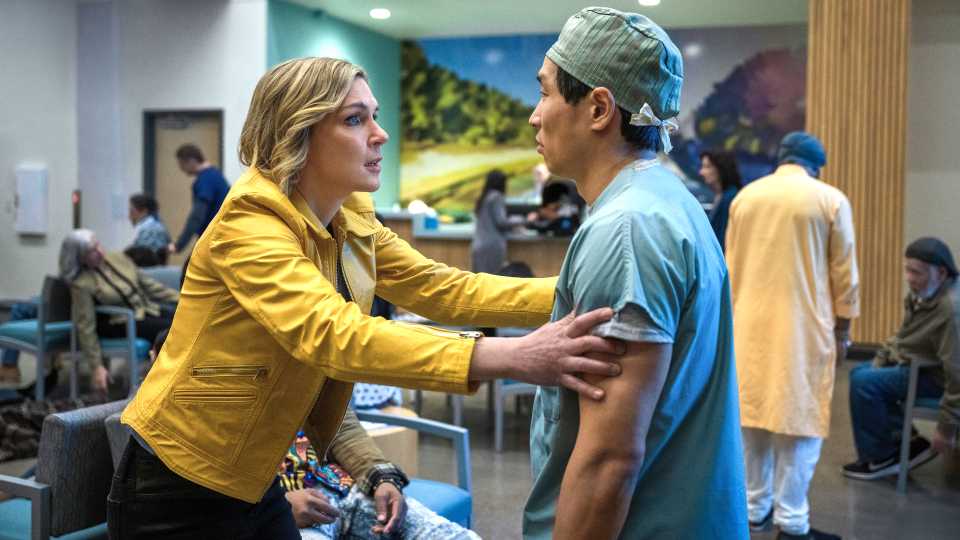 Rhea Seehorn's Carol holding a doctor by their arms looking worried in an ER lobby in Pluribus
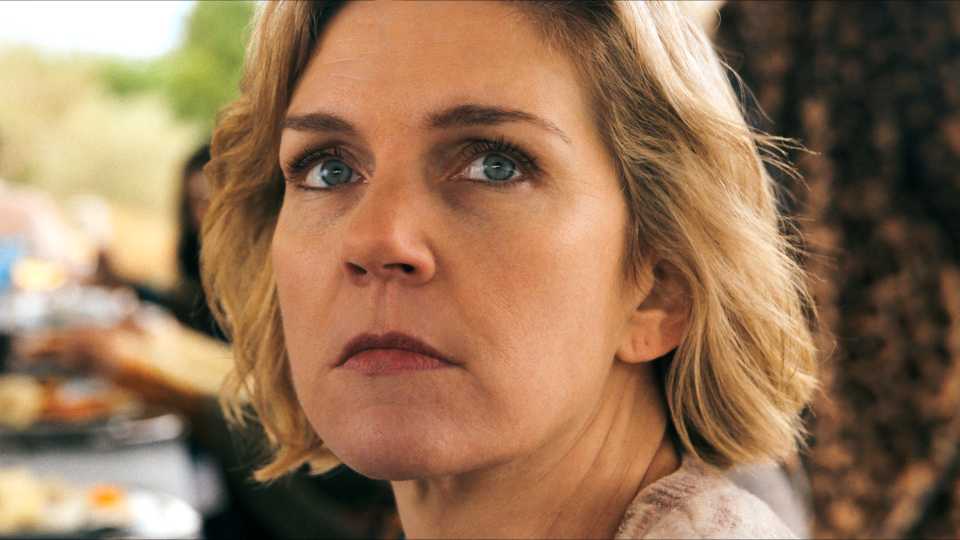 Rhea Seehorn's Carol looking seriously over her shoulder in Pluribus
 Rhea Seehorn in PluribusApple
 Rhea Seehorn in Pluribus©Apple TV+ / Courtesy Everett Collection
 Rhea Seehorn's Carol looking distracted and Karolina Wydra's Zosia smiling at someone in Pluribus
 Rhea Seehorn curled up on the couch in PluribusClose
Cast
See All-
 Rhea Seehorn
Carol Sturka
Rhea Seehorn
Carol Sturka
-
 Karolina Wydra
Zosia
Karolina Wydra
Zosia
 Expand
Collapse
Expand
Collapse
-
 Pluribus
We want to hear from you! Share your opinions in the thread below and remember to keep it respectful.
Be the first to post Images Attachment(s) Please respect our community guidelines. No links, inappropriate language, or spam.Your comment has not been saved
Send confirmation emailThis thread is open for discussion.
Be the first to post your thoughts.
- Terms
- Privacy
- Feedback
 13 hours ago
Rachel Zegler Auditioned To Play This Musical Legend — but the Actress Who Got the Part Received an Oscar Nomination
 13 hours ago
Van Halen's 10 Best Songs, Ranked
 11 hours ago
‘IT: Welcome to Derry’s Latest Twist Is Finally Explaining Pennywise’s Surprising Origin Story
 15 hours ago
Charlize Theron Starred in One of the Worst Book Adaptations of the 21st Century — Now It’s Heading to New Streaming Home
What To Watch
 July 20, 2025
The 72 Best Movies on Netflix Right Now
Trending Now
July 20, 2025
The 72 Best Movies on Netflix Right Now
Trending Now
 Patrick Stewart's Bloody Underrated Horror Hit Is Streaming for Free Next Month
 HBO Max Is Finally Serving Up Emma Stone's Most Underrated Movie This December
 The 20 Greatest Movies of the Last 50 Years, Ranked

