- News
- UK
- UK Politics
Government funding decisions risk sending progress on HIV back by decades, Lord Smith told a gathering of campaigners organised by The Independent - but there is still hope of ending the pandemic by 2030 if investment is made in new drugs
Rachel SchraerGlobal Health CorrespondentMonday 01 December 2025 12:26 GMTComments
 CloseLord Chris Smith: HIV aid cuts will send us back to 1987
Sign up for the View from Westminster email for expert analysis straight to your inbox
Get our free View from Westminster email
Get our free View from Westminster email
Email*SIGN UPI would like to be emailed about offers, events and updates from The Independent. Read our Privacy notice
The first MP to come out as HIV positive has warned that “foolish” government cuts to foreign spending risk sending the Aids pandemic back to the days of the 1980s, when his diagnosis felt like a death sentence.
Lord Chris Smith, a former secretary of state, made his HIV positive status public in 2005, having been the first British MP to come out as gay in the mid-80s.
In a striking intervention, he told a gathering of campaigners, charities and journalists organised by The Independent: “The real tragedy of what's now happening with the cuts to aid from the US, from the UK [is that poorer countries around the world] will be back to what I was facing in 1987.”
In November, the UK announced a 15 per cent cut to its contribution to the biggest international funder of HIV treatment and prevention, as part of deep cuts to overseas aid spending in a bid to shift money to defence.
“The UK government made a very foolish decision in my view,” said Lord Smith, now chancellor of the University of Cambridge.
“They made the wise decision that we needed to invest more in defence, but they made the very foolish decision to raid the international aid budget in order to finance that. That was a mistake.”
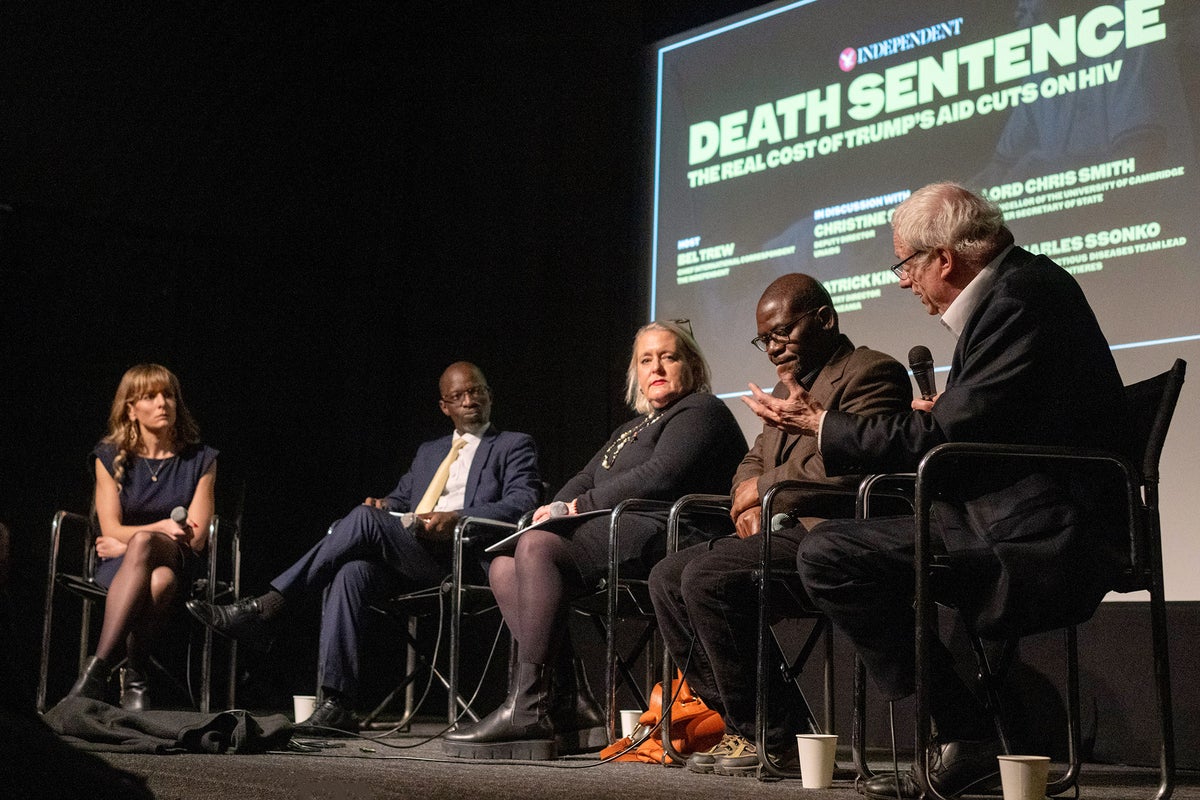
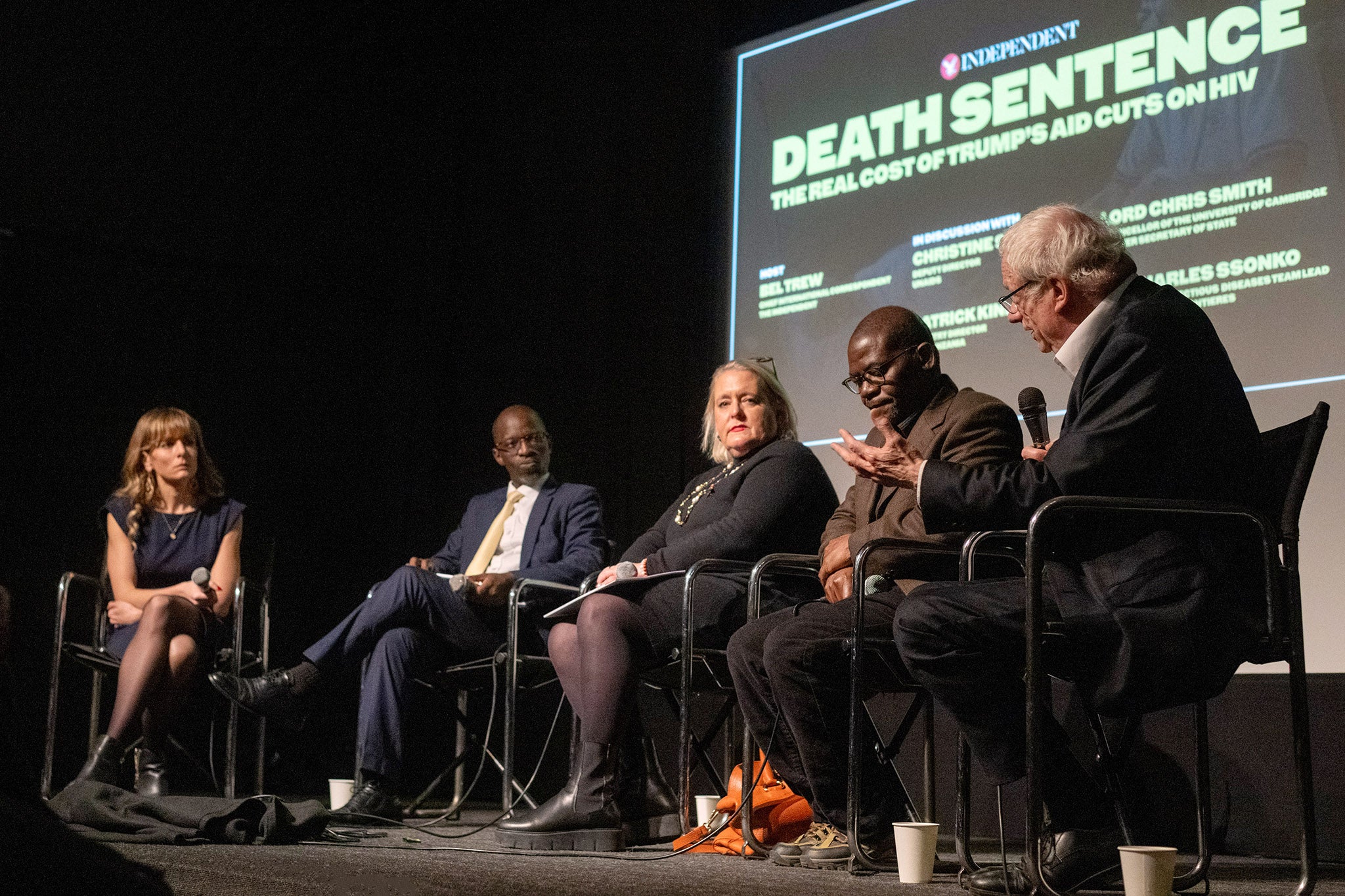 open image in gallery(left to right) Bel Trew, Patrick Kinemo, country lead for MSI Tanzania, Christine Stegling, deputy director of UNAIDS, Dr Charles Ssonko, HIV adviser to Medecins Sans Frontieres (MSF) and Lord Smith (Joanne Davidson for The Independent)
Lord Smith was addressing the audience of a screening of The Independent’s chief international correspondent Bel Trew’s documentary on the deadly cost of cuts to HIV services by the US for World Aids Day at the Institute of Contemporary Art (ICA) in London.
The UK has piled more pain on top of Donald Trump’s decisions to slash the vast majority of foreign aid funding when he took office in January.
While the US ultimately restored some funding, global efforts to treat HIV and prevent new infections have been profoundly disrupted in the past year. Trew told the audience at the screening that at least three people interviewed for the documentary have died since filming, as a result of aid cuts severing their access to life-saving HIV medicine.
“We should never forget that there are hundreds of thousands of people around the rest of the world who don't have [HIV] facilities,” Lord Smith said. “And it has just, in a stroke of a presidential pen, become infinitely worse”.
The UK could still protect other sources of HIV funding including through UN agencies - something The Independent is calling on Sir Keir Starmer to do.
Deputy director of the UN’s Aids agency, UNAIDS, Christine Stegling worked in Botswana in the 2000s at the peak of its HIV epidemic.
“Many of us lost our families, our friends,” she said. When global funding cuts were announced this year, “there was this moment when we realised [the pandemic] could look like this again if nothing really serious happened”.
Despite this, she said, a goal to end Aids as a public health emergency by 2030 wasn’t off the table with the “right resources... to the right communities at the right time” - including new preventative drugs to help bring down the infection rate.
Dr Charles Ssonko, HIV adviser to Medecins Sans Frontieres (MSF), echoed these hopes and fears: “If people interrupt treatment, the virus is going to multiply. They're going to fall sick again. They're going to get into hospital. Hospitals are going to get full. We're actually going to go back two decades ago.
“In 2005, I was treating HIV and everybody was devastated. Families were devastated. Health care workers were devastated.”
Now though, Dr Ssonko said, there are scientific breakthroughs that can contain the HIV epidemic: “There's the long-acting treatments that are already available. But I think the biggest problem that we do have today is the funding.”
Cuts could also risk the future development of new drugs, Lord Smith suggested. “If there's no funding for the deployment of drugs, there will be no research happening into the drugs in the first place”.
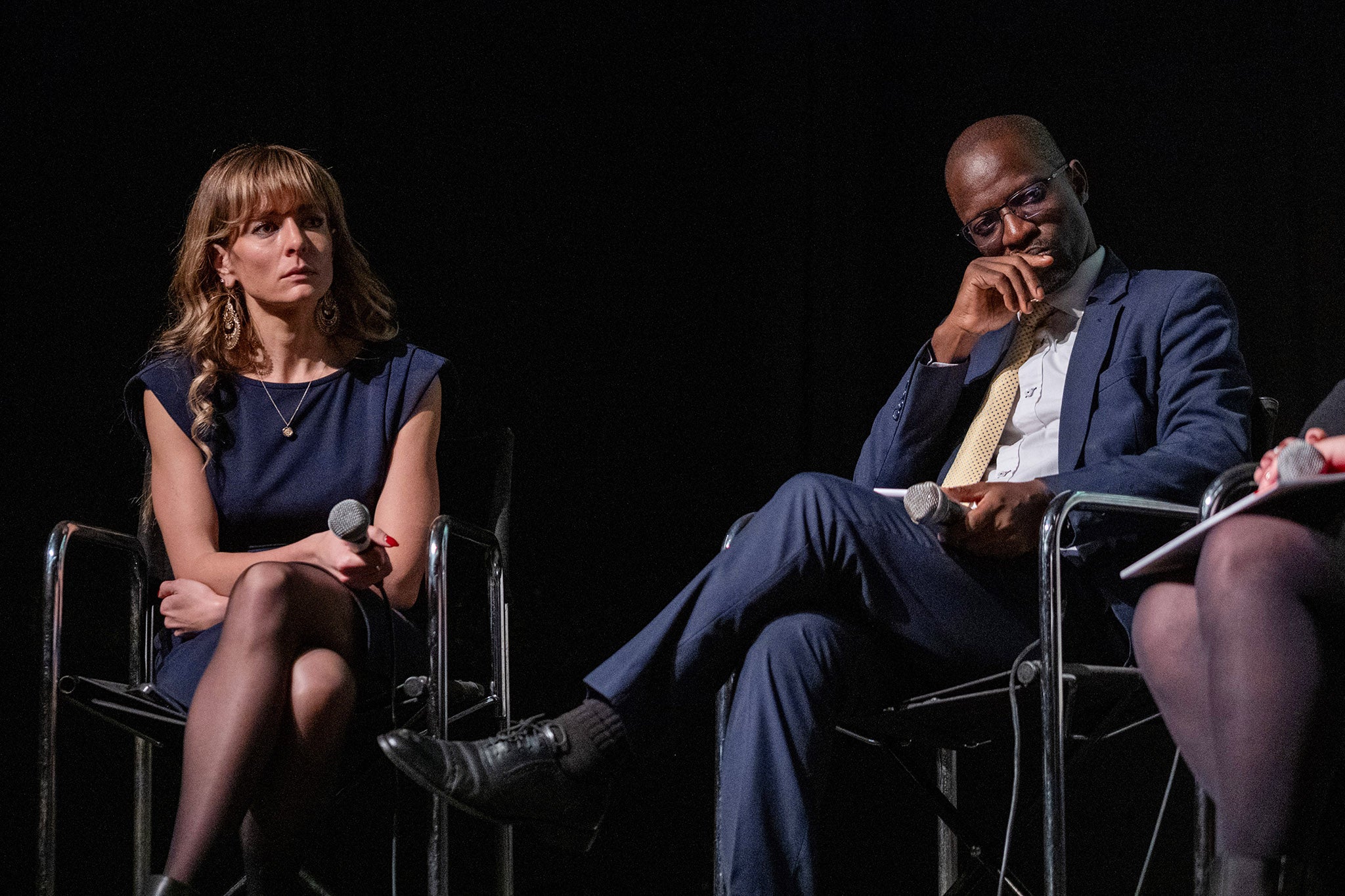 open image in galleryBel Trew and Patrick Kinemo during a panel discussion at the ICA in central London (Joanne Davidson for The Independent)
However, Dr Ssonko challenged countries in the Global South to “step up” and fund their own HIV responses too.
“I think it's been two decades or more where countries have been dependent on donor funds.
“For sustainability, we need... our own countries to start stepping up and supporting. I've worked with communities and I know how much communities can help themselves,” he said.
“I think the biggest lesson learned in all of this, in this shocking system break-down that we had, is that one particular donor was over-dimensionally involved,” Ms Stegling added, referring to the US.
While many countries were already on a course to pay for more of their own HIV programmes over time, the speed of the cuts threw plans into chaos.
“We were on a good trajectory,” she said. “What has really made this so difficult is this abrupt cut.”
To mark World Aids Day, dozens of activists, including those living with HIV, staged a “die in” in Trafalgar Square, demanding that the British government reverse cuts to HIV and AIDS treatment and prevention services.
Holding placards shaped like tombstones, the crowds, who are part of the protest group ACT UP, chanted: “We mourn the dead, we fight like hell for the living.”
Dan, a member who has been living with HIV for over 20 years, said that, with the global cuts, millions more could die right as groundbreaking new prevention drugs, like Lenacapvir, were coming onto the market which could, if effectively deployed, bring infection rates to zero.
Instead, he said investment should be in breaking the “deadly monopolies” around new drugs, anbyd making them affordable for all.
Sign our petition for Keir Starmer to protect HIV funding here.
This article is part of The Independent’s Rethinking Global Aid project
More about
Rethinking Global AidHIVChris SmithUNAIDSThe IndependentAIDSJoin our commenting forum
Join thought-provoking conversations, follow other Independent readers and see their replies
Comments