 Photography Catherine OpieDecember
1,
2025Art & PhotographyQ+ACatherine Opie on the story of her legendary Dyke Deck
Photography Catherine OpieDecember
1,
2025Art & PhotographyQ+ACatherine Opie on the story of her legendary Dyke Deck‘It’s fun, it’s wild, it’s what every dyke has been waiting for at those late-night poker games!’: As her cult playing cards are reissued, the acclaimed artist shares the origin story of Dyke Deck
ShareLink copied ✔️December 1, 2025Art & PhotographyQ+ATextGem FletcherRead More Music‘On some frontal lobe shit’: Steve Lacy and Solange go head-to-head
 Life & CultureWhat’s going on with men?
 Life & CultureWhat is the ‘forehead kiss of doom and despair’?Catherine Opie, Dyke Deck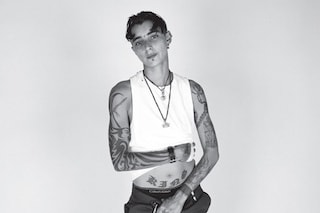
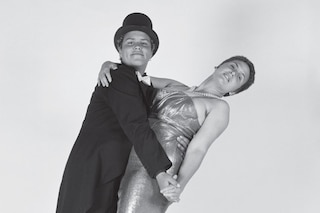
 Gallery / 14 images
Catherine Opie is punk: unwavering in her commitment to community, fearless in her creative process and relentless in her pursuit to speak truth to power. “I’ve always been invested in creating space for people,” she tells Dazed. “It’s a critical time right now to speak up!”
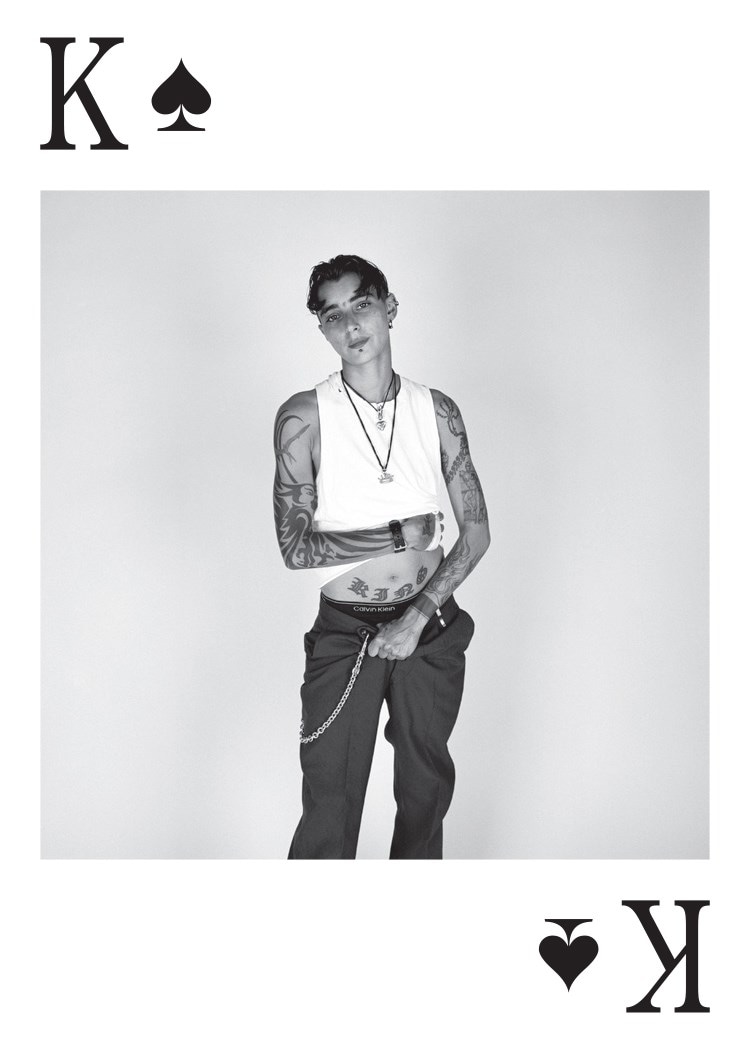
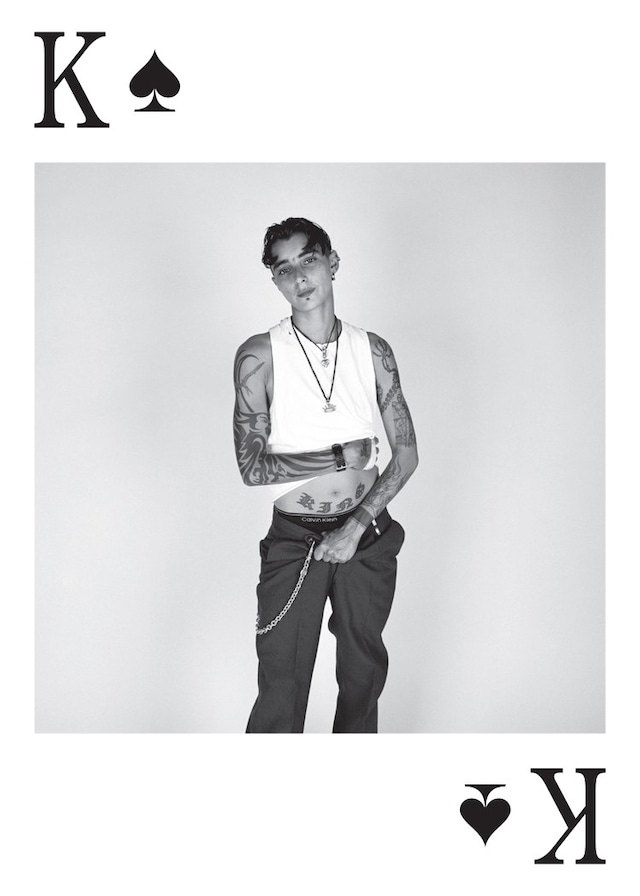
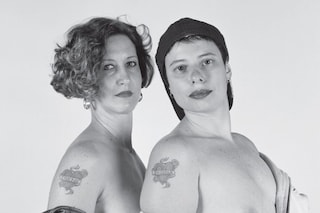
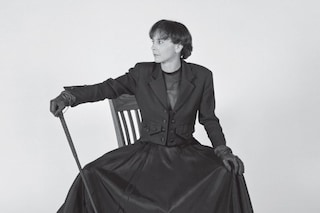
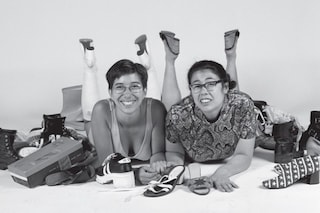
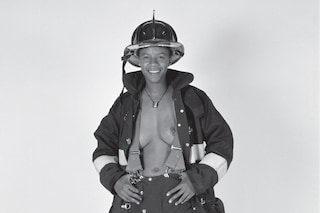
Opie is meeting us over Zoom to talk about Dyke Deck – the now iconic art collectable she made in the mid-90s to celebrate the lesbian community in San Francisco. The 52-card deck of cards features studio portraits of friends and strangers from the lesbian community, with butches, jocks, couples and femmes adorning each suit. Dyke Deck is part of lesbian lore: in queer circles, fans spend years scouring eBay and art auctions trying to get their hands on the original, which now commands up to £1,000 per deck.
At the same time she was making Dyke Deck, Opie was also creating her inimitable artwork, Pervert. The radical self-portrait, couched in a formal tradition of the 16th century painter Hans Holbein, pictures Opie topless, proudly adorned in a leather hood with ‘Pervert’ carved into her chest by renowned body modifier, Raelyn Gallinamodifier. The photograph was Opie’s response to rising tensions within the queer community, which saw the sexual radicals – who, like her, were avid practitioners of sadomasochism – disowned in reaction to the push for gay marriage and Jesse Helms’ campaign against Aids research funding. In that moment, making Dyke Deck offered Opie an emotional rebound – a moment of play amidst the heaviness of the political climate.
Opie’s intention with Dyke Deck was to make something fun for the community. “Back then, my photographs sold for $600 a print, and I couldn’t afford to buy my own work,” she tells Dazed. “So Dyke Deck was about making art accessible. I wanted to make art for all of us.” Now, 30 years later, Opie is reissuing the original Dyke Deck in collaboration with MOCA, as well as a new “reshuffled” deck that includes 25 previously unseen portraits and a replica of the original casting call she posted all over The Castro.
Below, Catherine Opie speaks to Dazed about the making of Dyke Deck, the importance of speaking up and how joy can be a form of political subversion.

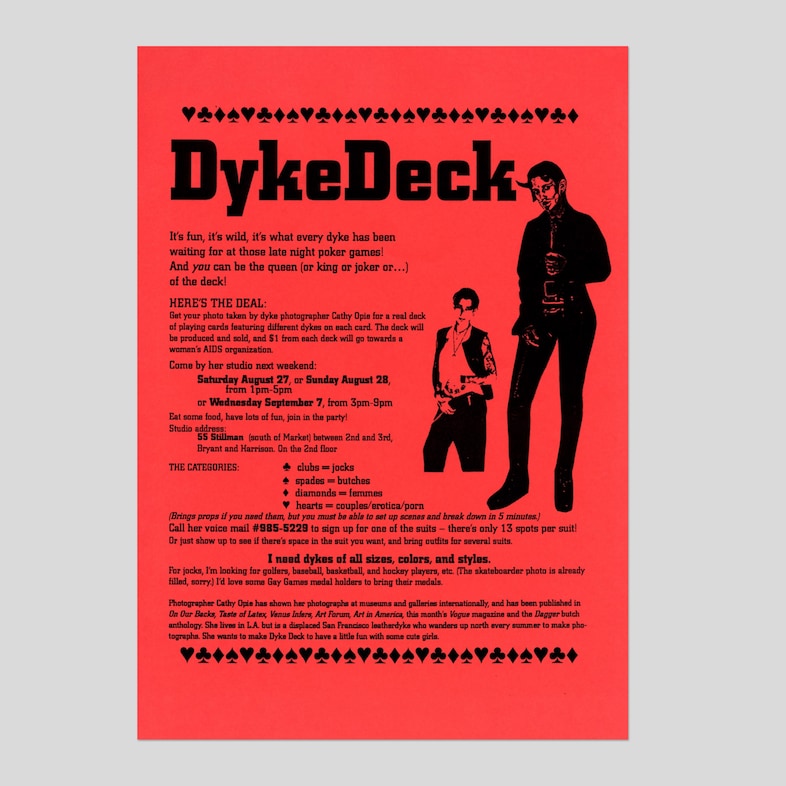 Casting CallCourtesy of the artist
Hey Cathy, how are you?
Catherine Opie: You’ve caught me on an optimistic day. I’m working on a piece right now where I’m the lesbian cowboy. When the people of Portland, Oregon, recently pulled out inflatables making fun of the authoritarian action this president has launched against their city, they taught me recently that we can have joy in our activism. I’ve been thinking about the history of the Sisters of Perpetual Indulgence and just what it means to personify a critical voice within queer culture. The lesbian cowboy emobodies of all if that and needs to be born.
Tell us about the origin story of Dyke Deck?
Catherine Opie: I was in San Francisco, and it was actually the summer I made Pervert. I was still making portraits of the community. Back then, my photographs sold for $600 a print, and I couldn’t afford to buy my own work. So Dyke Deck was about making art accessible. I wanted to make art for all of us. I also wanted to make something fun for the community. At that time, I was living in Los Angeles, but all my friends and playmates were living in San Francisco, so every summer I would go there to play in the dungeons, and that’s where I put out the open call.
So you made specific portraits for the deck? How did you cast people?
Catherine Opie: I made a poster, printed on red paper at Kinko’s and put it up all over Valencia Street in the Castro. It basically said, ‘Dyke Deck, it’s fun, it’s wild, it’s what every dyke has been waiting for.’ The project was about personas, and we had specific categories: couples are hearts, jocks are clubs, femmes are diamonds, and butches are spades. It was all queer play.
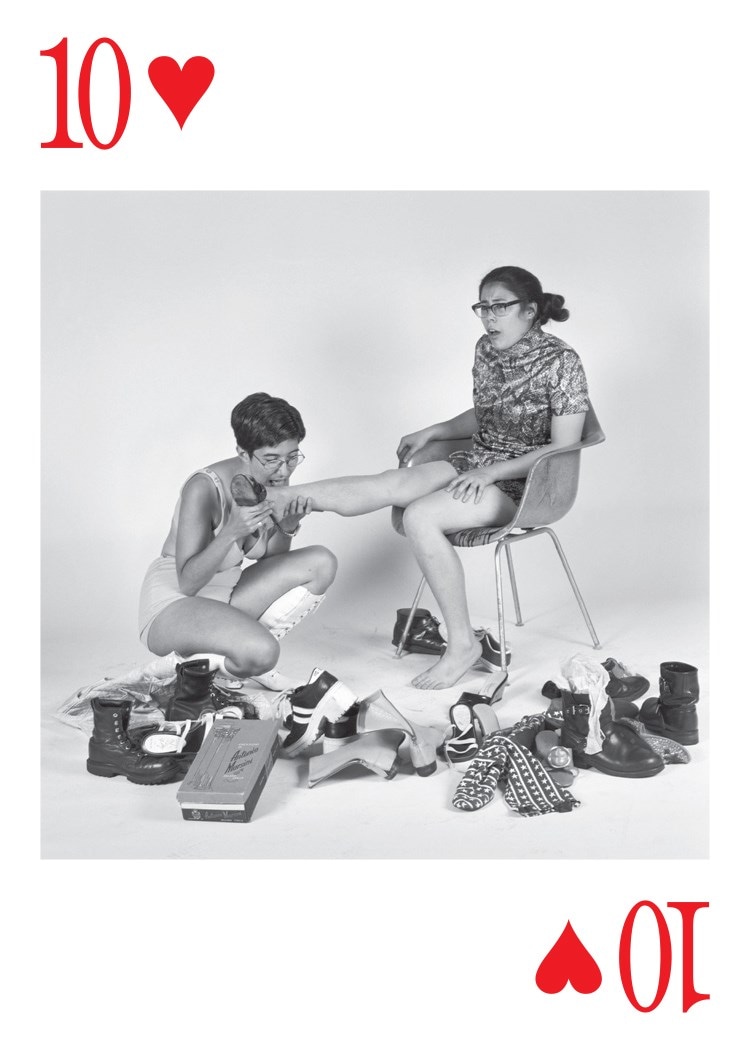 Photography Catherine Opie
I imagine the shoot was wild, right?
Catherine Opie: We did a three-day shoot at the studio, and you have no idea how much fun it was. People would show up in the craziest outfits. There were a few friends, including Diane DiMassa, but mostly the people who showed up were strangers. People came with all these props, they hung out, and ate pizza. It was fantastic!
Tell us about Adriene Jenik’s custom ‘Poke-Her’ games, which come with each deck?
Catherine Opie: Everyone thinks the dealer on the deck is me, but it’s Adriene, a great artist friend of mine who was a professional dealer in Vegas. She devised all these special games for the Dyke Deck, like ‘I saw Jodie’ and ‘Lick my Boots’. What is really great to see is how excited people are about the Dyke Deck now. In 1995, this was not a popular product. It was a product failure.
Okay, say more.
Catherine Opie: You’re gonna laugh, but I took the decks from MOCA up to the Castro and set up a little table and tried to sell them before Christmas. I wore a Dykes Lumber apron someone gave me to hold the cash. I got so many people saying, ‘Go back to LA’, or ‘you’re a poser LA lesbian’. It was a brutal two days, and I only sold five decks.
Projects can almost be ahead of their time – ideas that haven’t met their audience yet.
Catherine Opie: Dyke Deck was ahead of its time. Lesbians were not seen in mainstream culture. Ellen [DeGeneres] hadn’t even come out yet. For me, the best story about Dyke Deck is from Christina Quarles, a painter now on the board of MOCA. Her wife is her high school girlfriend, and in 1995, they bought the Dyke Deck from the MOCA bookstore after hearing about it from friends. She is one of the Altadena fire victims. She lost everything, but managed to rescue her original deck. When I talked to her about it, she said, ‘Don’t you understand, Cathy? In 1995, we would sit around in high school, and someone would pull out the Dyke Deck, and we would dream of what kind of lesbian we wanted to be.’ This touched me. This is why we had to remake it. We are back in the culture wars, and all the young queers are super scared right now. We thought we had rights, but it’s all being stripped back. Homophobia is alive and well!
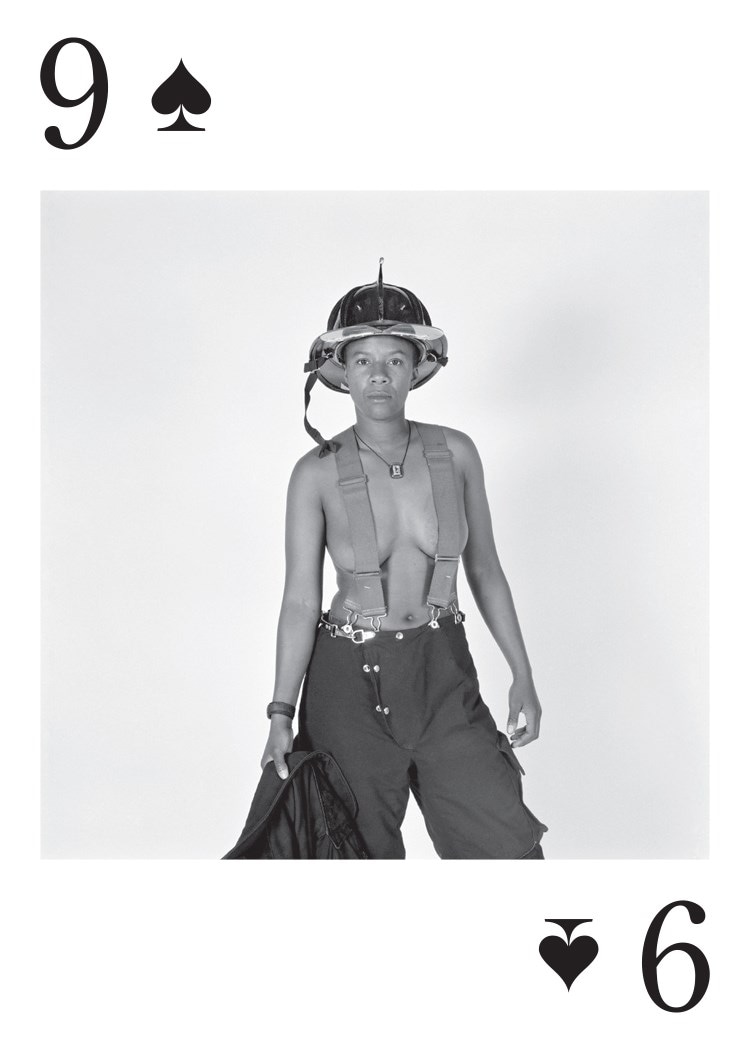 Photography Catherine Opie
Interestingly, you made Dyke Deck at the same time you made Pervert. Was this project a rebound from the emotional heaviness of creating Pervert?
Catherine Opie: Yes, on reflection. I needed to make a Dyke Deck for myself, too. To remind myself that we weren’t gonna let the politics of the culture wars get us down. We were still going to have joy and fun. And this is why it’s the perfect time to reissue it, as we’re facing challenging times again!
Have you always played cards?
Catherine Opie: My grandmother taught me how to shuffle as a child, and I still love it. I play cards with friends two or three times a week, including a regular game of cannasta with Jane Fonda.
How are you feeling at this moment? And how is that shaping your practice?
Catherine Opie: For me, making work is about a relationship to dialogue. How do I use my language to understand the historical ramifications of the times that we’re living in through my different bodies of work? I feel like we have an enormous amount of work ahead of us, and I’ve been reflecting on my role as a queer elder. How am I going to be really, really useful? How can I help calm the incredible fear? The youth are scared. And they also feel disenfranchised, believing that politics will never work for them. So, how do we re-educate about civics?
We must also protect the trans community, especially the trans youth. I think it goes back to actually working on hotlines again. I used to work on the rape hotlines in the 80s and do a lot of advocacy work. I’m being called back to these grassroots endeavours. I also write to the Supreme Court every week. This all feels very full circle in many ways. I’m 64 years old, and I’m still just trying to make queer culture important for all of us and to hopefully find a little joy in it. We need to do both things simultaneously: be activists and still put on a cowboy hat!
Catherine Opie’s Dyke Deck and Dyke Deck: Reshuffle Edition are available to order here now.
ShareLink copied ✔️More on these topicsArt & PhotographyQ+ACatherine OpieLesbiansExpand your creative community and connect with 15,000 creatives from around the world.
READ MORE
Art shows to leave the house for in December 2025
Dazed Club explore surrealist photography and sound
Derek Ridgers’ portraits of passionate moments in public
The rise and fall (and future) of digital art

This print sale is supporting Jamaica after Hurricane Melissa
These portraits depict sex workers in other realms of their lives

These photos trace a diasporic archive of transness
7 Studio Museum artworks you should see for yourself

Nadia Lee Cohen on her ‘most personal project yet’
Candid photos from a Paris strip club locker room
Liz Johnson Arthur immortalises PDA, London’s iconic queer POC club night