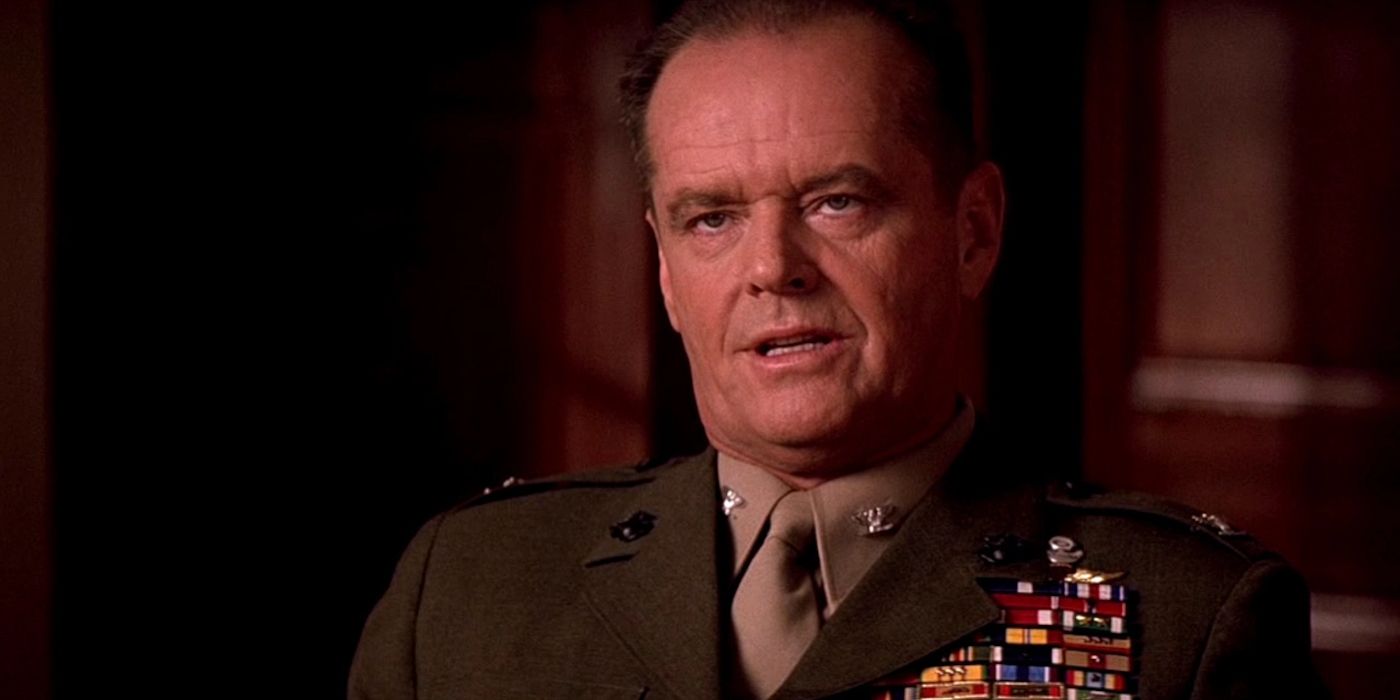
 Jack Nicholson as Colonel Nathan R. Jessup in court looking at someone off-camera in A Few Good Men.Image via Columbia Pictures
 By
Luc Haasbroek
Published 22 minutes ago
Luc Haasbroek is a writer and videographer from Durban, South Africa. He has been writing professionally about pop culture for eight years. Luc's areas of interest are broad: he's just as passionate about psychology and history as he is about movies and TV. He's especially drawn to the places where these topics overlap.
Luc is also an avid producer of video essays and looks forward to expanding his writing career. When not writing, he can be found hiking, playing Dungeons & Dragons, hanging out with his cats, and doing deep dives on whatever topic happens to have captured his interest that week.
Sign in to your Collider account
follow
Follow
followed
Followed
Like
Like
Thread
Log in
Here is a fact-based summary of the story contents:
Try something different:
Show me the facts
Explain it like I’m 5
Give me a lighthearted recap
By
Luc Haasbroek
Published 22 minutes ago
Luc Haasbroek is a writer and videographer from Durban, South Africa. He has been writing professionally about pop culture for eight years. Luc's areas of interest are broad: he's just as passionate about psychology and history as he is about movies and TV. He's especially drawn to the places where these topics overlap.
Luc is also an avid producer of video essays and looks forward to expanding his writing career. When not writing, he can be found hiking, playing Dungeons & Dragons, hanging out with his cats, and doing deep dives on whatever topic happens to have captured his interest that week.
Sign in to your Collider account
follow
Follow
followed
Followed
Like
Like
Thread
Log in
Here is a fact-based summary of the story contents:
Try something different:
Show me the facts
Explain it like I’m 5
Give me a lighthearted recap
Courtroom dramas are a great vehicle for storytelling. They provide a compact forum for contrasting narratives, inherent conflict through the prosecution and defense, and a natural space for powerful monologues. The justice system is a crucial part of our lives, and the best movies in this often-misunderstood genre place it under the microscope.
With this in mind, this list ranks the finest courtroom dramas of the last century. The titles below range from biopics and thrillers to historical documents and moral statements. A few are universal in their implications, transcending their time and place. However, they all aim to open eyes and awaken minds, proving that some movie genres can truly transcend the screen.
10 ‘Marshall’ (2017)
 Sterling K. Brown and Chadwick Boseman look at each other with serious tension in Marshall.Image via Open Road Films
"You cannot fight racism with silence." Before the landmark Brown v. Board of Education case, a young Thurgood Marshall (Chadwick Boseman) traveled the country defending Black citizens in racially charged trials. Here, he defends a Black chauffeur (Sterling K. Brown) accused of assaulting his white employer, only to be barred from speaking in court. Marshall is forced to strategize from the gallery, guiding a local Jewish lawyer (Josh Gad) unfamiliar with criminal defense.
The film blends procedural beats with historical portraiture, showing how justice in America has often depended on individual courage (and more than a little stubbornness). Before the civil rights movement gained momentum, challenging racist institutions required serious grit and sacrifice. In this regard, Marshall is not only a courtroom story but an origin myth for a legal titan. Marshall would go on to be one of the most influential American lawyers of his day, and eventually a Supreme Court justice.
9 ‘Witness for the Prosecution’ (1957)
 Charles Laughton as Sir Wilfrid Robarts in Witness for the Prosecution (1957)Image via United Artists
"The questions must be answered, Mr. Vole." Billy Wilder turns legal drama into a razor-wire duel of wit and deception, weaving in elements of noir and black comedy. When a charming veteran (Tyrone Power) is accused of murdering a wealthy widow, legendary barrister Sir Wilfrid Robarts (Charles Laughton) — frail, recovering from illness, yet still formidable — defies doctors’ orders to defend him.
On its surface, the plot is a classic murder trial with a defendant claiming innocence and a cunning prosecutor circling like a hawk, but the brilliance lies in the layers of performance, trust, and manipulation between husband and wife witnesses. Every testimony amps up the suspense, every revelation makes us rethink what we assumed to be true. The whole way through, Wilder balances tension with character humor, making the courtroom feel both theatrical and real. It’s a masterclass in misdirection, reminding us that justice can hinge on whether we believe a story... and how easily we can believe the wrong one.
8 ‘The Verdict’ (1982)
.jpg?q=49&fit=crop&w=825&dpr=2) Image via 20th Century Studios
Image via 20th Century Studios
"There is no other justice. There is only this." Paul Newman earned an Oscar nomination for this fantastic late-career performance. Here, he plays Frank Galvin, a disgraced, alcoholic lawyer grasping at redemption. Offered a medical malpractice case that could settle quickly and quietly, he refuses the payout and instead forces a trial, convinced the comatose patient at its center deserves the dignity denied her. What follows is a bruising fight against a powerful hospital, a stacked legal machine, and the protagonist's failing reputation.
Sidney Lumet (no stranger to courtroom masterpieces) directs all this with a weary moral gravity. The aesthetics mirror the mood, all dimly lit bars, suffocating courtrooms, and snow-blown streets. Rather than being a conventional legal thriller, The Verdict becomes an emotional reckoning. When Frank rises to speak, voice trembling, you feel a lifetime of regret turning into something like grace. Through him, the movie makes a statement on trying again when the world has written you off.
7 ‘Anatomy of a Murder’ (1959)
 James Stewart holds up his hand to swear on bible before trial.Image via Columbia Pictures
"Facts are stubborn things." This groundbreaking drama revolves around small-town lawyer Paul Biegler (James Stewart), who defends an army lieutenant (Ben Gazzara) accused of killing a man who allegedly assaulted his wife (Lee Remick). It was provocative material for mainstream Hollywood movies in the 1950s. Rather than sensationalizing it, Anatomy of a Murder leans into ambiguity: motives blur, testimony contradicts, and it's not just the facts but morality itself that's up for question. In the courtroom, charm, instinct, and performance carry as much weight as truth.
The film embraces this idea to the full, refusing to hand the audience a clean verdict. We never truly know where justice lies or who deserves sympathy. In the process, it asks tough questions about the possibility of true justice in a system run by fallible humans. With bold dialogue that shocked 1950s audiences and jazz inflections underscoring its cool detachment, Anatomy of a Murder laid the template for modern legal drama.
6 ‘Judgment at Nuremberg’ (1961)
 Image via United Artists
"A country isn’t a rock. It’s people." An important work of historical witness. This monumental film from liberal icon Stanley Kramer reconstructs the post-World War II trial where American judges prosecuted German officials complicit in Nazi atrocities. Rather than focusing on generals, it targets seemingly respectable jurists, men who didn’t kill, but legitimized killing through law. Judge Dan Haywood (Spencer Tracy) listens as witnesses recount sterilization, torture, and state-sanctioned cruelty, while defense attorneys argue that obedience and patriotism absolve them of responsibility.
In the process, Judgment at Nuremberg confronts banal, bureaucratic evil. The film forces viewers to ask whether morality can defer to authority and whether a legal system can remain neutral in the face of inhumanity. The events it depicts were hugely influential, reshaping how the modern world would think about national sovereignty, individual responsibility, and the possibility of universal moral principles.
5 ‘Erin Brockovich’ (2000)
 Julia Roberts in Erin BrockovichImage via Universal Pictures
"They’re poisoning people, and they know it." Julia Roberts shines in this true-story drama about a single mother who stumbles into a massive corporate cover-up of contaminated drinking water. Working at a small law firm, Erin pushes past condescension, class bias, and her own lack of formal training to build a case for families sickened by pollution. The star won the Oscar for her efforts.
The plot moves from dusty archives to kitchen-table interviews to the courtroom, striking a pitch-perfect balance between depth and entertainment value. Erin Brockovich isn’t a story about legal procedure so much as the cost of ignoring ordinary people’s voices, and Steven Soderbergh tells it with utmost style and energy. The director was on a ridiculous roll at the time, cranking Erin Brockovich out of The Limey and then following it up with the one-two punch of Traffic and Ocean's Eleven.
4 ‘A Few Good Men’ (1992)
 Tom Cruise as Lt. Daniel Kaffee in A Few Good MenImage via Columbia Pictures
"You can’t handle the truth!" Speaking of directors on winning streaks, Rob Reiner crafted this classic as the capstone to a phenomenal run of movies: Stand By Me, The Princess Bride, When Harry Met Sally..., and Misery. When two Marines are charged with the death of a fellow soldier, Naval lawyer Daniel Kaffee (Tom Cruise) initially views the case as routine, only to uncover layers of secrecy and divided loyalty. Opposite him stands Colonel Nathan Jessup (Jack Nicholson), a man who embodies authoritarian conviction.
The plot escalates toward one of the most famous confrontations in movie history, where ideals of duty and morality clash. Nicholson's monologue has since become iconic, but the whole movie is solid and well-made. Fundamentally, A Few Good Men understands that the courtroom is theater and battlefield at once, and that the truth sometimes erupts only when pushed to breaking point. A smart movie that keeps you on the edge of your seat.
3 ‘Anatomy of a Fall’ (2023)
"Truth isn’t the same as the story you tell." Justine Triet’s Palme d’Or winner blends legal thriller with psychological portrait. When a husband (Swann Arlaud) dies after falling from a snowy Alpine chalet, suspicion falls on his wife, Sandra (Sandra Hüller), a writer whose marriage was strained by creative jealousy, caregiving burdens, and emotional fatigue. Their young son (Milo Machado-Graner), visually impaired, becomes a key witness. Anatomy of a Fall unfolds through testimony, flashbacks, and subtle contradictions, turning the courtroom into a lens through which love, resentment, and artistic ego blur.
What’s on trial isn’t simply a death but an entire marriage. We search for certainty in glances, pauses, and fragments, only to find that truth in relationships rarely arrives cleanly. The writing and performances are phenomenal, elevating this way beyond your typical courtroom drama. The result is one of the most perceptive and emotionally resonant movies of the 2020s, jam-packed with food for thought.
2 ‘12 Angry Men’ (1957)
 Jurors arguing in '12 Angry Men', Henry Fonda in the background (1957)Image via United Artists
"It's possible." 12 Angry Men never leaves the jury room, yet it unfolds like a full-on war movie: prejudice versus reason, ego versus principle, anger versus empathy. A murder trial ends in deliberation, and twelve jurors enter a sweltering room to decide a young defendant’s fate. What begins as a near-unanimous guilty vote slowly shifts as one juror (Henry Fonda) insists on scrutinizing all assumptions and evidence. As tempers flare and biases surface, each character reveals how personal baggage shapes public duty.
There are no procedural twists here, no surprise witnesses. Instead, the film mines tension simply out of conversation. Disagreement and persuasion become life-shaping forces. In the process, 12 Angry Men argues that democracy is fragile precisely because it relies on patience and conscience. This message feels even more urgent now, in an era where attention spans are short, everyone's in their own information bubble, and changing someone's mind feels like a Herculean undertaking.
1 ‘To Kill a Mockingbird’ (1962)
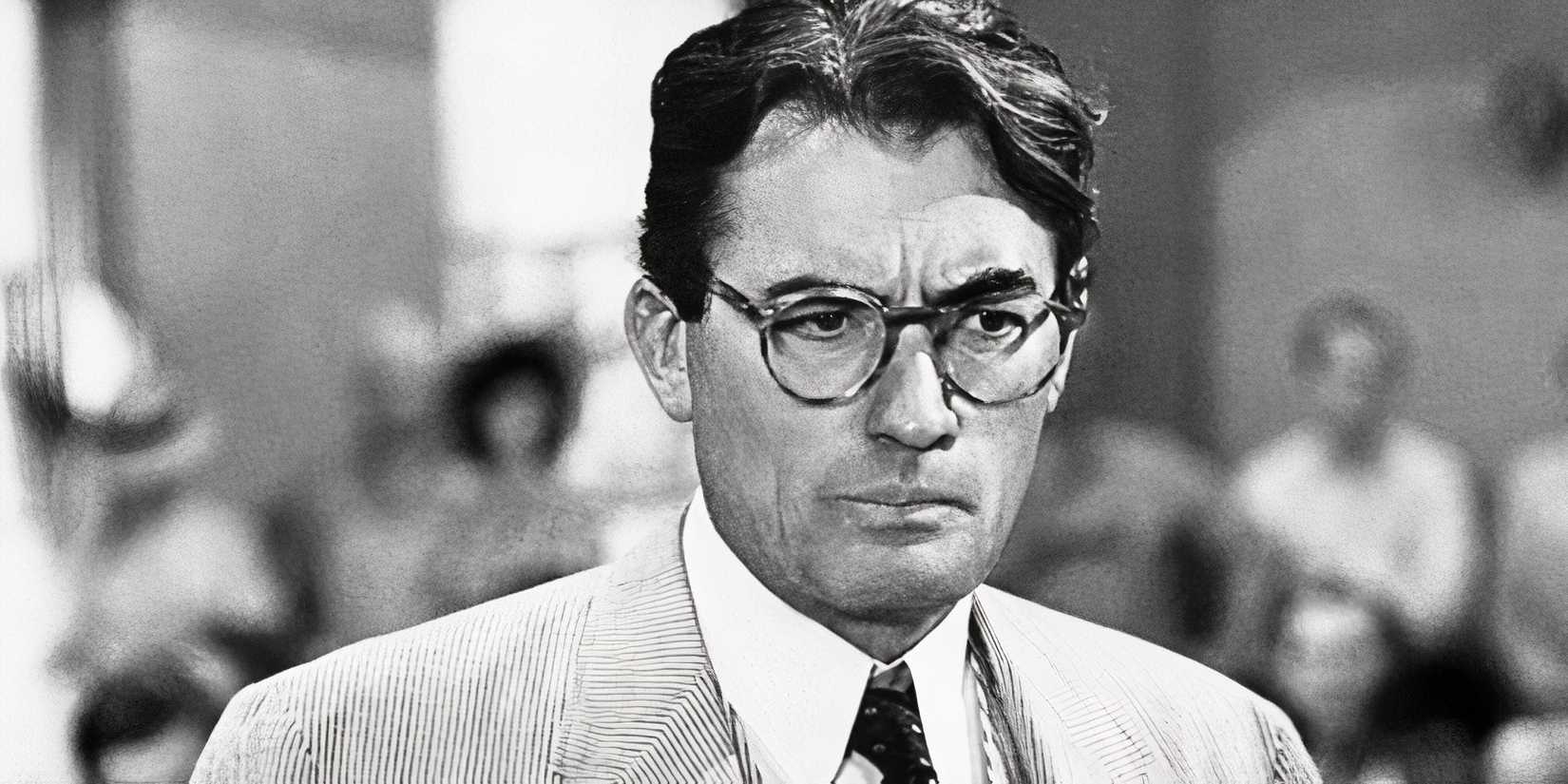 Image via Universal Pictures
"In the name of God, do your duty." This one feels less like a movie and more like a modern fable. Through the eyes of young Scout (Mary Badham), we watch as Atticus Finch (Gregory Peck) defends Tom Robinson (Brock Peters), a Black man falsely accused in the Jim Crow South. Having Scout as the viewpoint character significantly adds to the narrative impact. Through this conceit, To Kill a Mockingbird moves between courtroom drama and childhood wonder, contrasting the innocence of youth with the brutality of prejudice.
At its heart, Atticus embodies moral steadiness, standing against a community determined to uphold injustice. The trial’s outcome wounds not only the characters, but the idea of justice itself, arguing that legal systems reflect the values of those who wield them. Yet the film refuses despair, suggesting that ordinary decency can make a real difference. All these decades later, To Kill a Mockingbird is still inspiring.
 To Kill A Mockingbird
Approved
Crime
Drama
Release Date
December 25, 1962
Cast
Gregory Peck, John Megna, Frank Overton, Rosemary Murphy, Ruth White, Brock Peters
Runtime
129 minutes
Director
Robert Mulligan
Writers
Harper Lee, Horton Foote
Genres
Crime, Drama
Powered by
To Kill A Mockingbird
Approved
Crime
Drama
Release Date
December 25, 1962
Cast
Gregory Peck, John Megna, Frank Overton, Rosemary Murphy, Ruth White, Brock Peters
Runtime
129 minutes
Director
Robert Mulligan
Writers
Harper Lee, Horton Foote
Genres
Crime, Drama
Powered by
 Expand
Collapse
Expand
Collapse
-
 Movie
Movie
-
 A Few Good Men
-
 12 Angry Men
We want to hear from you! Share your opinions in the thread below and remember to keep it respectful.
Be the first to post Images Attachment(s) Please respect our community guidelines. No links, inappropriate language, or spam.Your comment has not been saved
Send confirmation emailThis thread is open for discussion.
Be the first to post your thoughts.
- Terms
- Privacy
- Feedback
 Nov 11, 2021
Order in the Court: 11 Best Courtroom Dramas
 2 hours ago
One of the Best Zombie Movies of All Time Has a New Streaming Home
 2 hours ago
Pierce Brosnan’s 18% Rotten Tomatoes Heist Flop Is Sneaking Out of Netflix
 32 minutes ago
Patrick Stewart's Bloody Underrated Horror Hit Is Streaming for Free Next Month
More from our brands

37 Shows on Netflix That Couples Can Binge-Watch Together
The Best Movies in Theaters Right Now

The 55 Best Movies of All Time, Ranked
25 Best R-Rated TV Shows of All Time, Ranked

10 Flawless Legal Dramas Everyone Needs To Watch

10 Saddest Movies Based on True Stories


The 60 Best Movies Of All Time
What To Watch
 July 20, 2025
The 72 Best Movies on Netflix Right Now
Trending Now
July 20, 2025
The 72 Best Movies on Netflix Right Now
Trending Now
 Ho, Ho, Ho! The 10 Greatest Movie Santa Clauses, Ranked
 Stephen King’s 91% RT ‘Mindhunter’ Replacement Surges on Streaming After Abandoning Audiences
 The 10 Greatest Sci-Fi Movies Without Aliens, Ranked