 By Eugene LudwigShareNewsweek is a Trust Project member
The American Farm Bureau Federation’s 2025 Thanksgiving Dinner Cost Survey has arrived, offering an annual snapshot of what it costs to put a holiday meal on the table.
Thanksgiving dinner has long been a fixture of the holiday season, and over time its price has become a cultural shorthand for how the economy “feels” to the average household. Yet, its actual weight within a household’s budget is far smaller than its public profile suggests. In 2023, the entire Thanksgiving meal accounted for roughly 0.05 percent of the Ludwig Institute for Shared Economic Prosperity’s (LISEP) Minimal Quality of Life (MQL) basket—the essentials needed to live a modest but meaningful life in America today—and only 0.3–0.4 percent of the MQL food budget, or a fraction within a fraction of what Americans must afford in any given year.
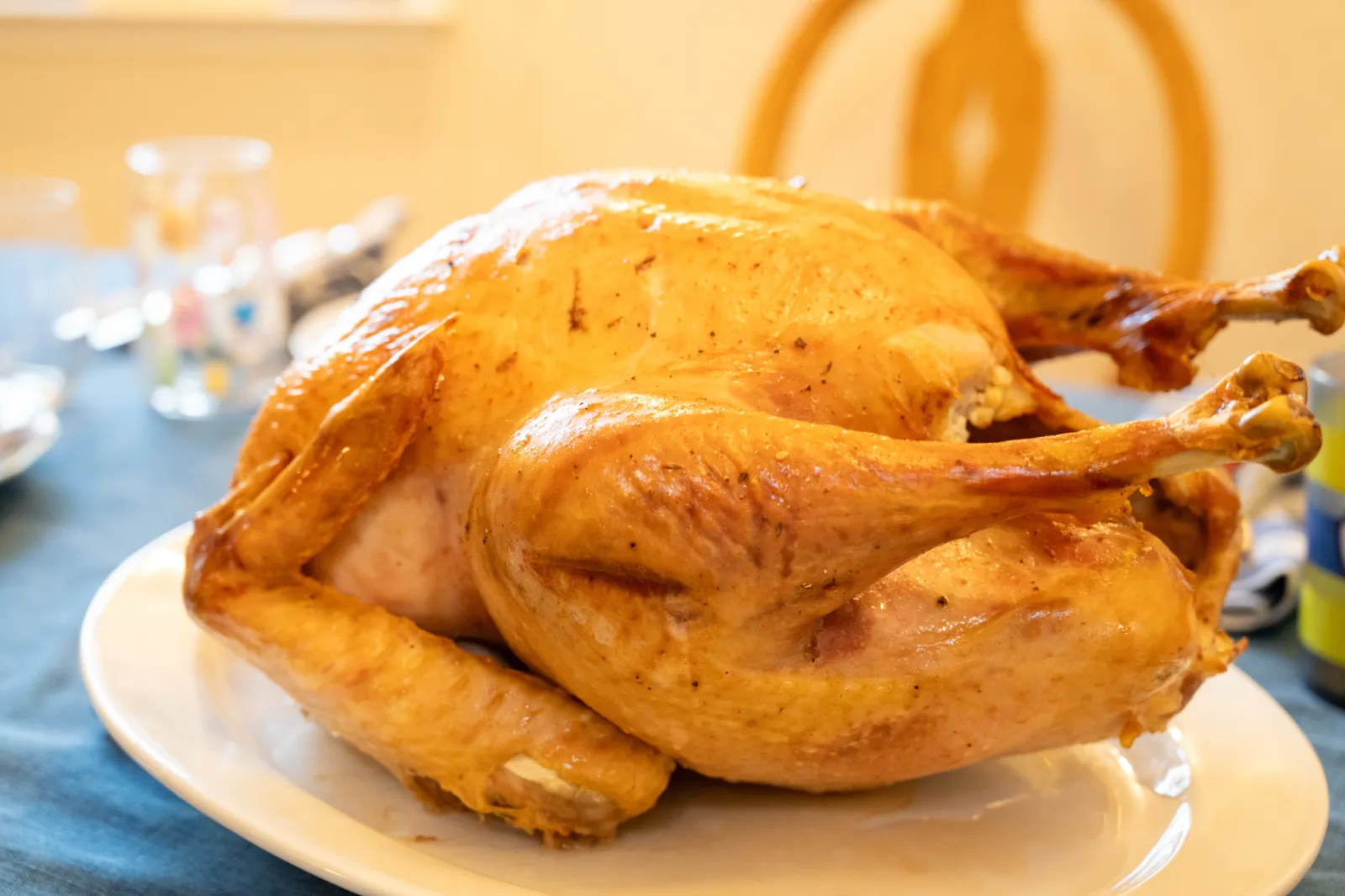 ...
...According to the AFBF’s report, the cost of Thanksgiving dinner declined 5 percent this year—from $58.08 in 2024 to $55.18 for a 10-person meal. And historically, the Thanksgiving meal has actually become easier, not harder, for the median worker to afford. Between 1986 and 2024, the cost of the meal rose 102 percent, while median true weekly earnings increased 247 percent. So, if the basket barely registers in a family’s annual budget, why does it capture so much attention?
Because the meal itself isn’t the real story, it’s what it represents: the start of a holiday season layered with additional expenses, landing on top of years of rising living costs and eroding financial stability.
For millions of low- and middle-income (LMI) Americans, the holidays do not represent a discrete new expense so much as an additional strain layered atop an already overextended budget. As LISEP’s MQL data repeatedly shows, the cost of achieving even a modest, dignified standard of living has steadily outpaced wages for more than two decades. Between 2001 and 2023, the cost of the MQL basket rose nearly 100 percent, while median wages lagged and in MQL-adjusted terms, declined 4 percent. Housing costs surged by more than 130 percent. Health care costs have tripled. Child care remains one of the fastest-rising basic expenses in the country. And since 2019, even the basic weekly grocery bill has climbed dramatically, rising from $179.90 to $232.70 per week for a family of four in 2025.
These long-term patterns form the backdrop against which the Thanksgiving basket must be understood. An uptick in sweet potatoes or a price dip in dinner rolls is trivial compared to the systemic erosion of purchasing power. Even a 16 percent decline in the retail price of turkey ($1.34 per pound) barely moves the needle.
And as households brace for the holidays, they’re also bracing for a cascade of new financial pressures that will stretch deep into 2026:
—Health care premiums and cost-sharing are rising as underlying medical inflation accelerates and enhanced Affordable Care Act (ACA) subsidies phase out. For both employer-sponsored and ACA marketplace plans, 2026 is shaping up to bring some of the steepest premium hikes in recent memory.
—Tariffs are adding upward pressure to consumer prices across a wide range of goods. The St. Louis Fed found that even though companies have yet to pass on the full cost of these tariffs, the early effects are already showing up in higher prices, especially for items like cars, appliances and electronics.
—Seasonal labor dynamics add complications. While the holiday season does create more work—research from the Federal Reserve Bank of Chicago and Bureau of Labor Statistics shows employment peaks in December, and temporary help services peak between October and December—this often means LMI workers must accept longer hours, unpredictable schedules, or physically demanding seasonal roles simply to stay afloat. And for those unable to increase hours, the season brings higher expenses without the offset of increased earnings. In both cases, workers face heightened volatility.
Against this backdrop, the AFBF Thanksgiving basket functions less as a measure of the holiday meal and more as a bellwether—a price tag we track because it sits at the intersection of tradition and economic anxiety. Its symbolic power doesn’t come from whether it rises or falls, but from what it evokes: the fragility of household budgets as the holiday season introduces new costs and obligations.
The MQL framework makes clear that the holiday meal is not the true source of financial strain; the pressure comes from the cumulative weight of the year: rising rents, higher insurance premiums, mounting child care costs and new price pressures across the essentials. By the time Thanksgiving arrives, the real question for many households is not whether they can afford dinner, it’s whether they can absorb anything more at all.
Eugene Ludwig is chairman of the Ludwig Institute for Shared Economic Prosperity (LISEP) and former U.S. comptroller of the Currency. He is author of the new book The Mismeasurement of America: How Outdated Government Statistics Mask the Economic Struggle of Everyday Americans, released Sept. 30.
The views expressed in this article are the writer's own.
Request Reprint & LicensingSubmit CorrectionView Editorial & AI Guidelines Add Newsweek as a preferred source on Google to see more of our trusted coverage when you search.
Recommended For You
 OpinionConventional Wisdom: Trump Turkey Pardoning Edition3 min read
 OpinionWhen Strength Becomes a Burden—Reimagining the Strong Black Woman | Opinion4 min read
 OpinionDoes the US Need a Third Political Party? Newsweek Contributors Debate5 min read
 OpinionGOP Rep.: The U.S. Must Close Critical AI Chip Export Loophole Exploited by China | Opinion5 min read
 OpinionAgriculture Secretary: Giving Thanks to the American Farmer This Thanksgiving | Opinion4 min read
 OpinionFormer White House Middle East Envoy: What We Keep Getting Wrong About the UAE and Sudan | Opinion5 min read
Related Podcasts
Top Stories
 WorldPutin Gives Update on Ukraine Peace, Trump Sending Witkoff to Moscow: Live Updates3 min read
 NewsUncommon Knowledge: Don’t Blame Trump for the Gerrymander Paradox8 min read
 NewsMarjorie Taylor Greene Like ‘Canary in Coal Mine’ for GOP: Ex-House Speaker4 min read
 Live BlogThanksgiving Winter Storm Live Tracker, Updates as Heavy Snow to Hit1 min read
 PoliticsDonald Trump’s Georgia Election Interference Case Dropped by New Prosecutor2 min read
 U.S.Kristi Noem Among Those Named in Judge’s Criminal Inquiry: Full List2 min read
Trending
 MoneyNew ‘Cash Law’ Could Change Grocery Store Rules3 min read
 SnowfallWinter Storm Warning Issued As 25 Inches of Snow To Strike5 min read
 U.S. Economy‘Mass Blackout’ Starts Today: What to Know3 min read
 Home PricesPrice Correction ‘Worse Than 2008’ Coming To US Housing Market—Analyst5 min read
 ArkansasRepublican Switches Party To Democrats Amid Concerns About Affordability3 min read
Opinion
OpinionWhy We Care About Turkey Costs | Opinion5 min read OpinionThanksgiving in America | Opinion5 min readOpinionWhen Strength Becomes a Burden—Reimagining the Strong Black Woman | Opinion4 min readOpinionConventional Wisdom: Trump Turkey Pardoning Edition3 min readOpinionDoes the US Need a Third Political Party? Newsweek Contributors Debate5 min read